11:05
Cell Division
Bozeman Science
Overview
This video explains the fundamental process of cell division, which is how all life originates and grows. It covers three main types: binary fission in prokaryotes, mitosis for growth and repair in eukaryotes, and meiosis for sexual reproduction. The video details how each process duplicates or halves genetic material to create new cells, emphasizing the importance of exact copies for body cells and genetic variation for reproductive cells. Understanding cell division is crucial for comprehending life's continuity and diversity.
How was this?
Save this permanently with flashcards, quizzes, and AI chat
Chapters
- All life is composed of cells, the basic units of structure and function.
- New cells arise only from pre-existing cells through cell division.
- Cell division allows for exponential growth, as seen from a single fertilized egg to an adult human.
- Cell division is essential for both prokaryotic (like bacteria) and eukaryotic organisms.
This foundational concept explains how organisms grow, reproduce, and maintain themselves, highlighting the universal mechanism of life's propagation.
A single fertilized egg developing into an adult human with trillions of cells, all originating from that first cell through repeated division.
- Prokaryotic cells, like bacteria, divide through a process called binary fission.
- The single circular DNA chromosome is duplicated.
- The cell elongates, and the DNA attaches to the cell wall.
- The cell wall splits, resulting in two identical daughter cells.
This is the simplest form of cell division, enabling rapid population growth in bacteria, which is critical for understanding microbial communities and infections.
E. coli bacteria can divide every 20 minutes through binary fission, leading to rapid exponential growth.
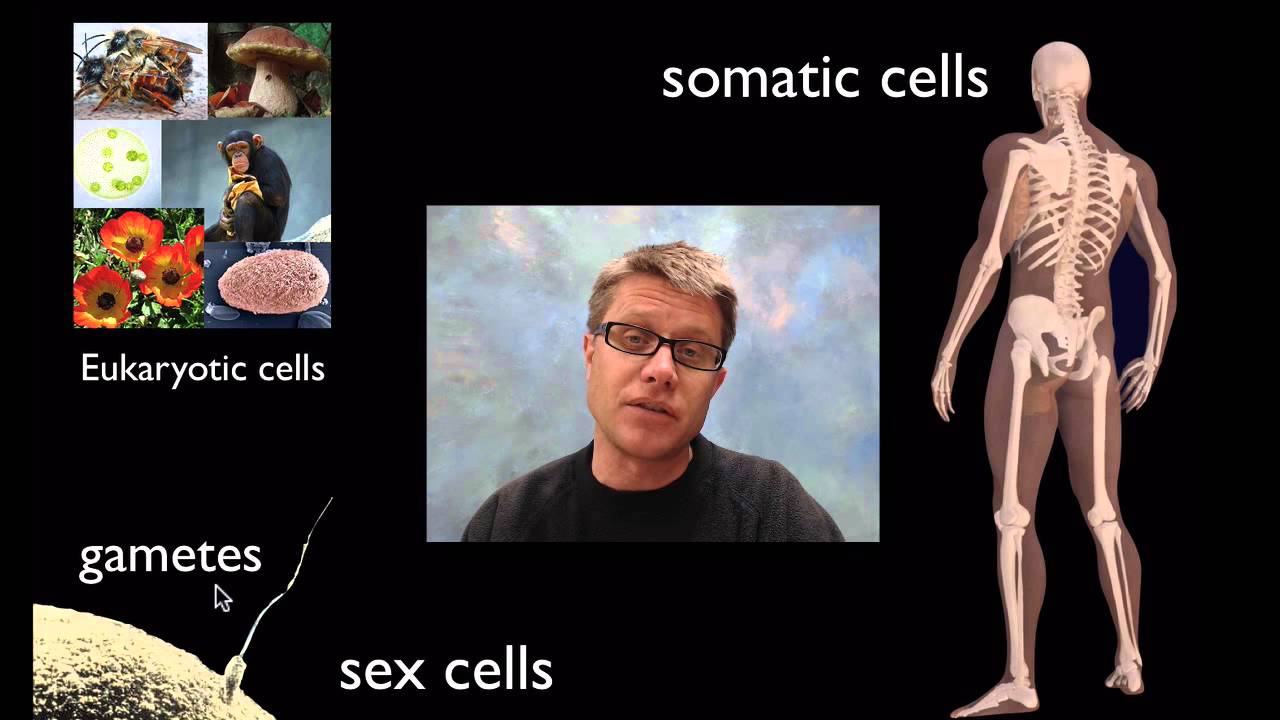
- Eukaryotic cells divide via mitosis (nuclear division) and cytokinesis (cytoplasm division).
- Mitosis produces two genetically identical diploid daughter cells from one diploid parent cell.
- Before division, DNA is duplicated during interphase, forming sister chromatids.
- Chromosomes align in the middle and are pulled apart to opposite poles.
- Mitosis is responsible for growth, development, and replacing worn-out or damaged cells.
Mitosis ensures that all somatic (body) cells in an organism have the same genetic information, which is vital for maintaining the integrity and function of tissues and organs.
The process of healing a cut involves mitosis to create new skin cells that are identical to the surrounding cells.
- Meiosis is a specialized type of cell division that produces gametes (sex cells: sperm and egg).
- It involves two rounds of division (Meiosis I and Meiosis II) to produce four genetically unique haploid cells.
- Crossing over occurs during Meiosis I, where homologous chromosomes exchange genetic material, creating new combinations of genes.
- Each resulting gamete has half the number of chromosomes as the parent cell.
- Meiosis introduces genetic variation, essential for the diversity of offspring.
Meiosis is the source of genetic diversity in sexually reproducing organisms, driving evolution and adaptation by ensuring offspring are not identical to their parents.
The combination of genes from a sperm and an egg, each resulting from meiosis, creates a unique genetic makeup for the resulting zygote.
- Mitosis produces two identical diploid cells for growth and repair.
- Meiosis produces four unique haploid cells for sexual reproduction.
- Mitosis involves one round of division, while meiosis involves two.
- Meiosis includes crossing over and the separation of homologous chromosomes, leading to genetic variation.
- Mitosis ensures genetic continuity, while meiosis generates genetic diversity.
Understanding the distinct outcomes and purposes of mitosis and meiosis clarifies how organisms grow and how genetic diversity is maintained across generations.
Mitosis creates new skin cells to heal a wound, while meiosis creates sperm and egg cells that combine to form a new individual with a unique genetic profile.
Key takeaways
- Cell division is the fundamental process by which life perpetuates and grows, starting from a single cell.
- Binary fission is a simple, rapid method for prokaryotes to reproduce, creating exact copies.
- Mitosis ensures genetic consistency in eukaryotic body cells, enabling growth and tissue repair.
- Meiosis generates genetic diversity by producing unique sex cells with half the genetic material.
- The distinction between mitosis and meiosis is crucial for understanding both organismal development and sexual reproduction.
- Genetic variation introduced by meiosis is the raw material for evolution and adaptation.
- All cell division processes involve the replication and segregation of genetic material (DNA).
Key terms
Cell DivisionBinary FissionProkaryoteEukaryoteMitosisCytokinesisMeiosisGameteSomatic CellDiploidHaploidChromosomeSister ChromatidsCrossing Over
Test your understanding
- What is the primary purpose of binary fission in bacteria?
- How does mitosis ensure that daughter cells are genetically identical to the parent cell?
- What is the key difference between mitosis and meiosis in terms of the number and genetic makeup of the resulting cells?
- Why is genetic variation introduced by meiosis important for a species?
- Explain the role of cytokinesis in both mitosis and binary fission.