AI-Generated Video Summary by NoteTube
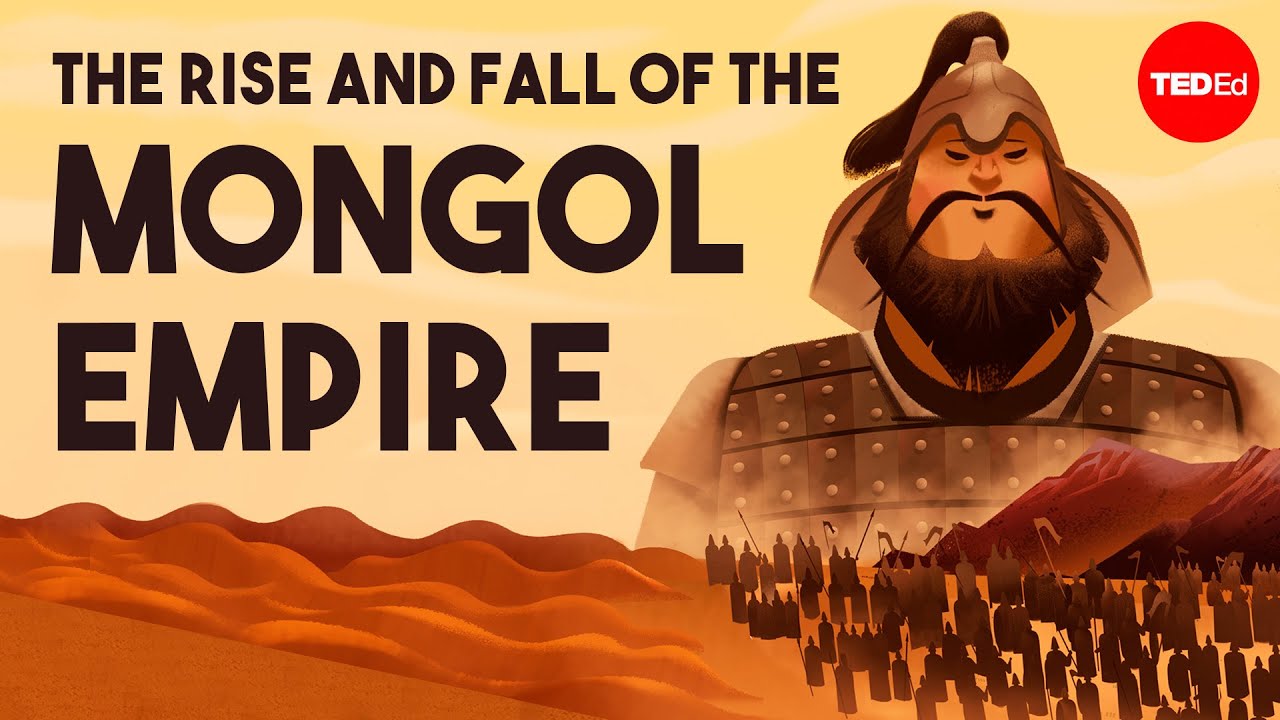
The rise and fall of the Mongol Empire - Anne F. Broadbridge
TED-Ed
Overview
This video chronicles the rise and fall of the Mongol Empire, the largest contiguous land empire in history. It begins with the nomadic pastoralists of the East Asian steppe in the 12th century, highlighting their societal structure and the emergence of Temujin, who united them to become Chinggis Khan. The video details Chinggis Khan's military innovations, his belief in a divine mandate to conquer, and the initial expansion of the empire. It then explores the empire's administration, religious tolerance, and the flourishing of trade facilitated by its vast reach. Finally, it discusses the empire's fragmentation due to succession disputes, the establishment of successor khanates, and the lasting legacy of Mongol rule.
This summary expires in 30 days. Save it permanently with flashcards, quizzes & AI chat.
Chapters
- •The East Asian steppe was inhabited by scattered Mongol and Turkic pastoral nomads in the 12th century.
- •Nomadic women managed migrations and trade, while men specialized in mounted warfare.
- •Temujin, born into aristocracy, rose to power by forming alliances and promoting meritocracy.
- •Temujin's innovations, like scattering conquered nomads, made him unstoppable, leading to his coronation as Chinggis Khan in 1206.
- •Chinggis Khan believed Tenggeri (Sky God) willed him to conquer the world.
- •Resistance to the Mongols was seen as resisting Tenggeri's will and met with death.
- •Under Chinggis Khan, the Mongols subdued northern China and eastern Islamic lands.
- •After Chinggis Khan's death in 1227, his family, the Golden Lineage, continued the expansion.
- •Mongol expansion continued under Chinggis Khan's descendants, reaching Central Asia, Russia, and Europe.
- •The Mongols conquered Islamic territories as far as Baghdad and southern China by 1279.
- •Conquered territories were governed using local administrators, with internal politics largely left untouched.
- •Religions were allowed to flourish as long as leaders prayed for the Mongols.
- •Artisans, scholars, and engineers were captured and resettled across Asia to continue their work.
- •The empire facilitated flourishing trade along the Silk Road, supported by an extensive messenger system.
- •Gold brocade, a valuable product combining resources from across the empire, was highly prized.
- •Gunpowder technicians from China were particularly valued.
- •Maritime trade also thrived, notably in blue-and-white porcelain.
- •Succession disputes among Chinggis Khan's grandsons led to civil war and fragmentation by the 1260s.
- •The empire split into four separate khanates: the Yuan Dynasty in China, the Ilkhanate in Iran, the Chagatai Khanate in Central Asia, and the Golden Horde in Eastern Europe.
- •Each khanate left its own distinct legacy, including cultural and scientific advancements.
- •The Mongol Empire, despite its relatively short duration, left an unparalleled legacy of world domination.
Key Takeaways
- 1Chinggis Khan united disparate nomadic tribes through innovative military and administrative strategies.
- 2The Mongol Empire's vastness was built on military conquest and a belief in divine mandate.
- 3Mongol rule was characterized by pragmatic administration, religious tolerance, and the promotion of trade and cultural exchange.
- 4The empire facilitated unprecedented connectivity and economic activity across Eurasia.
- 5Internal succession struggles led to the fragmentation of the Mongol Empire into successor states.
- 6Despite its collapse, the Mongol Empire significantly shaped the political and cultural landscape of the regions it encompassed.
- 7The Mongols' appreciation for specialized skills led to the transfer of knowledge and technology across their vast domain.