8:42
Mitosis (UPDATED 2026)
Amoeba Sisters
Overview
This video explains mitosis, the process by which eukaryotic cells divide their nucleus to create genetically identical daughter cells. It covers the purpose of mitosis, such as growth and repair, and details the stages involved: prophase, metaphase, anaphase, and telophase. The video also distinguishes mitosis from cytokinesis, clarifies the role of chromosomes and DNA replication during interphase, and touches upon the implications of uncontrolled cell division in cancer. It emphasizes that mitosis results in two identical cells, crucial for maintaining genetic integrity.
How was this?
Save this permanently with flashcards, quizzes, and AI chat
Chapters
- Mitosis is the process by which body cells create new, identical body cells.
- It is essential for repairing damaged tissues, like healing a cut.
- Mitosis also drives growth, enabling organisms to increase in size from childhood to adulthood, and is involved in hair and nail growth.
Understanding why cells divide helps explain fundamental biological processes like healing and growth, which are directly observable in everyday life.
Healing a cut on your leg or arm.
- Mitosis specifically refers to the division of the nucleus in eukaryotic cells.
- The nucleus contains DNA, which carries genetic information.
- To create new cells, the DNA must be accurately copied and distributed, ensuring the new cells are genetically identical to the parent cell.
- DNA is organized into condensed structures called chromosomes, which are made of DNA and proteins.
Focusing on the nucleus highlights the critical role of DNA in cell division and the importance of precise genetic replication for maintaining cellular identity.
Human body cells typically have 46 chromosomes in their nucleus, each containing vital genetic information.
- Before mitosis begins, cells undergo interphase, a preparatory stage.
- During interphase, DNA replication occurs, meaning each chromosome is duplicated.
- After replication, a chromosome consists of two identical sister chromatids attached at the centromere, but it is still counted as one chromosome.
- This replication ensures that each new cell will receive a complete set of genetic information.
Interphase is crucial because it ensures that the genetic material is duplicated accurately before division, preventing errors that could harm the new cells.
A cell starts with 46 chromosomes; after replication in interphase, it still has 46 chromosomes, but each is composed of two identical sister chromatids, totaling 92 chromatids.
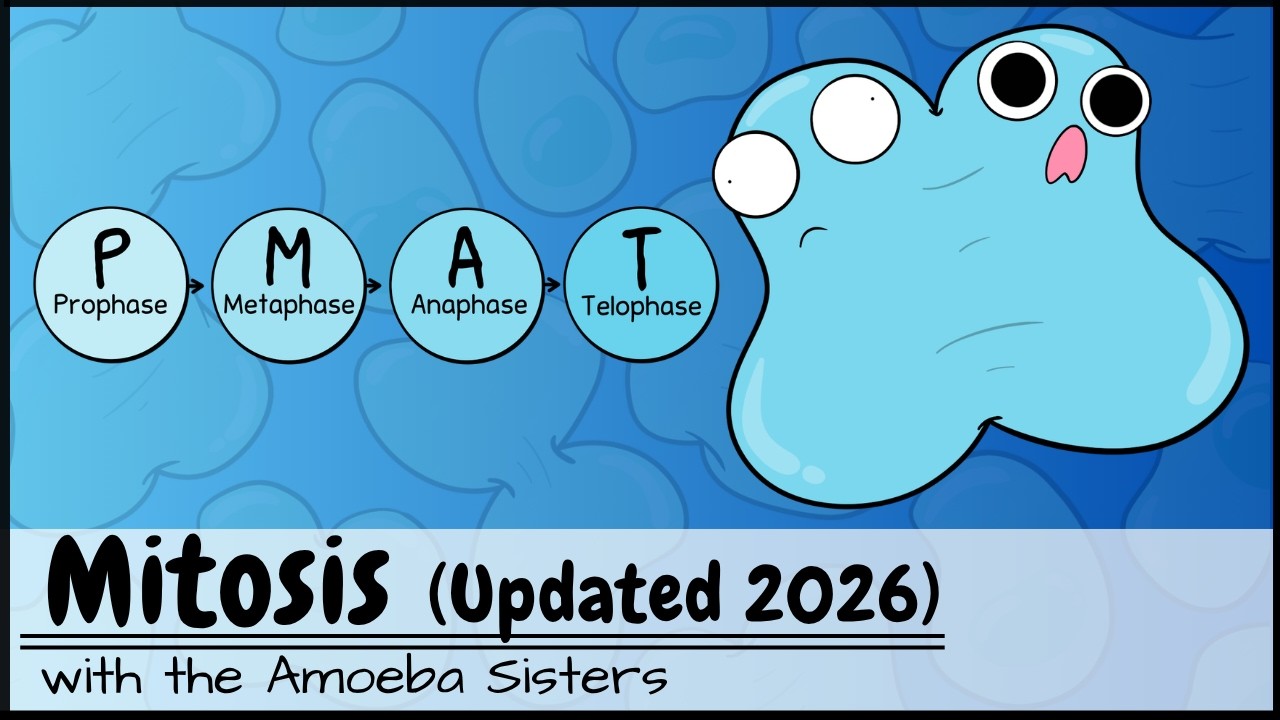
- Mitosis proceeds through four main stages, remembered by the acronym PMAT: Prophase, Metaphase, Anaphase, and Telophase.
- In Prophase, chromosomes condense and become visible, and the nucleus begins to break down.
- In Metaphase, chromosomes line up in the middle of the cell.
- In Anaphase, sister chromatids separate and move to opposite ends of the cell; once separated, each chromatid is considered a chromosome.
- In Telophase, new nuclei form around the separated chromosomes at each end of the cell, preparing for the final split.
Understanding the sequence of PMAT stages is key to visualizing how the replicated genetic material is systematically separated and distributed to form two new nuclei.
During anaphase, spindle fibers pull the sister chromatids apart, moving them 'away' to opposite poles of the cell.
- Cytokinesis is the division of the cytoplasm, which typically occurs concurrently with or immediately after mitosis, resulting in two distinct cells.
- Mitosis is specifically nuclear division; cytokinesis is cytoplasmic division; both are necessary for complete cell division.
- Mitosis occurs in most body cells (somatic cells) but not in gametes (sperm and egg cells), which are produced by meiosis.
- Errors in mitosis or uncontrolled cell division can lead to cancer.
- Diagrams often simplify chromosome numbers for clarity, showing fewer than the actual 46 chromosomes found in human cells.
Distinguishing mitosis from cytokinesis and understanding its role in somatic cells versus gametes clarifies its specific function in the body and its relation to other cell division processes like meiosis.
While mitosis divides the nucleus, cytokinesis physically splits the cell's cytoplasm to form two separate daughter cells.
Key takeaways
- Mitosis is a fundamental process for growth, repair, and asexual reproduction in eukaryotic organisms.
- Accurate DNA replication during interphase is critical for ensuring genetic consistency between parent and daughter cells.
- The four stages of mitosis (PMAT) describe a precise mechanism for segregating duplicated chromosomes.
- Mitosis results in two genetically identical diploid daughter cells from a single diploid parent cell.
- Cytokinesis is the separate but essential process of dividing the cell's cytoplasm after nuclear division.
- Uncontrolled mitosis is a hallmark of cancer, highlighting the importance of cell cycle regulation.
- Mitosis is distinct from meiosis, the process used to create haploid gametes.
Key terms
MitosisCytokinesisEukaryotic cellsNucleusDNAChromosomesSister chromatidsCentromereInterphaseProphaseMetaphaseAnaphaseTelophaseGametesMeiosisSomatic cells
Test your understanding
- What is the primary purpose of mitosis in multicellular organisms like humans?
- How does DNA replication during interphase ensure genetic continuity?
- Describe the key events that occur during each of the four stages of mitosis (PMAT).
- What is the difference between mitosis and cytokinesis, and why are both necessary for cell division?
- Why is it important that the daughter cells produced by mitosis are genetically identical to the parent cell?