3:02
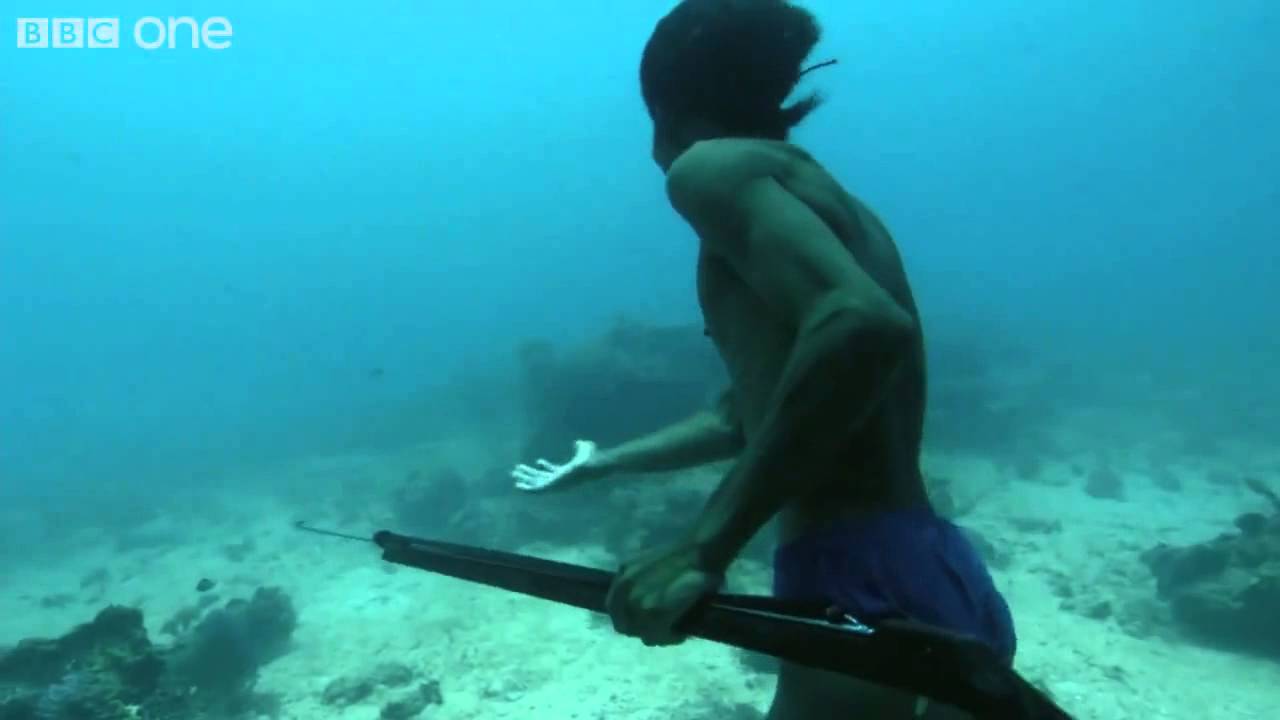
Superhuman Filipino diver from the Badjao tribe ;BBC
Panda Classic TV
Overview
This video showcases Sulbin, a Filipino diver from the Badjao tribe, demonstrating extraordinary breath-holding and diving capabilities. It highlights his ability to descend to depths of 20 meters, slow his heart rate significantly, and withstand immense pressure, all on a single breath. The narrative emphasizes the physiological adaptations and mental focus required for such feats, drawing a parallel to marine mammals and suggesting a deeper human connection to aquatic environments.
How was this?
Save this permanently with flashcards, quizzes, and AI chat
Chapters
- Sulbin prepares for an extreme breath-hold dive, requiring maximum lung capacity.
- He takes a final, focused breath before descending.
- The dive involves descending to a depth of 20 meters.
Understanding the preparation phase emphasizes the conscious effort and mental state required before pushing physical limits.
Sulbin taking one last breath before descending.
- During the dive, Sulbin's heart rate dramatically slows to about 30 beats per minute.
- The intense water pressure at depth compresses his chest and reduces lung volume significantly.
- He becomes negatively buoyant, allowing him to walk on the seabed without weights.
This chapter illustrates the body's remarkable physiological responses to extreme underwater conditions, showcasing survival mechanisms.
His heartbeat slowing to around 30 beats per minute and his chest being crushed by pressure, reducing lung volume to 1/3.
- The buildup of carbon dioxide in the blood creates a strong urge to breathe.
- Sulbin maintains mental focus to resist this urge and continue his hunt.
- He successfully spots and likely catches a fish after approximately 1 minute and 45 seconds underwater.
- Sulbin's capabilities extend to deeper dives and longer durations, up to 5 minutes, but he dives pragmatically.
This section highlights the crucial interplay between physical endurance and mental discipline needed to achieve extended breath-hold dives for survival.
Sulbin spotting a fish after 1 minute and 45 seconds, despite the urge to gasp for air.
- Sulbin's dive lasted 2.5 minutes, showcasing significant breath-hold capability.
- His abilities suggest a potential for humans to possess traits similar to marine mammals.
- The video implies a deep, perhaps ancestral, connection between humans and the marine environment.
This concluding thought prompts reflection on human potential and our relationship with the natural world, particularly aquatic ecosystems.
The suggestion that humans might not be so different from marine mammals due to such diving feats.
Key takeaways
- The Badjao people possess exceptional diving skills honed through cultural practice and physiological adaptation.
- Extreme breath-hold diving involves significant physiological changes, including heart rate reduction and lung compression.
- Mental focus and discipline are critical for overcoming the body's natural urge to breathe during prolonged dives.
- Human capabilities can extend remarkably far, sometimes drawing parallels with adaptations seen in marine mammals.
- Sulbin's dives demonstrate a practical application of these abilities for sustenance, not just for display.
- Understanding these adaptations can reshape our perception of human potential and our connection to aquatic environments.
Key terms
Breath-hold divingPhysiological adaptationHeart rate bradycardiaNegative buoyancyCarbon dioxide buildupMarine mammalsBadjao tribeDepth pressure
Test your understanding
- What physiological changes occur in Sulbin's body during his deep dive?
- How does the pressure at 20 meters affect a diver's body, according to the video?
- Why is mental focus crucial for Sulbin during his hunt underwater?
- What comparison is made between human divers like Sulbin and marine mammals, and why?
- Describe the role of carbon dioxide in creating the urge to breathe during a breath-hold dive.