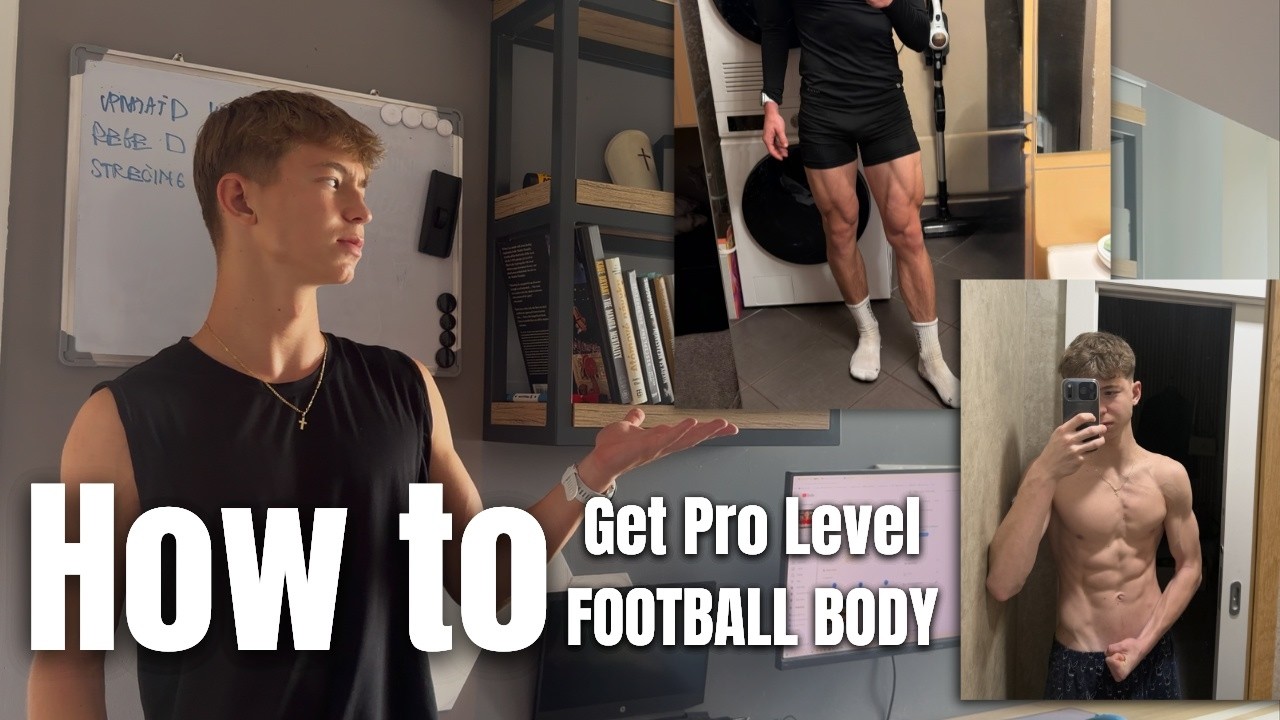
Being RIPPED change the Way i play Football
AnderFL
Overview
This video explains how to transform your physique and football performance by focusing on three key areas: training, nutrition, and habit modification. The speaker, who has personally experienced these benefits, emphasizes that achieving an athletic, "ripped" body isn't about secret programs but consistent application of fundamental principles. The advice is tailored for footballers, highlighting how strength training builds muscle, football practice burns fat, and proper nutrition fuels performance. It stresses the importance of setting clear goals (fat loss or muscle gain) and making sustainable changes to diet and daily habits to achieve long-term results and a competitive edge on the field.
Save this permanently with flashcards, quizzes, and AI chat
Chapters
- Being physically "ripped" (lean and muscular) enhances football performance by increasing strength in duels, making players harder to dispossess.
- Improved explosiveness and first-step quickness lead to better offensive opportunities and defensive recovery.
- Increased energy levels allow players to maintain performance in the crucial final minutes of a match.
- Enhanced confidence from looking and feeling good translates to more assertive play and better decision-making on the field.
- Quality strength training is essential for building muscle; without it, perfect diet and sleep won't create an athletic body.
- Football itself is an excellent calorie-burning activity, providing the necessary cardiovascular fitness through sprinting and dynamic movements.
- Combining 2-3 weekly strength sessions (focusing on basics like squats, plyos, and core) with regular football practice builds a lean, strong, and fast athletic physique, not just a bulky bodybuilding one.
- This integrated approach creates a body that is both powerful in physical contests and agile on the pitch.
- Nutrition is critical; you cannot 'out-train' a bad diet.
- The most important first step is defining your primary goal: either fat loss (to reveal existing muscle) or muscle gain (for increased strength and size).
- These two goals require opposite caloric approaches: a slight deficit for fat loss and a slight surplus for muscle gain; they cannot be achieved simultaneously.
- Once a goal is set and committed to for 10-15 weeks, focus on eating sufficient protein with every meal and consuming carbohydrates around training sessions for energy.
- Daily, seemingly small bad habits can sabotage significant training and dietary efforts.
- High-calorie drinks (sodas, energy drinks) are detrimental as the body often doesn't register them as food, hindering fat loss.
- Excessive sugar intake leads to energy spikes and crashes, disrupting the stable energy needed for a full 90-minute match.
- Frequent consumption of fast food, even if balanced by training, undermines progress by consistently adding excess calories and unhealthy fats.
- Adopt a mindset where food is viewed as fuel for your body, which is your most valuable machine.
- Every physical action on the pitch is powered by the quality of fuel (food) you consume.
- Avoid filling your 'Ferrari' (your body) with 'cheap gas' (unhealthy food), as this damages the engine and hinders performance.
- The key is awareness: consciously ask if a food choice is beneficial fuel or detrimental junk before eating.
- The three core steps are: proper training (strength + football), setting a clear nutrition goal, and eliminating bad habits.
- These principles are not complicated but require consistency, which is the differentiator between average players and champions.
- Making small, consistent changes over months and years yields far greater results than sporadic, intense efforts.
- Focus on building one new positive habit at a time, making it feel normal before moving to the next.
Key takeaways
- An athletic physique directly enhances football performance by improving strength, speed, and energy levels.
- Building an athletic football body requires a dual approach: strength training for muscle and football practice for fat burning and conditioning.
- You must choose a primary nutrition goal (fat loss or muscle gain) and stick to it for a significant period to see results.
- Eliminating high-calorie drinks, excessive sugar, and frequent fast food is crucial for progress, often more impactful than intense training.
- View your body as a high-performance machine and your food choices as the fuel that powers it.
- Sustainable progress comes from consistent, small habit changes rather than short bursts of intense effort.
- Consistency over time is the most significant factor separating players who achieve their physical potential from those who don't.
Key terms
Test your understanding
- How does developing a 'ripped' physique specifically improve a footballer's performance on the field?
- Explain the complementary roles of strength training and football practice in building an athletic body.
- Why is it crucial for a footballer to set a single, clear nutrition goal (fat loss or muscle gain) and commit to it?
- What are the three main 'silent killer' habits that can undermine a footballer's physical progress, and why are they so detrimental?
- How can adopting the 'food as fuel' mindset help a footballer make better dietary choices?