Inside My Chinese Startup
Jack Bloomfield
Overview
This video chronicles the initial stages of establishing a direct-to-consumer building supplies business, Bloom Build, operating from China and targeting Australian and American markets. The founder navigates the complexities of Chinese manufacturing, focusing on building relationships with suppliers to offer cost-price tiles by cutting out middlemen. Key challenges include overcoming the 'neijuan' (involution or race to the bottom) mentality among suppliers, negotiating minimum order quantities, and establishing efficient logistics and quality control. The narrative highlights the importance of personal connections, understanding local business practices, and the strategic hiring of a local team to ensure the business's success.
Save this permanently with flashcards, quizzes, and AI chat
Chapters
- The business aims to provide Australians and Americans with building supplies, starting with tiles, at cost price by sourcing directly from Chinese manufacturers.
- The traditional supply chain involves multiple intermediaries (sourcing agents, brands, stores), significantly inflating prices for the end consumer.
- Bloom Build's model proposes buying directly from suppliers, consolidating stock in China, and shipping directly to customers, thereby eliminating these middlemen.
- This allows suppliers to achieve better margins and customers to receive lower prices, creating a win-win scenario.
- The founder travels to Guangzhou and Foshan, China's manufacturing hubs, to meet suppliers in person.
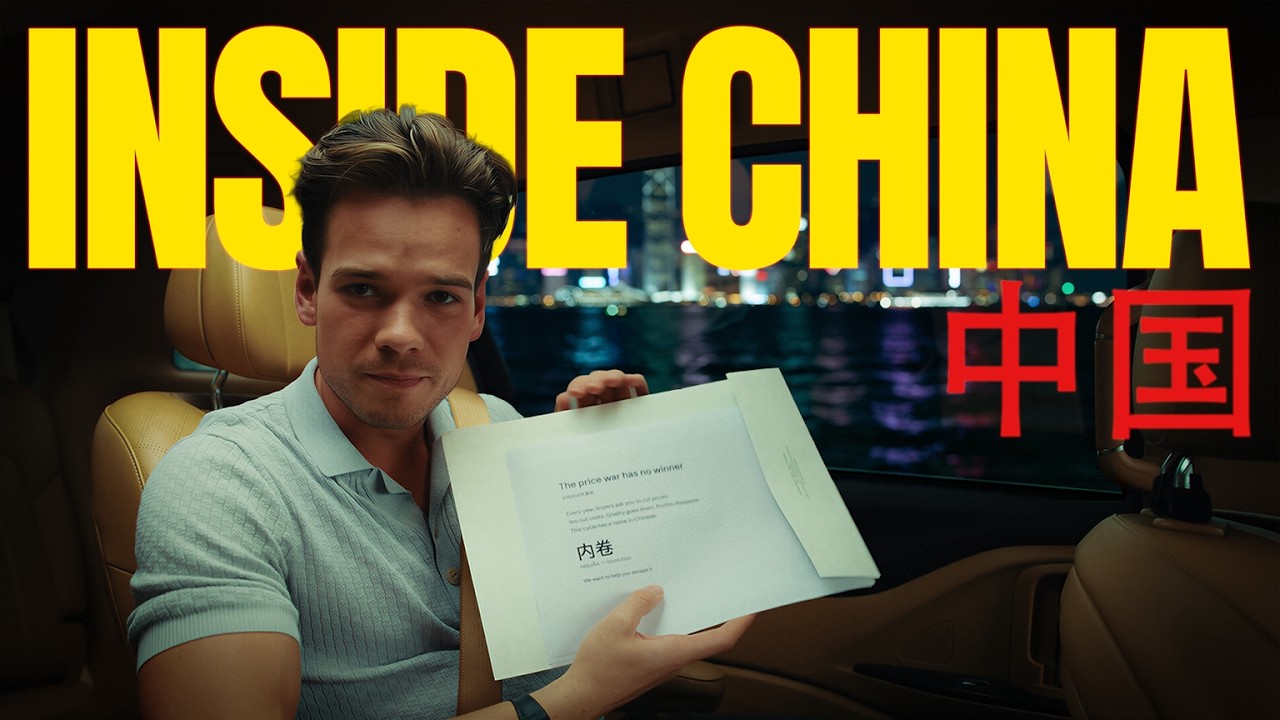
- A key concept discussed is 'neijuan,' meaning involution or a 'race to the bottom,' where suppliers are pressured to accept increasingly smaller margins.
- To counter 'neijuan,' Bloom Build presents a clear, translated pitch explaining its direct-to-consumer model.
- The goal is to convince suppliers to reduce or eliminate Minimum Order Quantities (MOQs) to allow Bloom Build to purchase existing stock.
- A primary negotiation point is convincing suppliers to lower their high MOQs (e.g., 200-1000 sq meters) to zero for Bloom Build.
- Suppliers are hesitant to sell smaller quantities from existing stock, often demanding a 20% price increase for non-container orders.
- Bloom Build argues that this higher price is acceptable initially, with the potential to negotiate lower prices as the business relationship grows and proves successful.
- The first supplier met, a factory owner, agrees to the model, offering access to their stock and a willingness to adjust MOQs, marking a significant early win.
- The video reveals inefficiencies in some Chinese factories, such as a lack of digital stock lists, with inventory information held only in people's memory.
- This highlights an opportunity for Western businesses to introduce innovation and better processes.
- Business dealings in China often depend heavily on personal connections and the level of introduction, emphasizing the importance of knowing the right people, especially decision-makers like factory owners.
- Interactions with sales staff who lack the authority to make significant decisions underscore the need to reach higher levels within supplier organizations.
- The team visits one of the largest tile suppliers in Foshan, a company with a massive office building and high MOQs (tens of thousands of square meters).
- This supplier is a harder sell due to their scale and existing relationships with Australian distributors.
- The founder contrasts selling to retail customers versus developers, noting that retail offers quicker sales cycles and direct customer feedback.
- Developers have longer sales cycles, require more competitive pricing, and can be difficult to manage due to potential changes in client preferences post-sale.
- The business is actively recruiting its first employee in China, a Shipping and Logistics QC Manager.
- This role is critical for on-the-ground quality control, supplier vetting, and managing the China operations.
- The ideal candidate is seen less as an employee and more as a partner who can take ownership and potentially grow a team.
- The recruitment process is expected to take 2-3 weeks, with the website launch targeted for a similar timeframe, highlighting the pressure to get operations and personnel in place quickly.
Key takeaways
- Direct-to-consumer models can significantly reduce costs by eliminating traditional supply chain intermediaries.
- Building strong, personal relationships with suppliers is paramount, especially in cultures where personal connections drive business decisions.
- Understanding and adapting to local market dynamics, such as 'neijuan' in China, is essential for business success.
- Negotiating flexible Minimum Order Quantities (MOQs) is a key strategy for businesses sourcing from manufacturers with high production volumes.
- Operational inefficiencies in supplier bases present opportunities for innovation and competitive advantage.
- The first hire in a startup is often the most critical, acting as a partner rather than just an employee.
- A phased approach, starting with a specific product category like tiles, allows for focused execution before expanding to broader offerings.
- Persistence and a willingness to adapt are crucial for overcoming the inherent challenges of building a new business in a foreign market.
Key terms
Test your understanding
- How does Bloom Build's direct-to-consumer model aim to reduce costs for customers compared to traditional retail?
- What is 'neijuan,' and how does it impact Chinese suppliers, and how does Bloom Build attempt to mitigate its effects?
- Why is negotiating lower Minimum Order Quantities (MOQs) a critical objective for Bloom Build when dealing with Chinese tile manufacturers?
- What are the key differences and challenges in selling building supplies to retail customers versus developers, according to the video?
- Why is the founder emphasizing the importance of hiring a 'partner' rather than just an 'employee' for the first on-the-ground role in China?