16:28
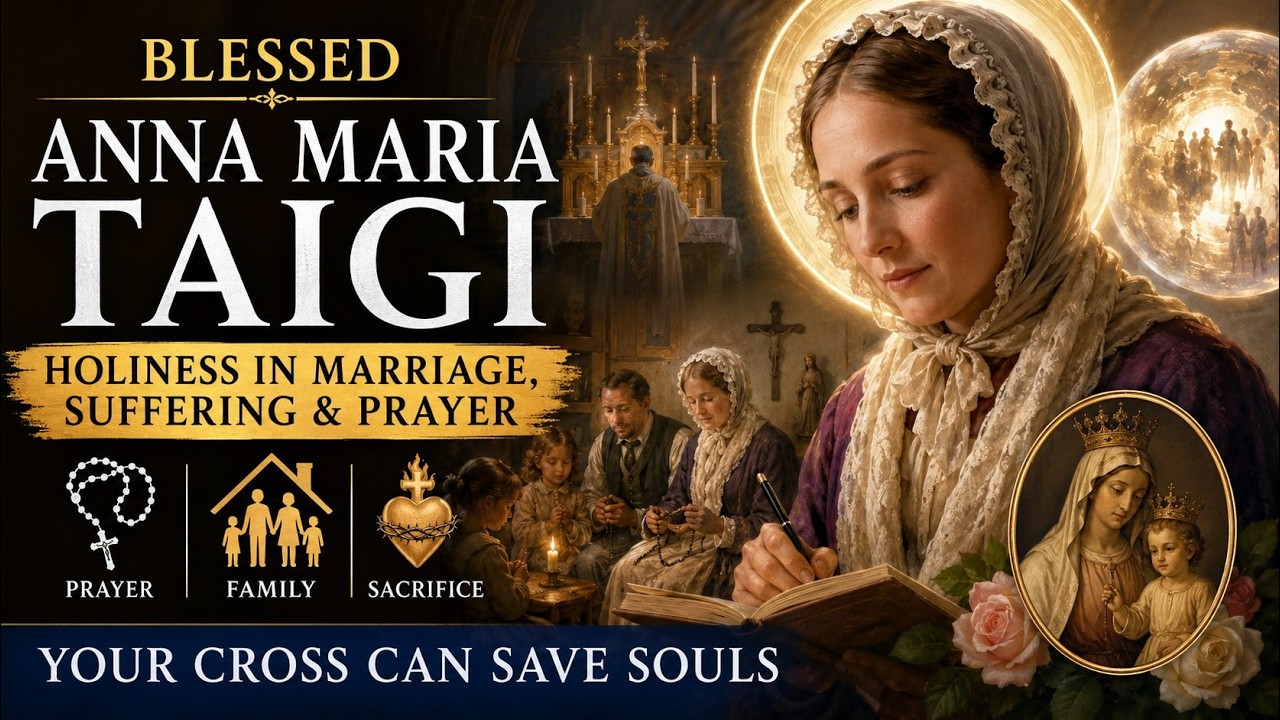
Blessed Anna Maria Taigi: Holiness in Marriage, Suffering & Prayer
Sensus Fidelium
Overview
This video explores the life of Blessed Anna Maria Taigi, a 19th-century mystic, wife, and mother, highlighting her journey of holiness within ordinary life. It emphasizes the importance of remaining united with Christ, the power of intercessory prayer, and how to find God's will even amidst suffering and difficult circumstances. Through Taigi's example, the video illustrates that holiness is achievable in any state of life by embracing God's will, conquering personal passions, and offering one's trials for the salvation of others.
How was this?
Save this permanently with flashcards, quizzes, and AI chat
Chapters
- Our baptism incorporates us into Christ, making us partakers of the divine nature, and the Father sees us as His Son.
- Remaining in Christ means keeping His commandments and allowing Him to dwell within us.
- Asking in Jesus' name means aligning our requests with His salvific will, not just a verbal formula.
- Prayer, especially intercessory prayer for others, is a participation in Christ's mediation and can change the world.
Understanding our deep union with Christ and the efficacy of prayer empowers us to live a more meaningful spiritual life and actively participate in God's plan for salvation.
The speaker explains that asking in Jesus' name is not a magical phrase but a deep union with Christ, where our requests align with His salvific will, which is the salvation of all.
- Blessed Anna Maria Taigi was a wife, mother, and mystic who lived a life of extraordinary holiness within ordinary circumstances.
- Despite facing poverty, a difficult husband, and the loss of children, she deepened her commitment to God through spiritual direction.
- Her life exemplified charity, particularly towards the poor and needy, while never neglecting her family responsibilities.
- She maintained a vibrant prayer life, including daily Mass, praying the Rosary with her family, and committing to a plan of life through a third order.
Taigi's life demonstrates that profound holiness is attainable not in isolation, but within the demanding realities of family life and societal challenges.
Her husband testified that despite his temper, Anna Maria's tact, patience, and gentle silence maintained a heavenly peace in their home, helping him mend his faults.
- Taigi's marriage to Domenico was challenging due to his hot temper, yet she responded with patience and prayer, seeing it as her God-given role.
- She managed a crowded household with her husband, daughter-in-law, and widowed daughter's six children, maintaining peace among strong personalities.
- Her approach to her husband's faults was to pray and offer an example, viewing marital differences as an opportunity to form a team.
- The most important lesson for children is the constant witness to virtue, especially in difficult family dynamics.
This chapter offers practical wisdom for managing difficult relationships and family tensions through faith, patience, and a focus on God's will.
When her widowed daughter returned with six children, Anna Maria found herself keeping peace among multiple strong personalities, grandchildren, and her difficult husband under one roof.
- Taigi experienced mystical graces, including a luminous globe of light, which allowed her to see the state of souls worldwide and whom to pray for.
- She used this knowledge not for vain curiosity or worry, but to direct her prayers and sacrifices towards the conversion of sinners and averting catastrophes.
- Her response to world crises, like those seen through modern media, was prayer and offering her crosses for specific intentions.
- Many conversions were attributed to her intercession, and she was chosen by God as a victim of expiation to avert great calamities.
Taigi's mystical experiences highlight how spiritual insight should be channeled into active prayer and sacrifice for the good of others and the world.
Instead of getting angry or worried about the world's problems, which she saw through her luminous globe, Anna Maria prayed for the conversion of sinners, the Holy Father, and all the world.
- Holiness is found in doing God's will and submitting one's own will to His, especially within one's given state of life.
- Serving God does not require extraordinary external penances but a vigorous fight against one's passions.
- Renouncing one's own will and submitting to God's is more meritorious than great bodily mortifications.
- Taigi exemplified the grace of matrimony, representing the Church and the New Eve, faithful at the foot of the cross.
This chapter distills the core of spiritual life: aligning our will with God's, which is the most direct path to holiness regardless of external circumstances.
Our Lord told Anna Maria that amidst crosses, she would have many bad days, but her vocation was to do His will and submit her own, emphasizing that serving God is about conforming to His will in all things.
Key takeaways
- Holiness is achievable within the ordinary circumstances of marriage, family, and work through faith and perseverance.
- Intercessory prayer for others is a powerful participation in Christ's mediation and can significantly impact the world.
- Responding to suffering and difficult relationships with patience, prayer, and submission to God's will is a path to spiritual growth.
- Spiritual insight and awareness of world events should be transformed into prayer and sacrifice for the conversion of sinners.
- The core of Christian life is the constant effort to align one's will with God's will, which is more meritorious than external penances.
- Embracing one's state in life, particularly marriage, with fidelity and virtue provides a unique path to serving God and sanctifying others.
Key terms
Baptismal identityIncorporation into ChristIntercessory prayerMediatorMysticSpiritual directionCharityPlan of lifeExpiationGod's will
Test your understanding
- How does baptismal identity change our relationship with God the Father and Jesus?
- What is the difference between asking in Jesus' name and simply reciting a prayer formula?
- How did Blessed Anna Maria Taigi manage difficult family dynamics and her husband's temper?
- What is the proper spiritual response to becoming aware of global crises or suffering?
- Why is submitting one's will to God's will considered more meritorious than performing great acts of penance?