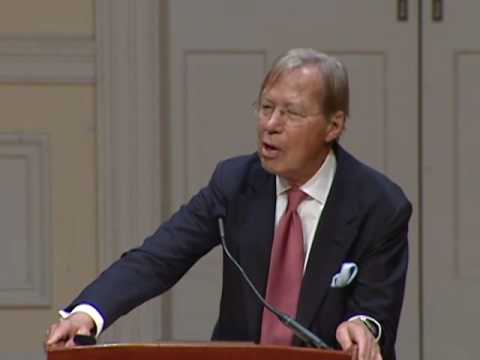
Is There Truth in Interpretation? Law, Literature and History
Library of Congress
Overview
This lecture, the inaugural Fred R. and Molly S. Kellogg lecture in jurisprudence, explores the nature of truth in interpretation across various fields, including law, literature, and history. Professor Ronald Dworkin challenges the pervasive skepticism that suggests interpretation is purely subjective, arguing instead for a "responsibility theory." This theory posits that interpretation is a collective, ongoing activity within a tradition, where interpreters have a responsibility to best understand and uphold the values embedded in that tradition. Dworkin distinguishes between collaborative interpretation (like law and literature) and explanatory interpretation (like history), emphasizing that disagreements arise not from a lack of truth, but from deeply held, often subconscious, beliefs about what constitutes excellence or value within a given practice. The lecture encourages a more nuanced understanding of interpretive disagreements, moving beyond the simplistic dichotomy of objective truth versus subjective opinion.
Save this permanently with flashcards, quizzes, and AI chat
Chapters
- Welcome to the inaugural Fred R. and Molly S. Kellogg lecture in jurisprudence at the Library of Congress.
- Appreciation for the Kellogg family's generosity in establishing this biennial event.
- Acknowledgement of dignitaries and the importance of the lecture.
- Announcement of a reception following the lecture.
- Lectures are contemporary, in-the-moment events, unlike books.
- Jurisprudence is a topic that engages philosophy, reason, civilization, and harmony.
- Introduction of Professor Ronald Dworkin as the inaugural speaker.
- Mention of Dworkin's clerkship for Judge Learned Hand and his impact on jurisprudence.
- Disagreements in interpretation exist at all levels, from grand constitutional questions to specific legal precedents.
- Lawyers and judges often feel their interpretations are judgments of truth, yet disagreements seem intractable.
- The existence of interpretive 'tribes' (e.g., originalists, moral readers) highlights the difficulty of convincing others.
- Skepticism about truth in interpretation is appealing due to pervasive and endless disagreements.
- Interpretation is not limited to law but is a pervasive feature of human reason.
- Examples include interpreting language, cultures, history, art, and sacred texts.
- In all genres, there's a tension between the feeling of objective pursuit of truth and the reality of intractable disagreement.
- The skeptical view (no right answer) is incoherent because the skeptic's own claim requires truth.
- A distinction is made between uncertainty (lack of persuasion) and skepticism (a positive claim of no truth).
- Skepticism is an independent interpretation that claims truth for itself.
- A popular answer to 'what makes an interpretation true' is the psychological state of the author/creator (intention).
- This theory is compelling in conversation but ridiculous in genres like history or law.
- In law, understanding a congressman's intention is irrelevant to statutory interpretation.
- In art, the author's intention is not the sole determinant of meaning; interpreters can find things the author didn't intend.
- Interpretation is a collective activity, joining a tradition and interpreting that tradition.
- Interpreters assume the practice has a point and embodies a value, creating an interpretive responsibility.
- Disagreements stem from differing high-level conceptions of the practice's purpose (e.g., democracy, justice).
- The true interpretation is the one that best acquits the interpreter's responsibility given the best interpretation of the practice joined.
- Collaborative interpretation: Interpreter partners with the creator (e.g., musician, judge, literary critic).
- Explanatory interpretation: Historian explains the meaning of events for a contemporary audience.
- Conceptual interpretation: Philosophy interprets shared concepts.
- Disagreements among literary critics often trace back to differing views on where literature's value lies.
- The question of 'what makes a poem good' is intertwined with 'what does this poem mean'.
- Examples: Brooks vs. Foster on Yeats's 'Among School Children' highlights differing theories of literary value (internal form vs. biographical context).
- Historians also disagree based on their sense of what is important or valuable in the past for the present.
- Macaulay's view of history as development contrasts with Butterfield's critique.
- Different historical approaches (e.g., Marxist, climate-focused) reflect differing views on what constitutes significant historical meaning.
- Law belongs to collaborative interpretation; judges interpret laws as partners with creators.
- Judges are not making up law but trying to find it, and their disagreements stem from complex underlying values.
- The responsibility theory explains disagreements without resorting to incoherent skepticism.
- Law is closer to poetry than physics, requiring nuanced interpretation rather than algorithmic certainty.
Key takeaways
- Interpretation is a fundamental aspect of human reason, present in law, literature, history, and everyday life.
- Interpretive skepticism, the idea that there is no objective truth in interpretation, is ultimately self-contradictory.
- The 'psychological state' or author's intention theory of interpretation is insufficient and inappropriate for many genres, including law.
- The 'responsibility theory' suggests that true interpretation best acquits the interpreter's responsibility within a given tradition or practice.
- Disagreements in interpretation arise from deeply held, often subconscious, beliefs about the value and purpose of the practice being interpreted.
- We must distinguish between uncertainty (a lack of persuasion) and skepticism (a positive claim of no truth).
- Understanding interpretive disagreements requires examining the underlying theories of value and excellence within each genre.
- Law, like literature, is a collaborative interpretive practice where judges strive to find the law, not invent it, based on complex underlying principles.