Canadian Economic Policy Chapter 1 2027
Professor Anthony Noce - Concordia University
Overview
This video introduces the fundamental concepts of Canadian economic policy, focusing on the role of policymakers and the incentives that drive economic behavior. It begins by illustrating how incentives can influence individual choices, using the example of obesity rates in the US and their economic impact. The video then defines economics as the study of human behavior and the allocation of scarce resources, emphasizing the importance of incentives in shaping decisions. It explores the motivations of policymakers, distinguishing between office-motivated and ideologically motivated individuals, and analyzes the complexities of policy-making through the lens of Prime Minister Mark Carney's approach to US trade negotiations. Finally, the video delves into the economic concepts of public goods, scarcity, and opportunity cost, explaining how these principles underpin economic policy decisions and resource allocation.
Save this permanently with flashcards, quizzes, and AI chat
Chapters
- Economic policy involves understanding how policymakers interact with the public and what drives their decisions.
- Incentives, such as health insurance coverage, can significantly alter human behavior, sometimes with unintended consequences like increased health risks.
- Economists analyze correlations between factors like insurance and health outcomes to understand the impact of incentives.
- The core of economics involves not only allocating scarce resources but also understanding and influencing human behavior through incentives.
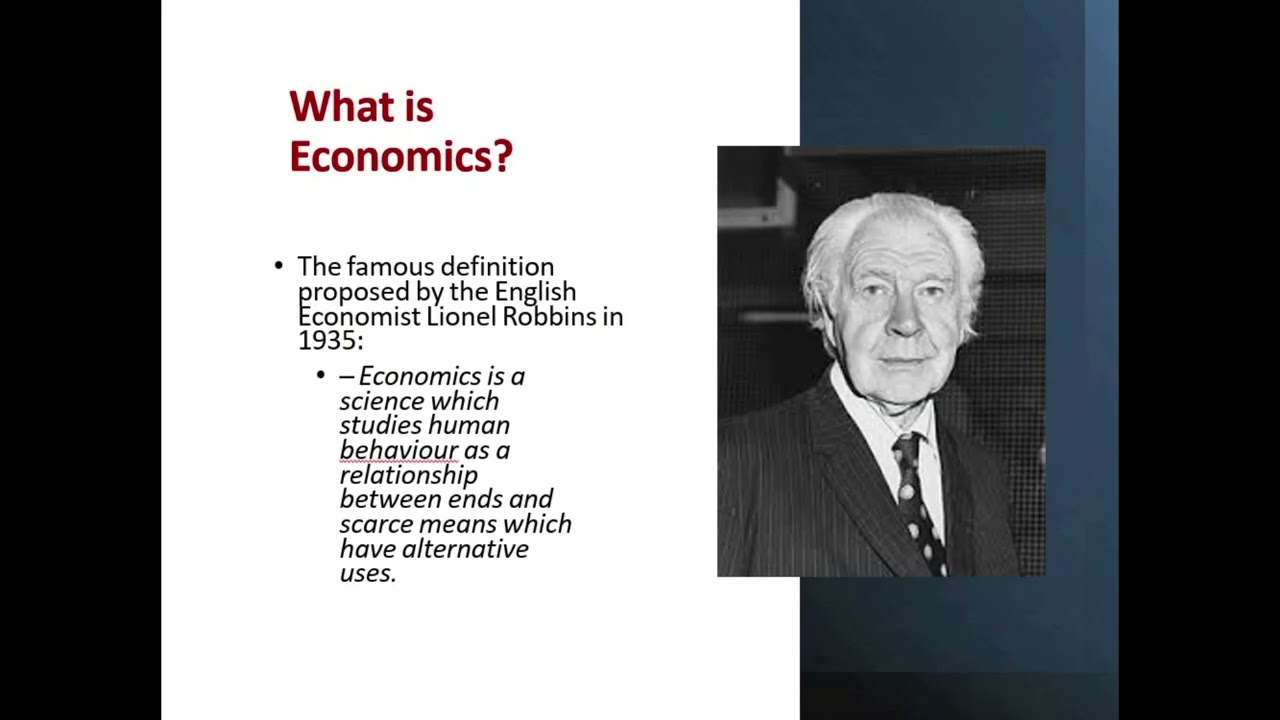
- Economics studies human behavior, particularly the interactions between different agents (individuals, firms, governments) within an environment.
- A key aspect of economics is the efficient allocation of scarce resources, which are limited (e.g., human, natural, technological, time).
- Economic policy is a deliberate system of principles designed to guide decisions and maximize desired outcomes.
- Policies can be expressed through norms, statutes, regulations, or codes of conduct, and aim to achieve specific purposes.
- Policymakers are driven by two primary motivations: remaining in political office (office-motivated) or pursuing specific ideological agendas (ideologically motivated).
- Office-motivated politicians prioritize winning elections, while ideologically motivated politicians use elections as a means to implement their policy visions.
- The concept of a 'political business cycle' suggests that office-motivated policymakers might manipulate economic conditions (e.g., unemployment via the Phillips curve) to boost popularity before elections.
- This manipulation involves stimulating the economy before an election and then implementing contractionary policies afterward, relying on voters not fully understanding the cycle.
- Prime Minister Mark Carney's policy approach appears pragmatic rather than strictly ideological, demonstrating flexibility in response to changing circumstances.
- His decision to abandon the federal consumer carbon tax, despite previous support, exemplifies this flexibility, possibly as a political calculation.
- Carney's approach to US trade negotiations combines pragmatism (negotiating hard but having walk-away points), sovereignty (prioritizing policy independence), and diversification (seeking new markets).
- This strategy involves significant economic risk due to potential short-term costs of diversification, suggesting a move beyond simple office-seeking towards strategic realism.
- Goods can be categorized based on rivalry (whether one person's consumption prevents another's) and excludability (whether non-payers can be prevented from consuming).
- Private goods are rival and excludable (e.g., food, clothing).
- Common resources are rival but non-excludable (e.g., forest land, leading to overuse).
- Public goods are non-rival and non-excludable (e.g., national defense, knowledge), often requiring government intervention due to the 'free-rider' problem.
- Scarcity arises when demand for a resource exceeds its supply at a zero price, forcing societies to make trade-offs.
- Key economic questions revolve around what to produce, how to produce it, and for whom to produce, given limited resources.
- Efficiency in production means achieving desired results with the minimum amount of resources.
- Opportunity cost is the value of the next best alternative foregone when a choice is made.
- Incentives are inducements that encourage or discourage specific actions, distinct from motivations.
- Economic policy primarily focuses on remunerative (monetary rewards/punishments) and coercive (threats/punishments) incentives.
- Incentives can sometimes backfire or have unintended consequences, especially when they alter ethical considerations or intrinsic motivations.
- Effective incentive design requires careful consideration of potential behavioral responses and their impact on desired outcomes.
Key takeaways
- Economic policy is fundamentally about understanding and influencing human behavior through incentives.
- Policymakers' decisions are shaped by their motivations, whether to maintain power or to implement specific ideologies.
- The distinction between private and public goods is crucial for understanding market failures and the need for government intervention.
- Scarcity is the core economic problem, forcing societies to make choices and incur opportunity costs.
- Incentives can be powerful tools for altering behavior, but their design must account for potential unintended consequences and backfiring effects.
- Pragmatism and strategic realism, rather than pure ideology or office-seeking, can guide complex policy decisions, especially in international relations.
- The concept of a political business cycle highlights how electoral pressures can lead policymakers to manipulate economic conditions for short-term gain.
Key terms
Test your understanding
- How do incentives, such as insurance, influence individual behavior and what are the potential economic consequences?
- What are the two main themes of economics, and how do they relate to the study of economic policy?
- Explain the difference between office-motivated and ideologically motivated policymakers and how this distinction can lead to a political business cycle.
- What are the characteristics of public goods, and why do they often require government intervention?
- How does scarcity lead to trade-offs, and what is the economic significance of opportunity cost?
- Describe two types of incentives and provide an example of how an incentive might backfire.