7:05
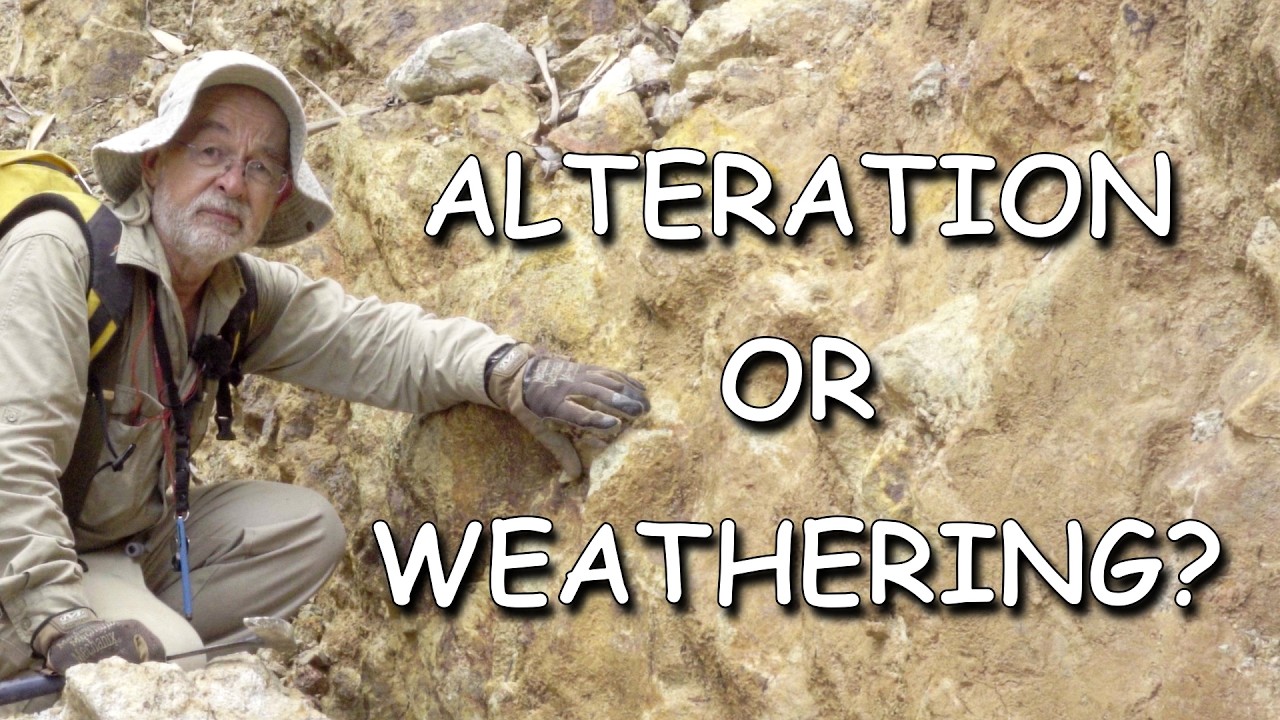
Clay Alteration or Weathering?
GeologyUpSkill
Overview
This video explains how to differentiate between hydrothermal clay alteration and weathering-induced clay in epithermal environments. It highlights practical field techniques, focusing on mineral indicators like pyrite and mafic silicates (biotite, hornblende) to determine the origin of clay formation. Understanding this distinction is crucial for geological mapping and resource exploration, as hydrothermal alteration is often associated with valuable mineral deposits.
How was this?
Save this permanently with flashcards, quizzes, and AI chat
Chapters
- Distinguishing between clays formed by deep-earth hydrothermal processes and those formed by surface weathering is a common challenge in geological mapping, especially in epithermal environments.
- Traditional lab techniques like XRD are accurate but slow, necessitating quicker field-based methods.
- The goal is to identify the origin of clay minerals to understand the geological history and potential for mineralization.
Accurately identifying the origin of clay alteration is critical for understanding the geological processes that formed a rock and for exploring for mineral deposits, as hydrothermal alteration is often a key indicator.
The speaker is at Kainantu in PNG, a nominal epithermal environment with significant clay in the hydrothermal system, illustrating the need for field differentiation.
- The presence of fresh pyrite in clay-rich rocks strongly suggests hydrothermal alteration because pyrite is typically unstable and weathers away.
- If fresh pyrite is observed alongside clay in what appears to be fresh rock, the clay is likely hydrothermal, and the pyrite is probably also a hydrothermal product.
- Pyrite often forms by replacing iron-rich primary minerals like mafic silicates or magnetite in diorite intrusions.
Pyrite's susceptibility to weathering makes its fresh presence a powerful indicator that the surrounding clay alteration is likely of hydrothermal origin, not from surface weathering.
An outcrop near a mineralized structure shows diorite altered to a soft mixture of clay and abundant, fresh pyrite, suggesting hypogene clay alteration associated with nearby veins.
- In weathering environments, mafic silicates like hornblende and biotite are often the first minerals to alter.
- If feldspars are altered to clay but hornblende remains fresh and unaltered, the clay is likely a product of weathering, not hydrothermal alteration.
- This weathering process is often driven by acidic groundwater, which can leach minerals and convert feldspars to clay.
The alteration pattern of mafic silicates provides a key diagnostic clue: if they are fresh while feldspars are clayed, it points to weathering as the dominant process.
A piece of diorite shows fresh hornblende grains and some slightly altered biotite, but the feldspars are completely converted to soft clay (kaolinite), indicating the clay is from weathering, not hydrothermal activity.
- Biotite is relatively resistant to weathering but is susceptible to alteration by hydrothermal fluids, often converting to sericite (fine-grained white mica).
- If biotite has altered to white mica while feldspars have altered to clay, this combination strongly suggests hydrothermal clay alteration.
- The characteristic silky or reflective texture of fine white mica on weathered surfaces is a tell-tale sign of biotite alteration.
The alteration of biotite to white mica, especially when coupled with feldspar alteration to clay, is a strong indicator of hydrothermal processes, as this specific alteration sequence is uncommon in weathering.
An outcrop exhibits biotite grains altered to sericite (white mica) and feldspars altered to kaolinite. The presence of these altered minerals, along with the silky texture indicating mica, points to hydrothermal alteration.
- When trying to identify hydrothermal clay in epithermal environments, start by looking for fresh pyrite.
- If pyrite is absent, examine the mafic silicates, particularly biotite.
- If biotite has altered to white mica and feldspars are altered to clay, it is highly probable that the clay is hydrothermal.
- This systematic approach uses observable mineralogical changes to infer the origin of clay alteration.
Combining observations of pyrite and mafic silicate alteration provides a robust field method for distinguishing hydrothermal clays, which is essential for geological interpretation and exploration.
The speaker summarizes that if pyrite is absent, but biotite is altered to white mica while feldspars are clay, the clay is likely hydrothermal.
Key takeaways
- Fresh pyrite in clay-rich rocks is a strong indicator of hydrothermal alteration because pyrite weathers easily.
- If feldspars are altered to clay but mafic minerals like hornblende remain fresh, the clay likely formed from weathering.
- Biotite alteration to white mica, especially when feldspars are also altered to clay, is a key diagnostic feature of hydrothermal clay alteration.
- Surface weathering processes often begin by altering mafic silicates, whereas hydrothermal alteration can affect feldspars first.
- Understanding the difference between hydrothermal and weathering clays is crucial for geological mapping and identifying potential mineral deposits.
- Field observations of mineral stability and alteration patterns can provide rapid and reliable insights into the origin of clay minerals.
Key terms
Epithermal environmentHydrothermal alterationWeatheringPyriteMafic silicatesBiotiteHornblendeFeldsparKaoliniteSericiteHypogene alteration
Test your understanding
- What is the primary challenge when mapping clay alteration in epithermal environments?
- How can the presence of fresh pyrite help distinguish between hydrothermal and weathering clays?
- What does the state of hornblende and biotite reveal about whether clay alteration is due to weathering or hydrothermal processes?
- Under what conditions can the alteration of feldspars to clay, combined with biotite alteration to white mica, strongly suggest hydrothermal activity?
- Why is it important for geologists to differentiate between hydrothermal and weathering-induced clays?