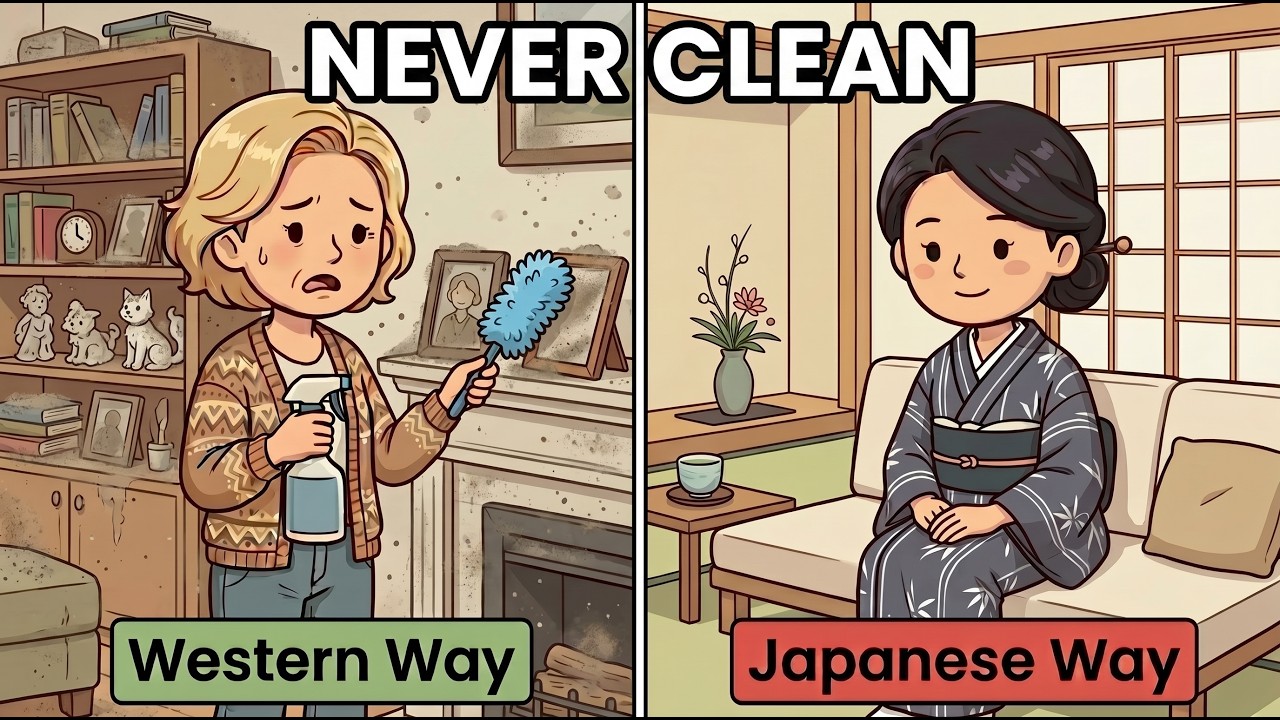
The Secret Japanese Habits to NEVER Clean
Japanese Mindset
Overview
This video explores Japanese habits and philosophies that lead to exceptionally clean homes with less actual cleaning time. It challenges the conventional approach of deep cleaning as an infrequent event, instead promoting small, consistent daily actions and a mindful relationship with possessions. Key concepts include creating an entryway shoe removal system (genkan), practicing continuous improvement through small tasks (kaizen), incorporating short daily cleaning routines (soji) and seasonal deep cleans (osuji), and decluttering intentionally (Dan Sherry). The underlying principle is that a clean home reflects inner peace and self-respect, shifting cleaning from a dreaded chore to a mindful practice.
Save this permanently with flashcards, quizzes, and AI chat
Chapters
- The genkan is a designated entryway in Japanese homes where shoes are removed before entering the main living space.
- This practice prevents the vast majority of dirt, germs, and outdoor contaminants from entering the home.
- Implementing a similar system in Western homes involves creating a visual cue and a convenient space for shoe removal.
- Establishing a 'genkan moment' with a shoe rack and seating can significantly reduce floor cleaning frequency and wear.
- Kaizen is a Japanese philosophy of continuous improvement through small, manageable steps.
- Instead of large, infrequent cleaning 'events,' this approach focuses on 'cleaning moments' throughout the day.
- The 'two-minute rule' suggests completing any cleaning task that takes two minutes or less immediately.
- This consistent, small-effort maintenance prevents dirt and grime from accumulating, thus avoiding major cleaning tasks later.
- Soji refers to a short, daily cleaning routine, often done in the morning, to reset the living space.
- This 10-15 minute routine includes tasks like airing out the home, making the bed, wiping kitchen surfaces, and a quick floor sweep.
- Osuji is a deeper, seasonal cleaning that addresses areas not covered by the daily routine.
- Scheduling osuji quarterly (e.g., once per season) prevents the anxiety and overwhelm associated with infrequent, massive cleaning efforts.
- Dan Sherry is a Japanese philosophy focused on decluttering by refusing, discarding, and separating from unnecessary items.
- The core idea is that owning fewer things directly translates to spending less time cleaning, organizing, and maintaining them.
- This philosophy encourages intentionality about what enters the home, not just removing existing clutter.
- Practices like the 'one-in-one-out' rule and identifying 'guilt items' help maintain a decluttered state.
- Japanese bathrooms often have separate toilet rooms and wet areas designed for rinsing.
- Key bathroom habits include daily squeegeeing of shower walls and drying fixtures to prevent soap scum and water spots.
- A quick daily swipe of the toilet bowl with a brush prevents significant buildup.
- The 'clean as you go' philosophy is paramount in Japanese kitchens, with cleaning integrated into the cooking process.
- Using silicone mats or foil on stovetop edges catches grease, simplifying cleanup.
- The most crucial element is shifting the mindset around cleaning from a dreaded chore to a practice of self-respect and environmental care.
- A clean home is seen as a reflection of one's inner state and a supportive sanctuary, not a task for external validation.
- Intentionally performing small cleaning actions, like wiping a counter or taking off shoes, reinforces the value placed on one's living space and well-being.
- This perspective change turns cleaning into an energizing act that enhances life rather than draining it.
Key takeaways
- Preventing dirt from entering your home via a dedicated shoe removal area (genkan) is more effective than cleaning it later.
- Small, consistent daily actions (Kaizen) are far more effective for long-term cleanliness than infrequent, large cleaning efforts.
- A short daily cleaning routine (soji) can reset your space and prevent clutter buildup.
- Decluttering intentionally (Dan Sherry) directly reduces the amount of time and effort needed for cleaning.
- Integrating cleaning tasks into daily activities ('clean as you go') minimizes the need for dedicated cleaning sessions.
- Mindfully performing cleaning tasks as acts of self-care transforms the perception of chores into beneficial practices.
- Focusing on prevention and small, consistent efforts leads to a cleaner home with significantly less overall work.
Key terms
Test your understanding
- How does the Japanese concept of 'genkan' fundamentally change the approach to home cleanliness compared to traditional Western methods?
- Explain the principle of 'Kaizen' and how the 'two-minute rule' applies to household cleaning.
- What is the difference between 'soji' and 'osuji,' and how do they work together to maintain a clean home?
- How does the philosophy of 'Dan Sherry' contribute to reducing the amount of cleaning required in a home?
- What is the significance of reframing cleaning as a practice of self-respect rather than a chore?