4:30
OVERVIEW OF THE BOOK OF LEVITICUS | God’s Holiness, Sacrifice & Atonement Explained.
Whispers of the Word
Overview
The Book of Leviticus serves as a guide for the Israelites on how to live in the presence of a holy God after their exodus from Egypt. It details instructions for worship, sacrifice, purity, and justice, emphasizing the importance of holiness in all aspects of life. The book establishes the Levitical priesthood, outlines various offerings for sin and reconciliation, and highlights the significance of the Day of Atonement. Ultimately, Leviticus calls God's people to live a transformed life, reflecting His holiness through obedience, compassion, and integrity, with its themes pointing towards the ultimate atonement found in Jesus Christ.
How was this?
Save this permanently with flashcards, quizzes, and AI chat
Chapters
- Leviticus is a priestly manual and holiness handbook for ancient Israel.
- Its central theme is how sinful people can live in the presence of a holy God.
- God, through Moses, provides instructions for worship, sacrifice, purity, and justice.
Understanding Leviticus is crucial because it reveals God's standards for His people and the means by which they can approach Him, setting the foundation for biblical concepts of worship and holiness.
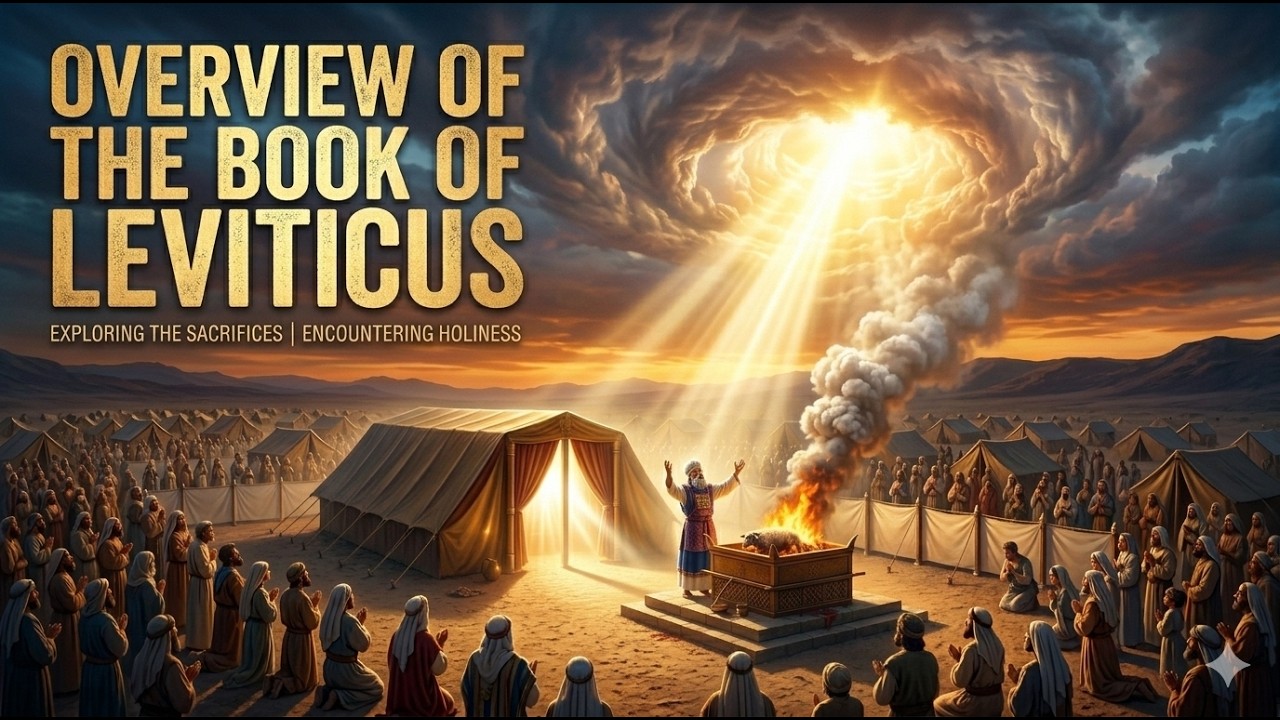
The Lord speaks from the Tabernacle, giving sacred instructions for worship and sacrifice.
- Various offerings like burnt, grain, and fellowship offerings symbolize devotion, gratitude, and reconciliation.
- Sin and guilt offerings underscore the consequences of wrongdoing and the availability of mercy through atonement.
- The Day of Atonement ritual, including the scapegoat, demonstrates forgiveness through sacrifice.
The detailed sacrificial system explains the gravity of sin and the necessity of atonement, foreshadowing a greater sacrifice for humanity's redemption.
The High Priest enters the Holy of Holies once a year with the blood of sacrifice, and a scapegoat is sent into the wilderness carrying the people's sins.
- Aaron and his sons are consecrated as priests to mediate between God and the people.
- Holiness is paramount, as demonstrated by the swift judgment on Nadab and Abihu for offering unauthorized fire.
- This event emphasizes the sacred and powerful nature of God's presence.
The establishment and discipline of the priesthood highlight the serious responsibility of mediating God's presence and the absolute need for obedience in approaching the divine.
Nadab and Abihu offer unauthorized fire before the Lord, resulting in divine judgment.
- Israel is taught to distinguish between clean and unclean, purity and defilement.
- God's commands shape daily life, including food, health, relationships, and worship.
- Holiness extends to ethical conduct, requiring justice, compassion, and integrity towards others.
Leviticus instructs believers on how to live distinctly in the world, reflecting God's character in their everyday actions and interactions.
Laws concerning clean and unclean foods and practices that honor or separate people from God.
- Sacred festivals like Passover and the Day of Atonement serve as reminders of God's faithfulness.
- The Sabbath year and the Year of Jubilee offer cycles of rest, freedom, and restoration.
- Obedience leads to blessing, while disobedience brings hardship, presenting a clear choice.
These appointed times and cycles reinforce God's covenant faithfulness and His plan for His people's well-being, offering a vision of ultimate redemption.
The Year of Jubilee, proclaimed every fifty years, signifies freedom and restoration.
- Leviticus's message of needing atonement, cleansing, and a perfect sacrifice remains relevant.
- The ancient sacrifices point forward to Jesus Christ, the ultimate sacrifice for sin.
- Holiness is presented not just as a rule, but as a divine calling and a path to God's presence.
Understanding Leviticus provides a framework for appreciating the significance of Jesus's sacrifice and the ongoing call to live a holy life as His followers.
The ancient sacrifices are seen as foreshadowing Jesus Christ, the perfect Lamb who takes away the sin of the world.
Key takeaways
- Leviticus explains how sinful humans can approach a holy God through prescribed rituals and sacrifices.
- The book emphasizes that holiness is a fundamental characteristic of God that His people are called to emulate.
- Sacrifice and atonement are central themes, highlighting the cost of sin and the availability of forgiveness.
- The Levitical priesthood served as mediators, demonstrating the need for intercession between God and humanity.
- Purity laws and ethical commands in Leviticus extend God's standards to all aspects of daily life.
- The rituals and festivals in Leviticus serve as reminders of God's faithfulness and His plan for His people.
- The ultimate fulfillment of Leviticus's sacrificial system is found in Jesus Christ's atoning sacrifice.
Key terms
LeviticusHolinessTabernaclePriestSacrificeOfferingAtonementDay of AtonementScapegoatClean and UncleanYear of Jubilee
Test your understanding
- What is the primary purpose of the Book of Leviticus?
- How did the sacrificial system in Leviticus address the problem of sin and human separation from God?
- Why was the priesthood established, and what does the judgment on Nadab and Abihu reveal about approaching God?
- In what ways did Leviticus instruct the Israelites to live as a holy nation beyond religious rituals?
- How does the Book of Leviticus connect to the New Testament and the person of Jesus Christ?