5:20
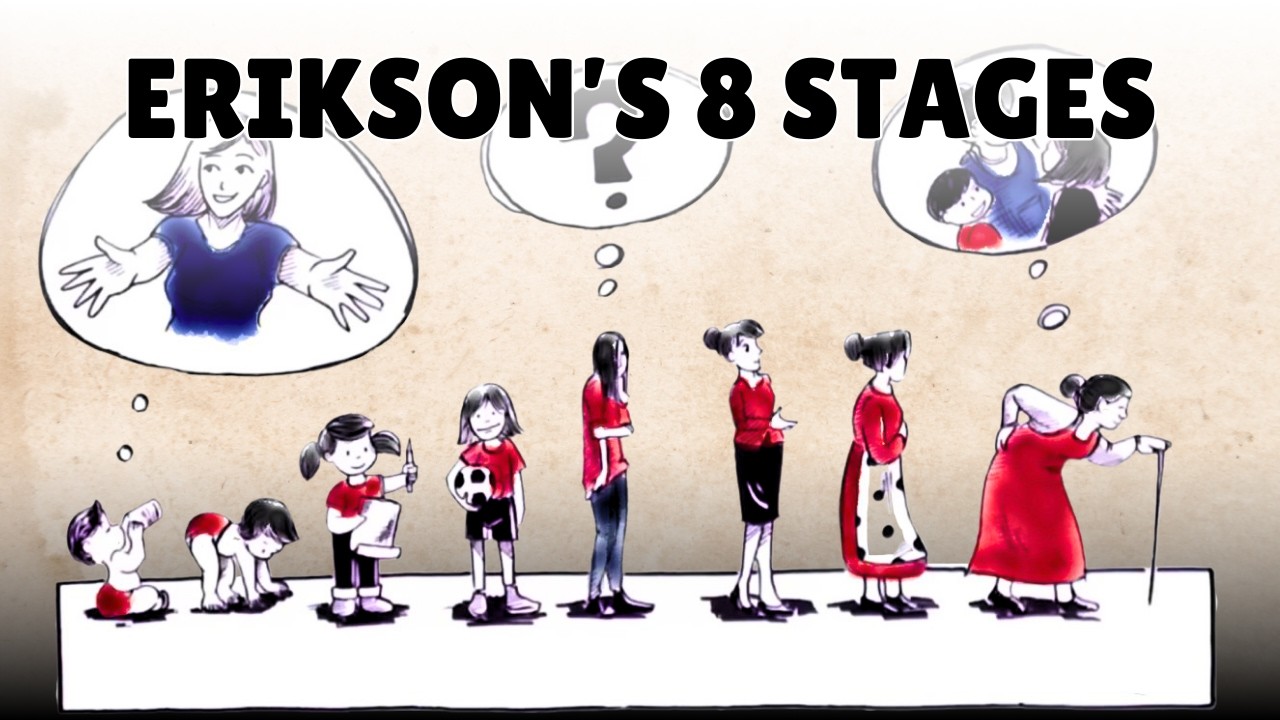
Erikson’s 8 Stages of Psychosocial Development Explained
Sprouts
Overview
This video explains Erik Erikson's eight stages of psychosocial development, a theory outlining key developmental challenges individuals face from infancy to old age. Each stage presents a conflict between two opposing psychological tendencies. Successfully navigating these conflicts leads to the development of specific virtues and a healthy personality, while failure can result in difficulties in later life. The stages are Trust vs. Mistrust, Autonomy vs. Shame & Doubt, Initiative vs. Guilt, Industry vs. Inferiority, Identity vs. Role Confusion, Intimacy vs. Isolation, Generativity vs. Stagnation, and Ego Integrity vs. Despair.
How was this?
Save this permanently with flashcards, quizzes, and AI chat
Chapters
- Erikson's theory describes eight psychosocial stages individuals progress through from birth to death.
- Each stage involves a unique developmental task or conflict.
- Successfully resolving these conflicts leads to the development of psychological strengths or virtues.
- Failure to resolve conflicts can lead to psychological difficulties later in life.
Understanding these stages helps explain the fundamental psychological challenges and tasks that shape personality and behavior throughout the lifespan.
- Stage 1: Basic Trust vs. Mistrust (Infancy, 1-2 years) - Infants learn to trust the world based on consistent caregiving, primarily from their mother.
- Stage 2: Autonomy vs. Shame & Doubt (Early Childhood, 2-4 years) - Toddlers develop self-confidence by exploring their bodies and abilities with parental support.
- Stage 3: Initiative vs. Guilt (Preschool, 4-5 years) - Preschoolers explore their capabilities and interests; encouragement fosters initiative, while excessive restriction leads to guilt.
These foundational stages establish a child's basic sense of security, independence, and willingness to explore, which are crucial for future learning and social interaction.
In Stage 2, a child who is allowed to try feeding themselves, even if messy, develops autonomy, whereas a child constantly criticized for spills might develop shame and doubt their abilities.
- Stage 4: Industry vs. Inferiority (School Age, 5-12 years) - Children develop a sense of competence and productivity by succeeding in school and social activities, influenced by teachers and peers.
- Stage 5: Identity vs. Role Confusion (Adolescence, 13-19 years) - Teenagers explore different roles and beliefs to form a cohesive sense of self; exploration leads to identity, while pressure to conform can cause confusion.
These stages are critical for developing a sense of competence in the world and forming a stable personal identity, which are essential for navigating adult life.
A teenager trying out different hobbies, friend groups, and styles of dress is working through Stage 5, seeking to understand who they are.
- Stage 6: Intimacy vs. Isolation (Early Adulthood, 20-40 years) - Young adults seek to form deep, committed relationships; success leads to fulfilling connections, while failure results in loneliness.
- Stage 7: Generativity vs. Stagnation (Adulthood, 40-65 years) - Adults focus on contributing to society and guiding the next generation; this leads to a sense of purpose, while unresolved issues can cause stagnation.
- Stage 8: Ego Integrity vs. Despair (Maturity, 65-death) - Older adults reflect on their lives; a sense of fulfillment leads to integrity, while regret can result in despair.
These later stages address our need for connection, contribution, and life satisfaction, shaping our overall sense of meaning and well-being in our later years.
A person mentoring a junior colleague or raising children is demonstrating generativity in Stage 7.
- Erik Erikson was a German-American psychologist influenced by Freud.
- He is famous for coining the term 'identity crisis'.
- Despite lacking a bachelor's degree, he held professorships at Harvard and Yale.
Knowing a bit about Erikson's background provides context for his influential theory and highlights that significant contributions can come from diverse academic paths.
Key takeaways
- Psychosocial development is a lifelong process involving a series of distinct challenges.
- Each developmental stage builds upon the successful resolution of previous stages.
- Social interactions and relationships are central to navigating each psychosocial conflict.
- Successfully resolving the conflict in each stage results in the development of a specific virtue or strength.
- Failure to resolve a stage's conflict can lead to lasting psychological difficulties.
- Adolescence is a critical period for identity formation, often involving an 'identity crisis'.
- Later life stages focus on connection, contribution to society, and life review.
Key terms
Psychosocial DevelopmentBasic Trust vs. MistrustAutonomy vs. Shame & DoubtInitiative vs. GuiltIndustry vs. InferiorityIdentity vs. Role ConfusionIntimacy vs. IsolationGenerativity vs. StagnationEgo Integrity vs. DespairIdentity Crisis
Test your understanding
- What is the core conflict of the Industry vs. Inferiority stage, and how is it typically resolved?
- Why is the development of basic trust in infancy considered foundational for later psychosocial stages?
- How does the challenge of Identity vs. Role Confusion manifest during adolescence?
- What is the primary focus of the Generativity vs. Stagnation stage in adulthood?
- What psychological outcome does Erikson suggest results from successfully navigating the Ego Integrity vs. Despair stage?