17:28
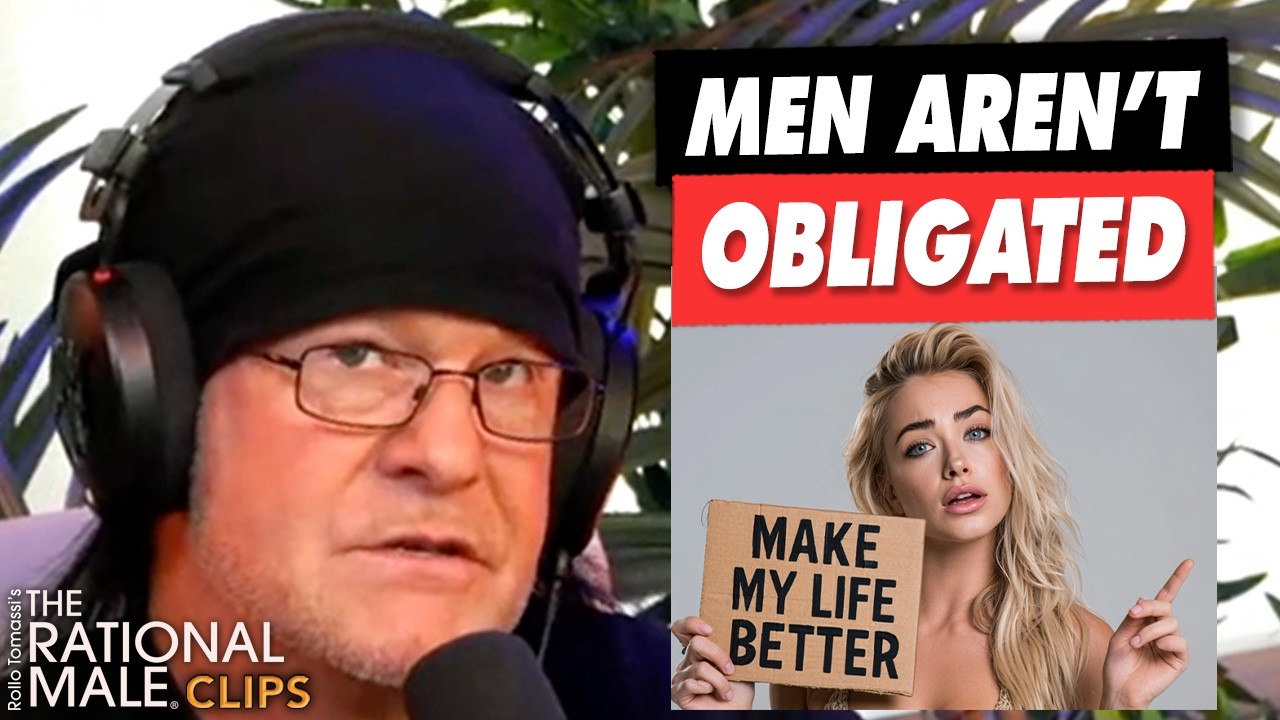
Why Men Don’t Owe Women Anything!
Rational Male Clips
Overview
This video argues that men do not inherently owe women anything, challenging the notion that societal expectations or feminist agendas create such obligations. It posits that the instinctual male protector drive, often mislabeled as toxic masculinity, is a natural evolutionary response. The speaker contends that this instinct is manipulated by various ideologies, both left and right, to serve their own agendas, rather than genuinely benefiting men. The core argument is that men should direct this protective and ambitious energy towards self-improvement and personal goals, rather than being coerced into fulfilling perceived obligations to women.
How was this?
Save this permanently with flashcards, quizzes, and AI chat
Chapters
- In a pragmatic, 21st-century context, men and women do not inherently owe each other anything.
- Feminism, particularly post-sexual revolution, is framed not as a pursuit of equality but as a demand for restitution and retribution.
- Questions about what men owe women often reveal a 'mental point of origin' focused on women, rather than a balanced perspective.
- The idea of men owing women a better life is presented as an ego investment, often rooted in ideology or religion.
Understanding this perspective challenges deeply ingrained societal expectations about gender roles and obligations, prompting a re-evaluation of what drives these beliefs.
The speaker critiques the question 'Is there anything that the sexes owe each other?' as indicative of a mindset that prioritizes women's needs or perspectives as the starting point.
- The male protector instinct is an innate, evolved response, not a social construct or 'toxic masculinity'.
- This instinct drives men to act heroically and self-sacrificially in immediate, high-threat situations, often without conscious thought.
- Evolutionary biology explains this instinct through the 'disposable male' and 'valuable female' dynamic, rooted in reproduction (cheap sperm, expensive eggs).
- When men have time to think, especially in less immediate threats, this instinct might not manifest as nobly, leading to self-preservation.
Recognizing this instinct as natural and evolutionary helps to destigmatize certain male behaviors and understand their deep-seated origins.
A pizza delivery driver rushing into a burning building multiple times to save children, demonstrating an immediate, instinctual act of bravery.
- Ideologies (both left and right) manipulate the male protector instinct for their own agendas.
- This manipulation re-frames the instinct from spontaneous heroism to fulfilling imposed obligations, such as 'owing women a better life'.
- Phrases like 'a real man does X' are seen as sales pitches, exploiting this instinct to push specific ideologies or choices.
- This dynamic is used to keep men 'stuck in the bucket' or feeling inadequate, often by framing their actions as insufficient or self-serving if not directed towards women's perceived needs.
Identifying this manipulation is crucial for men to avoid being exploited and to direct their natural drives towards more personally beneficial and authentic pursuits.
The speaker contrasts the instinctual act of saving children from a fire with the ideological demand that men 'owe women a better life,' arguing the latter is a manipulation.
- Societal expectations often demand contradictory behaviors from men: be sensitive and empathetic ('man down'), but also be ready for immediate, high-risk action ('man up').
- This cognitive dissonance prevents a unified understanding of masculinity, leading to confusion and a 'failure to launch' among some men.
- The 'juice isn't worth the squeeze' sentiment arises when men feel their efforts are unappreciated or directed by external, often contradictory, demands.
- Men are encouraged to focus their energy on self-improvement, personal goals, and building their own lives, rather than solely on fulfilling perceived obligations to women.
This chapter provides a framework for understanding the modern male identity crisis and offers a path towards purposeful living by prioritizing self-development over external validation.
The speaker describes how society wants men to be 'touchy-feely' and 'emotionally intelligent' until a crisis occurs, at which point they are expected to 'man up' and risk their lives.
- The prevailing social order is described as 'gyocentric,' where women's complaints about men automatically set the narrative.
- Men are pressured to accept these narratives and conform to expectations, often without their own struggles being acknowledged.
- Individuals and groups who preach 'men need to do this' or 'be a better man' often have ulterior motives, not genuine concern for male well-being.
- Their 'mental point of origin' is frequently focused on women's issues or desires, using men as a tool to achieve those ends.
This highlights a systemic bias that can disadvantage men and underscores the importance of critically examining the motives behind calls for male behavioral change.
The speaker criticizes figures like Charlie Kirk and Ben Shapiro for promoting narratives about what 'real men' should do, suggesting their focus is on serving women's perceived needs rather than men's.
Key takeaways
- Men do not have inherent, externally imposed obligations to women in the modern era.
- The male protector instinct is a natural evolutionary trait, not a negative social construct.
- Societal and ideological forces often manipulate this instinct for their own agendas.
- Masculinity is complex and often subjected to contradictory expectations by society.
- Men are encouraged to prioritize self-development and personal goals over fulfilling imposed obligations.
- Critically evaluate the motives behind messages dictating how men should behave.
- A 'gyocentric' social order can lead to narratives that disadvantage men.
Key terms
Protector InstinctToxic MasculinityGender ParityRestitution and RetributionMental Point of OriginDisposable SexGyocentric Social OrderFailure to LaunchCognitive Dissonance
Test your understanding
- What is the speaker's core argument regarding men owing women anything?
- How does the speaker differentiate the male protector instinct from 'toxic masculinity'?
- What are the alleged motives behind the manipulation of the male protector dynamic by societal or ideological groups?
- According to the video, why might men feel that 'the juice isn't worth the squeeze' in contemporary society?
- What does the speaker mean by a 'gyocentric' social order, and how does it affect men?