8:35
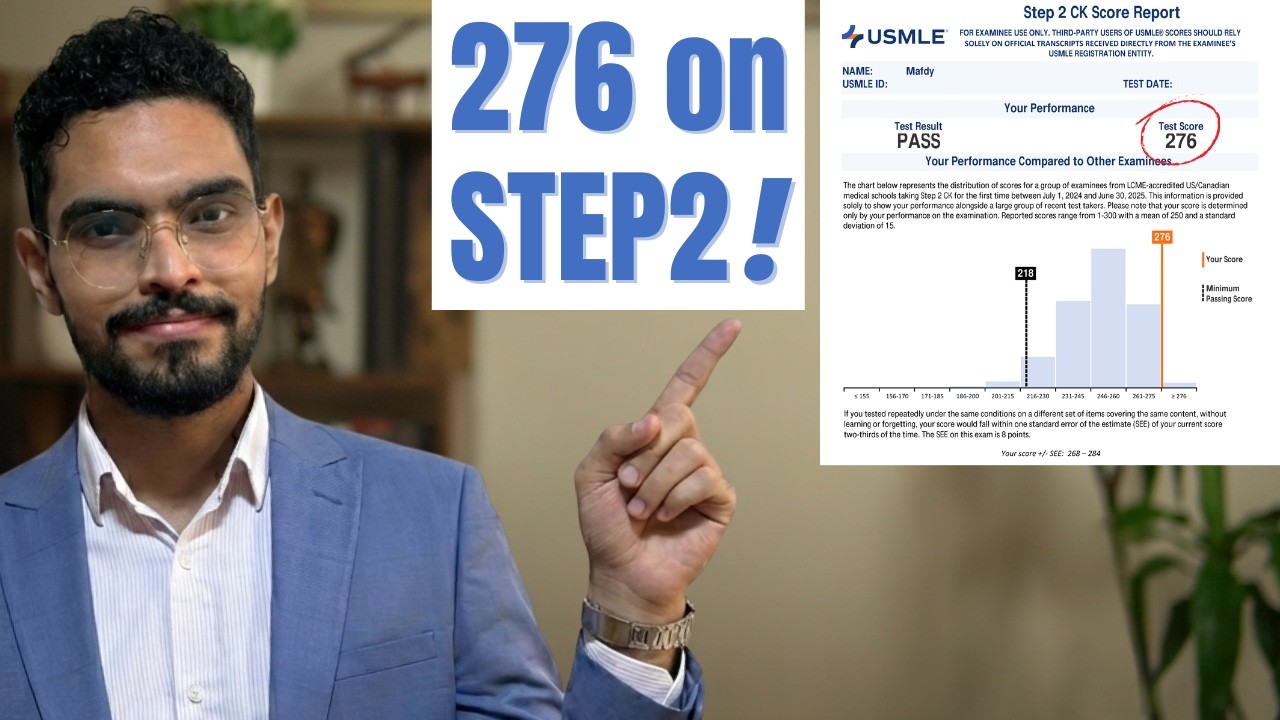
How to Score 276 on USMLE Step 2 CK: How to Ace Step 2 CK and Score HIGH!
Malke Asaad, M.D.
Overview
This video outlines a three-phase study strategy for achieving a high score on the USMLE Step 2 CK exam. The presenter details their personal preparation journey, emphasizing the importance of structured learning, consistent practice with question banks like UWorld and Amboss, and strategic use of self-assessment exams (NBMEs, UWSA). Key elements include understanding why questions are right or wrong, focusing on weak areas, and simulating exam conditions. The strategy progresses from initial learning and broad practice to intensive review and final consolidation, culminating in exam-day readiness and mindset.
How was this?
Save this permanently with flashcards, quizzes, and AI chat
Chapters
- Begin with a first pass of UWorld in random, timed mode to establish a baseline understanding.
- Prioritize understanding explanations for both correct and incorrect answers to deepen learning.
- Integrate NBME and UWorld Self-Assessment (UWSA1) exams during this phase to gauge progress.
- This phase typically lasts 3-4 months, though it can be shorter if not balancing with internship.
This initial phase is crucial for building a broad knowledge base and identifying initial strengths and weaknesses, setting the stage for more targeted study later.
Scoring 69% on the first pass of UWorld, followed by taking NBME 9 (65-70% through UWorld) and UWSA1 (scoring 261).
- Focus on subject-specific CMS forms to mirror NBME question style and identify specific knowledge gaps.
- Repeatedly review UWorld incorrects to solidify understanding and improve accuracy.
- Utilize multiple self-assessment exams (NBME 10, 11, UWSA2, OME 3120) to track improvement and simulate exam pressure.
- This phase lasts approximately 2 months and may involve periods of plateauing.
This phase shifts from broad learning to targeted reinforcement, ensuring that common question patterns and challenging concepts are mastered.
Achieving 95% correct on UWorld incorrects and scoring 252 on NBME 10 and 261 on UWSA2.
- Dedicate the first four weeks to completing the Amboss Qbank, using tutor mode for efficiency and focusing on weak areas.
- The next four weeks are for intensive self-assessment, simulating exam conditions with NBME exams and thoroughly reviewing each question.
- Incorporate remaining CMS forms and UWorld marked questions, aiming for 100% mastery of UWorld incorrects.
- The final week involves focused review of NBME incorrects, high-yield ethics/patient safety topics, and recent NBME releases.
This final phase is critical for consolidating knowledge, refining test-taking strategies, and building confidence through rigorous self-assessment and targeted review.
Taking NBME 6 (264), NBME 7 (268), NBME 8 (280), NBME 12 (265), NBME 13/14 (271), NBME 15 (265), and the Free 120 (89%).
- Prioritize rest and relaxation the day before the exam.
- Maintain a calm and focused mindset during the exam, tackling questions one by one.
- Utilize scheduled breaks effectively to rest and refocus between blocks.
- Trust in the preparation and choose the best answer even when uncertain.
A well-managed exam day, including physical and mental preparation, can significantly impact performance and reduce anxiety.
Taking alternating 5 and 10-minute breaks between question blocks, using the longer breaks for restroom and snacks.
Key takeaways
- A structured, phased approach to studying is more effective than random cramming.
- Understanding the reasoning behind correct and incorrect answers is more important than simply answering questions.
- Consistent self-assessment using NBMEs and UWSA is vital for tracking progress and identifying weak areas.
- Reviewing incorrect answers repeatedly is a highly effective strategy for knowledge retention.
- Simulating exam conditions, including timing and break structure, is crucial for building stamina and confidence.
- Maintaining a calm and focused mindset on exam day, despite encountering difficult questions, is key to success.
- High-yield topics like ethics and patient safety should be specifically reviewed.
Key terms
USMLE Step 2 CKUWorldAmbossNBME (National Board of Medical Examiners) examsUWSA (UWorld Self-Assessment)CMS forms (Clinical Mastery Series)QbankTutor modeTimed modeHigh-yield topics
Test your understanding
- How does breaking down UWorld practice by system, rather than random order, improve learning?
- Why is it important to review incorrect answers thoroughly, rather than just moving on to new questions?
- What is the purpose of using multiple self-assessment exams like NBMEs and UWSA throughout the study process?
- How can simulating exam conditions during practice sessions benefit a student on the actual test day?
- What strategies can a student employ on exam day to manage anxiety and maintain focus, even when faced with difficult questions?