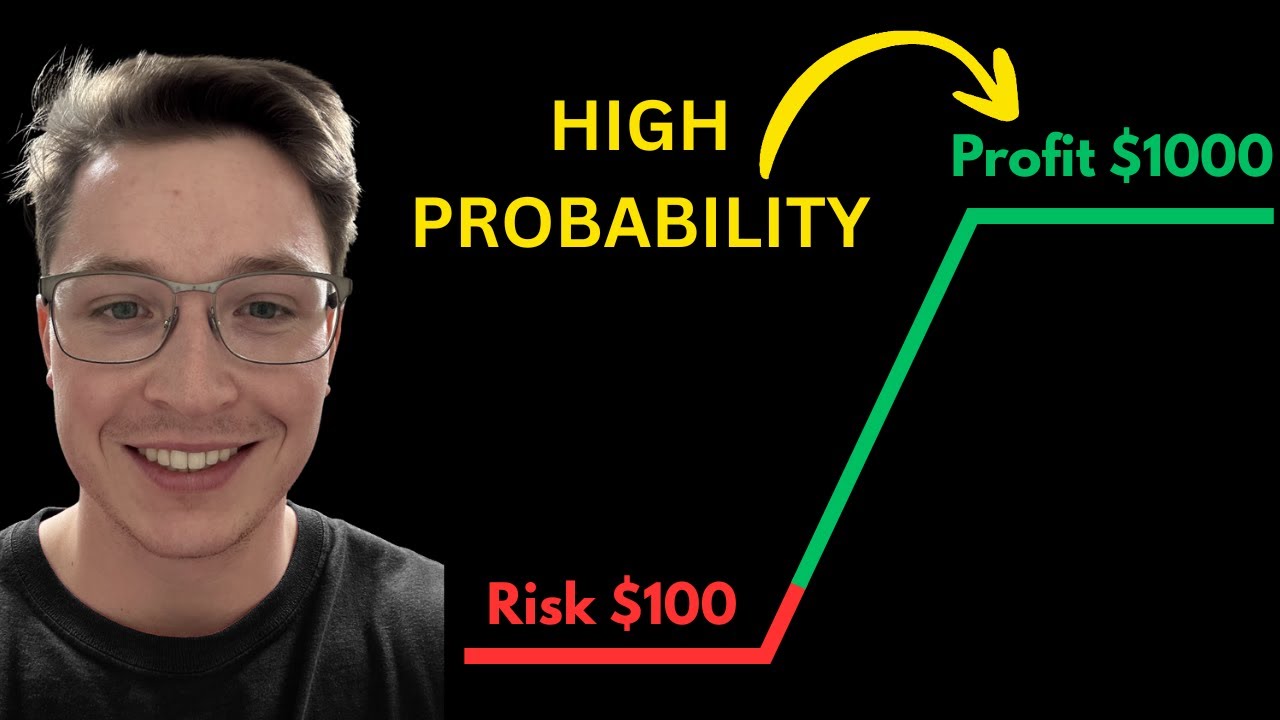
How to Spot 10x Vertical Spreads BEFORE They Take Off
Volatility Vibes
Overview
This video explains how to identify and trade vertical spreads with the potential for high returns by analyzing volatility skew and momentum. It details the concept of volatility skew, explaining its origins in market realities that deviate from theoretical models, such as negative skewness and excess kurtosis in asset returns. The video demonstrates how skew, particularly the 'volatility smirk' in equity indices, reflects market expectations and hedging demands, leading to potential pricing inefficiencies. It then outlines a strategy for exploiting these inefficiencies by comparing historical and realized volatility to identify overpriced options to sell and underpriced options to buy within a vertical spread, often in conjunction with momentum indicators.
Save this permanently with flashcards, quizzes, and AI chat
Chapters
- The Black-Scholes model assumes constant implied volatility, but real markets show it varies by strike price and expiration.
- Asset returns exhibit negative skewness (larger drops are more likely) and excess kurtosis (fatter tails, more extreme outcomes).
- Implied volatility skew, often seen as a 'volatility smirk' in equities, arises because out-of-the-money puts typically have higher implied volatility than out-of-the-money calls.
- Skew reflects the market's risk-neutral density, which anticipates downside risk, and the negative correlation between spot returns and implied volatility (volatility spikes when markets fall).
- The market's implied distribution often overstates downside risk, leading to a 'skew premium' where options in high skew areas (like OTM puts) are systematically overpriced.
- This premium persists due to institutional demand for downside protection (buying puts) and market makers requiring compensation for taking on this risk.
- Speculative demand for 'lottery ticket' OTM calls also contributes, as sellers demand a premium for providing this asymmetric payoff.
- Vertical spreads are directly affected by skew because they involve options at different strikes, meaning they are exposed to differences in implied volatility.
- Traders can measure skew by tracking its historical behavior to identify when it's unusually steep or inverted, potentially signaling mean reversion opportunities.
- Call skew is measured by comparing ATM IV to 25-delta call IV, while put skew compares ATM IV to 25-delta put IV; more negative values indicate steeper skew.
- Extreme skew often occurs during periods of high market sentiment (fear or greed) and can serve as a contrarian signal.
- Comparing implied volatility (market's forecast) with realized volatility (actual historical movement) at specific strikes helps determine if skew is overpriced.
- The ideal setup involves buying an at-the-money (ATM) option that is fairly priced or underpriced relative to realized volatility.
- Simultaneously, sell an out-of-the-money (OTM) option with elevated implied volatility due to skew, making it overpriced.
- This strategy creates a relative value trade: selling expensive volatility and buying cheaper volatility.
- The reward-to-risk ratio can be significantly high (5:1 to 10:1) because the overpriced short leg compensates for the cost of the fairly priced long leg.
- While skew-based trades can be profitable without directional forecasts, adding momentum analysis can enhance performance.
- Momentum indicators (time series, cross-sectional, relative) help identify stocks with persistent trends.
- Bullish momentum combined with call skew favors bullish vertical spreads, while bearish momentum and put skew favor bearish spreads.
- Even a small directional edge from momentum can significantly boost the win rate and consistency of skew-favored vertical spreads.
- Recent trades in QUBT, SBET, MP, and QS demonstrated the strategy: identifying strong momentum, elevated call skew, and favorable volatility differentials.
- These trades typically involved buying ATM options priced near or below realized volatility and selling OTM options with significantly higher implied volatility.
- The outcomes were often triple-digit percentage returns on risk, highlighting the potential of exploiting skew mispricing.
- The strategy relies on buying fair/underpriced volatility and selling overpriced skew, ideally in the direction of momentum, leading to asymmetric payoffs (small losses often, large wins occasionally).
Key takeaways
- Volatility skew is a market phenomenon where implied volatility differs across strike prices, reflecting real-world return distributions and hedging demands.
- The 'skew premium' arises from persistent demand for downside protection and speculative upside, leading to overpriced OTM options.
- Vertical spreads can be structured as relative value trades by buying fairly priced ATM options and selling overpriced OTM options inflated by skew.
- Comparing implied volatility to realized volatility at specific strikes is key to identifying overpriced wings of the skew.
- Momentum analysis can enhance skew-based vertical spreads by adding a directional bias, improving win rates and consistency.
- These trades often have asymmetric payoffs: small losses are common, but large wins compensate for them, leading to positive expected value over time.
- The strategy focuses on exploiting pricing dislocations rather than solely predicting market direction.
Key terms
Test your understanding
- How does the concept of volatility skew differ from the assumptions of the Black-Scholes model, and why is this difference important for options traders?
- What is the 'skew premium,' and what market dynamics (demand/supply) cause it to persist, particularly in equity index options?
- Describe the ideal setup for a vertical spread trade designed to exploit volatility skew, including the characteristics of the long and short legs.
- How can comparing implied volatility with realized volatility at specific strike prices help a trader identify opportunities within the volatility skew?
- In what ways can momentum analysis be integrated with volatility skew analysis to improve the performance and consistency of vertical spread trades?