11:20
The Black Legend, Native Americans, and Spaniards: Crash Course US History #1
CrashCourse
Overview
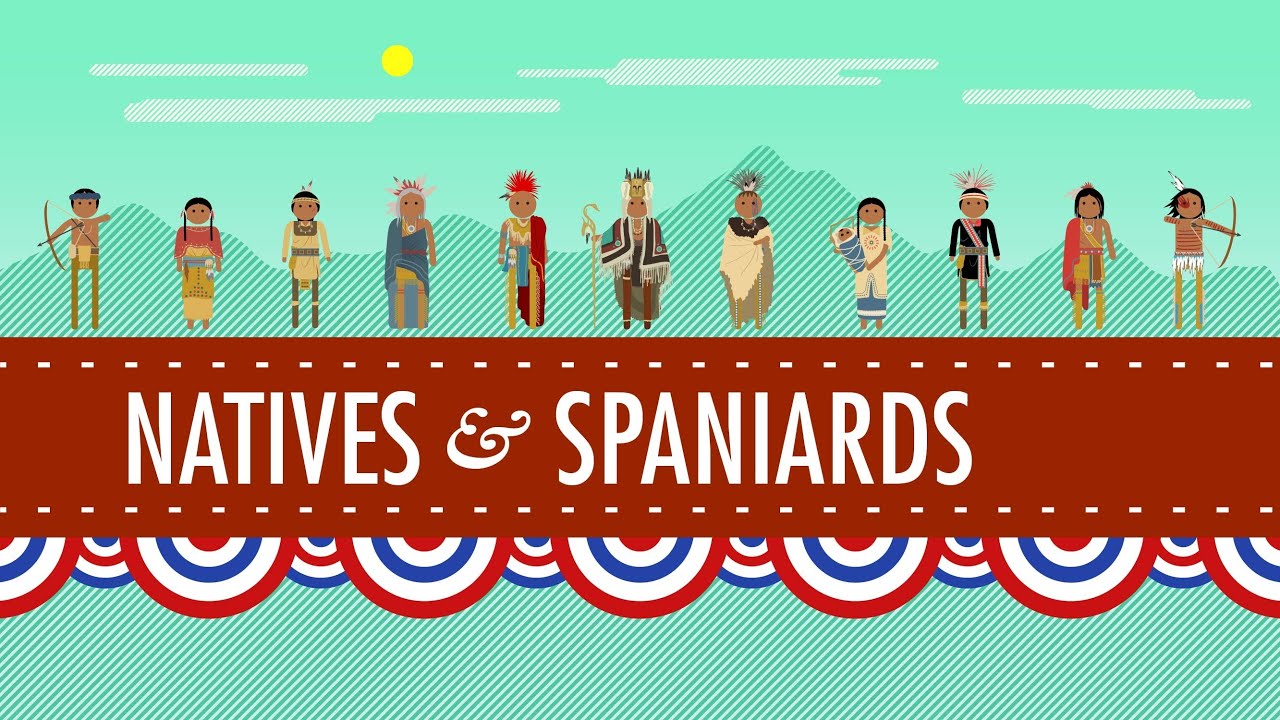
This video explores the complex pre-Columbian societies of North America and the initial encounters with Europeans, primarily the Spanish. It challenges the notion of European "progress" by highlighting the diverse and sophisticated cultures of Native Americans, their social structures, and their relationship with the environment. The episode also introduces the "Black Legend," a narrative of Spanish brutality, and questions its use by later European powers to justify their own colonization efforts, emphasizing the importance of considering multiple perspectives and unheard voices in historical accounts.
How was this?
Save this permanently with flashcards, quizzes, and AI chat
Chapters
- North America before European arrival was home to diverse peoples with complex social and political structures, farming, and trade networks, not a 'primitive' or empty land.
- Native American societies lacked European-style monumental architecture, metalwork, gunpowder, wheels, and domesticated animals, but this does not equate to being less evolved.
- The idea of linear human progress from 'primitive' to 'civilized' is a Eurocentric and contemporary-centric view that distorts historical reality.
- Estimates of pre-Columbian North American populations vary widely, but their numbers were drastically reduced by European diseases like smallpox and influenza, an event far worse than mere 'decimation'.
Understanding the complexity and diversity of pre-Columbian societies is crucial to dismantling Eurocentric biases and appreciating the rich history of the continent before European colonization.
The Zuni and Hopi civilizations, with their large, multi-family dwellings in canyons, demonstrate sophisticated settlement patterns that peaked before European arrival, likely due to environmental factors like drought.
- Most Native American groups organized as tribes, with lifestyles dictated by available natural resources (e.g., fishing on the West Coast, buffalo hunting on the Great Plains).
- Tribes often formed loose confederacies, like the Iroquois Confederacy (Great League of Peace), for mutual benefit.
- Native religions involved a vibrant spiritual world, often centered on a single creator god, with ceremonies tied to their specific lifestyles.
- Native Americans viewed land as a common resource to be used, not owned, with village leaders assigning plots for use but not private property.
Recognizing the distinct social organization, spiritual beliefs, and concepts of property ownership among Native American tribes provides a more accurate picture of their societies and highlights fundamental differences with European perspectives.
Blackhawk, a Sauk leader, articulated the Native American view of land as a gift from the Great Spirit for subsistence, stating, 'The Great Spirit gave it to his children to live upon and cultivate as far as necessary for their subsistence; and so long as they occupy and cultivate it, they have a right to the soil.'
- The Spanish were the first Europeans to explore North America, seeking gold and other riches, but their initial encounters often led to conflict and the unintentional spread of deadly diseases.
- Spanish colonization efforts in Florida were largely unsuccessful due to climate and disease, while they established a more permanent presence in the Southwest with settlements like Santa Fe.
- The Pueblo Revolt of 1680, led by Popé, was a significant Native American uprising that temporarily drove the Spanish out of New Mexico, demonstrating resistance to colonization and forced labor.
- The 'Black Legend' exaggerates Spanish cruelty towards Native Americans, a narrative that, while containing truths, was later used by other European powers, particularly the English, to legitimize their own colonial ambitions.
Understanding the Spanish colonization, Native American resistance like the Pueblo Revolt, and the origins of the 'Black Legend' is essential for analyzing the motivations and justifications behind European expansion and its impact on indigenous populations.
Bartolomé de las Casas, in his writings (like 'A History of the Indies'), documented the horrific servitude and suffering of Native Americans under Spanish rule, providing a critical European perspective on the brutality of colonization.
- The historical record is often shaped by the perspective of those who created it, leading to biases and the silencing of certain voices.
- While the US benefits from a wealth of written sources due to its later arrival, it's crucial to remember that every narrative comes from a specific viewpoint.
- It is vital to question who is speaking, why they are speaking, and whose voices are missing from historical accounts.
- The 'Black Legend,' though based on some truths about Spanish actions, was strategically employed by later colonizers, like the English, to portray themselves as more benevolent, masking their own exploitative practices.
Critically evaluating historical sources and acknowledging the perspectives of marginalized groups, especially Native Americans whose voices are often absent from written records, is fundamental to a more complete and accurate understanding of history.
The video highlights that Native Americans lacked written languages, meaning their perspectives on European arrival and colonization are largely absent from the historical record, making it imperative to interpret existing European accounts with caution and awareness of this information gap.
Key takeaways
- Pre-Columbian North America was home to diverse and complex societies, not a primitive wilderness.
- The concept of linear human progress is a flawed, Eurocentric viewpoint.
- Native American cultures had distinct social structures, spiritual beliefs, and concepts of land ownership that differed significantly from European norms.
- European diseases had a catastrophic impact on Native American populations, far exceeding simple 'decimation'.
- The 'Black Legend' is a narrative of Spanish cruelty that, while containing truths, was used by later colonizers to justify their own actions.
- Historical understanding requires critically examining the sources, recognizing the speaker's perspective, and acknowledging the voices that are missing.
- Understanding the past necessitates moving beyond simplistic narratives and embracing the complexity of different cultures and their interactions.
Key terms
Pre-ColumbianEurocentricContemporary-centricDecimationOcticimationTribesConfederaciesIroquois ConfederacyMatrilinealNoble SavagesBlack LegendPueblo RevoltPopéBartolomé de las CasasEncomienda
Test your understanding
- How did the video challenge the idea that Native American societies were 'primitive' before European contact?
- What were the key differences in the Native American and European views on land ownership?
- Explain the concept of the 'Black Legend' and how it was used by later European colonizers.
- Why is it important to consider the perspective of the speaker and the unheard voices when studying history, according to the video?
- What was the significance of the Pueblo Revolt in the context of Spanish colonization in New Mexico?