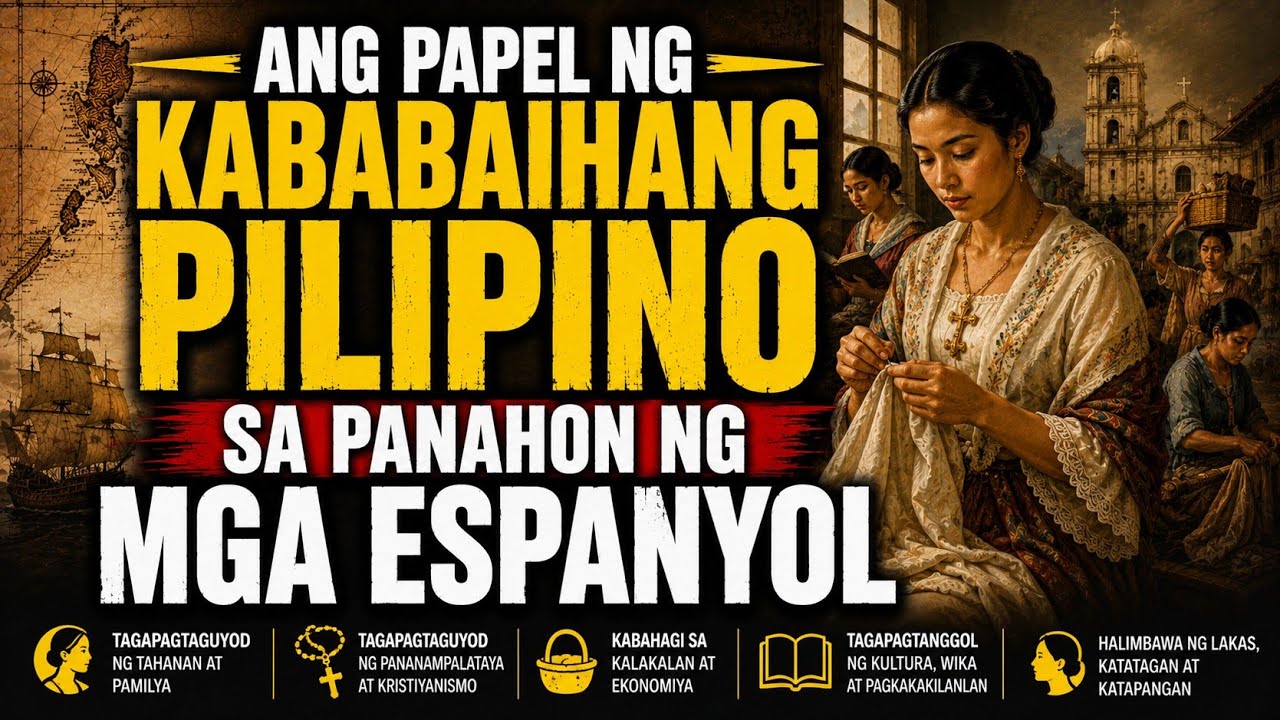
ANG PAPEL NG KABABAIHAN SA PANAHON NG MGA ESPANYOL
Teacher Aldrin TV
Overview
This video explains the significant shift in the role of Filipino women during the Spanish colonial period. Before colonization, women held high societal status, with roles like spiritual leaders and equal inheritors of property. However, Spanish rule diminished their status, confining them primarily to domestic duties as wives and mothers. The Church heavily influenced their identity, encouraging piety and obedience. While educational opportunities were limited, some women, particularly from wealthy families, received basic education focused on domestic skills and faith. Ultimately, colonization reinforced a patriarchal system, reducing women's public influence and rights.
Save this permanently with flashcards, quizzes, and AI chat
Chapters
- Before Spanish colonization, Filipino women enjoyed a high social standing.
- They could serve as spiritual leaders (mabaylan) and heads of barangays.
- Women had equal rights to men in inheriting property.
- Spanish colonization significantly lowered the status of Filipino women.
- Their primary roles shifted to being good wives and mothers, managing the household and children.
- Women became assistants to their husbands in daily life.
- The Catholic Church played a major role in shaping women's identity.
- Women were taught to be obedient, modest, and religious.
- They were encouraged to be devout, attend mass, and join religious organizations.
- Some educated women and nuns dedicated their lives to religious service.
- Educational opportunities for women were initially very limited.
- Education was primarily for men, but later extended to some women from wealthy families.
- Curriculum included reading, writing, faith, and domestic skills like sewing and embroidery.
- Colonization led to a significant reduction in women's rights.
- Women could no longer hold leadership positions like mabaylan, as priests took over spiritual roles.
- The patriarchal system, where men held more power, was strengthened.
Key takeaways
- Filipino women's societal status significantly declined under Spanish rule compared to the pre-colonial era.
- The Spanish colonial period confined women primarily to domestic roles as wives and mothers.
- The Catholic Church heavily influenced women's identity, promoting obedience and piety.
- Educational access for women was restricted and focused on domestic skills.
- Spanish colonization reinforced a patriarchal system, diminishing women's public rights and influence.
- The shift in women's roles was a direct consequence of colonial policies and religious impositions.
Key terms
Test your understanding
- How did the role of Filipino women change from the pre-colonial era to the Spanish colonial period?
- What was the primary influence of the Catholic Church on the lives of women during this time?
- What types of education were available to women, and why were they limited?
- How did Spanish colonization impact the rights and public participation of women?
- Why is it important to understand the pre-colonial status of women when discussing the Spanish colonial period?