49:16
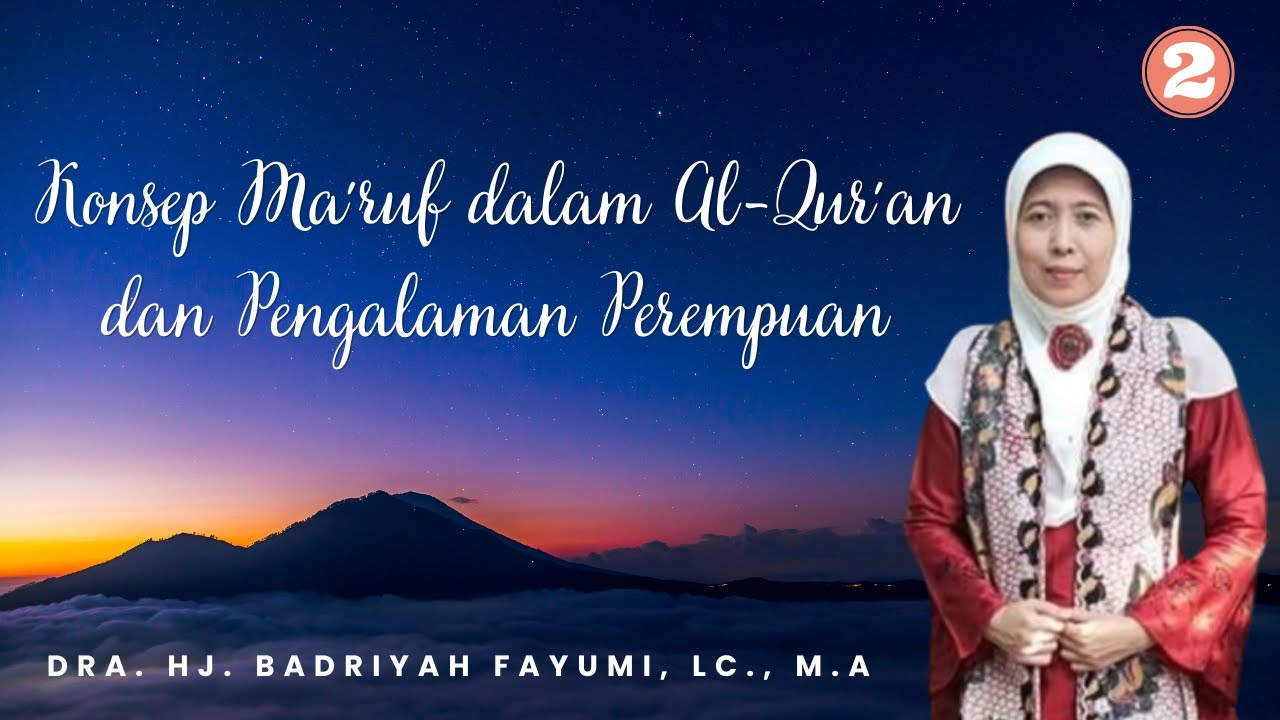
Konsep Ma'ruf dalam Al-Qur'an dan Pengalaman Perempuan
Faqih Abdul Kodir
Overview
This video explores the concept of 'Ma'ruf' in the Quran, focusing on its application in marital relations and women's experiences. It delves into the linguistic origins and theological dimensions of Ma'ruf, contrasting it with 'Urf' (custom). The discussion highlights how Ma'ruf serves as a principle for ethical conduct, a contextual solution for legal and social issues, and a protective mechanism for women, particularly in vulnerable situations within marriage and after divorce. The speaker emphasizes that Ma'ruf is a divine guideline for fostering kindness, justice, and well-being in human interactions, especially concerning women.
How was this?
Save this permanently with flashcards, quizzes, and AI chat
Chapters
- The term 'Ma'ruf' appears 32 times in the Quran, with 18 verses specifically related to marriage, family, and gender relations.
- Linguistically, Ma'ruf derives from roots meaning knowledge and recognition, signifying something generally known, accepted, and good.
- It is often contrasted with 'Munkar' (the disapproved or rejected) and implies actions that are accepted by reason, aligned with Sharia, and bring ease and comfort.
- Scholars like Ibn Ashur and Quraish Shihab define Ma'ruf as acceptable and responsive actions, and as a contextual implementation of universal goodness ('Khair' and 'Birr').
Understanding the Quranic definition of Ma'ruf is crucial because it provides a foundational principle for ethical behavior and justice, particularly in interpersonal relationships.
Ma'ruf is understood as something generally known and accepted, like kindness in dealings, as opposed to 'Munkar,' which is rejected or disapproved.
- 'Urf' is a term primarily used in Islamic jurisprudence (fiqh), often referring to customs or traditions.
- While some Hanafi scholars equate Ma'ruf and 'Urf', generally Ma'ruf has broader theological and ethical dimensions.
- Ma'ruf encompasses divine law (Sharia), rational acceptance, and social acceptance, ensuring goodness and benefit.
- 'Urf' can be good or bad; only 'Urf' that aligns with Sharia and Ma'ruf is considered valid and acceptable in Islamic legal reasoning.
Distinguishing between Ma'ruf and 'Urf' is important to ensure that societal customs do not override divine principles or lead to injustice, especially for vulnerable groups.
A tradition of forced marriage, even if accepted by a local community ('Urf'), is not Ma'ruf because it violates Sharia and rational principles of consent and well-being.
- The concept of Ma'ruf is extensively applied throughout the stages of marriage, from engagement (khitbah) to post-divorce matters.
- Key marital areas where Ma'ruf is emphasized include mutual treatment (mu'asyarah bil-ma'ruf), financial support (nafaqah), child-rearing, and decision-making.
- Even after divorce, Ma'ruf guides actions related to reconciliation (ruju'), waiting periods (iddah), and provisions for ex-spouses and children (mut'ah, iddah maintenance).
- The Quran commands living with wives 'in kindness' (bi al-ma'ruf), highlighting it as a continuous principle of ethical interaction within marriage.
Applying Ma'ruf in marital relations ensures that interactions are guided by kindness, justice, and mutual respect, preventing exploitation and promoting harmony.
The Quranic command in Surah An-Nisa (4:19) to 'live with them in kindness' (wa 'asyiruhunna bil-ma'ruf) serves as a direct instruction for marital conduct, even when disagreements arise.
- Ma'ruf serves as a contextual method for resolving issues not explicitly covered by Quranic verses or Hadith.
- It provides a framework for developing contemporary Islamic jurisprudence and legislation that aligns with universal values and local realities.
- Examples include the legal age for marriage, marriage registration, and rules regarding polygamy, which are implemented based on Ma'ruf principles.
- Concepts like 'Gono-gini' (joint marital property) in Indonesia are seen as implementations of Ma'ruf, reflecting social realities and equitable contributions.
Ma'ruf's role as a problem-solving methodology allows Islamic law to remain relevant and adaptable to changing societal contexts without compromising its core ethical principles.
The requirement for marriage registration, while not explicitly in the Quran or Sunnah, is considered an implementation of Ma'ruf because it promotes social order, protects rights, and prevents potential harm.
- Women's lived experiences often serve as the historical backdrop for Quranic revelations concerning Ma'ruf, such as verses on inheritance rights.
- The concept of Ma'ruf acts as a protective mechanism, safeguarding women from physical, psychological, and social injustices in vulnerable situations.
- It functions as a 'safety net' against unfairness, even in circumstances that might be considered 'normal' or customary.
- Ultimately, Ma'ruf aims to ensure women's well-being and welfare, making their welfare a tangible goal of these divine commands.
Recognizing women's experiences as central to the concept of Ma'ruf highlights its reformative and empowering nature, ensuring that divine guidance truly serves the welfare of all.
The revelation of inheritance laws was partly prompted by the experience of a woman whose daughters were denied inheritance, underscoring how women's real-life struggles informed the principle of Ma'ruf.
Key takeaways
- Ma'ruf is a comprehensive Quranic principle encompassing divine law, reason, and social acceptance, guiding ethical conduct and promoting well-being.
- While 'Urf' (custom) can be a source of guidance, it must be evaluated against Ma'ruf to ensure it aligns with Islamic principles and does not lead to injustice.
- The concept of Ma'ruf is integral to all aspects of marital and family life, demanding kindness, justice, and mutual respect in all interactions.
- Ma'ruf provides a flexible framework for addressing contemporary social and legal issues, enabling Islamic law to remain relevant and responsive to changing times.
- Women's experiences are foundational to understanding and applying Ma'ruf, as the concept inherently aims to protect their rights and ensure their welfare.
- Ma'ruf serves as a powerful tool for empowerment and reform, challenging unfair practices and promoting a more just and equitable society.
- Applying Ma'ruf requires continuous effort and reflection to ensure that actions and decisions lead to genuine ease, comfort, and benefit for all involved.
Key terms
Ma'rufMunkarUrfKhairBirrMunakahatMu'asyarah bil-ma'rufNafaqahRuju'Mut'ahIjtihad
Test your understanding
- How does the Quranic concept of Ma'ruf differ from general societal customs ('Urf')?
- In what specific marital contexts does the Quran emphasize the principle of Ma'ruf?
- Why is understanding women's experiences crucial for interpreting and applying the concept of Ma'ruf?
- How can Ma'ruf be utilized as a method for developing contemporary Islamic jurisprudence and addressing issues not explicitly covered in religious texts?
- What are the key dimensions (theological, rational, social) that define Ma'ruf according to the speaker?