AI-Generated Video Summary by NoteTube
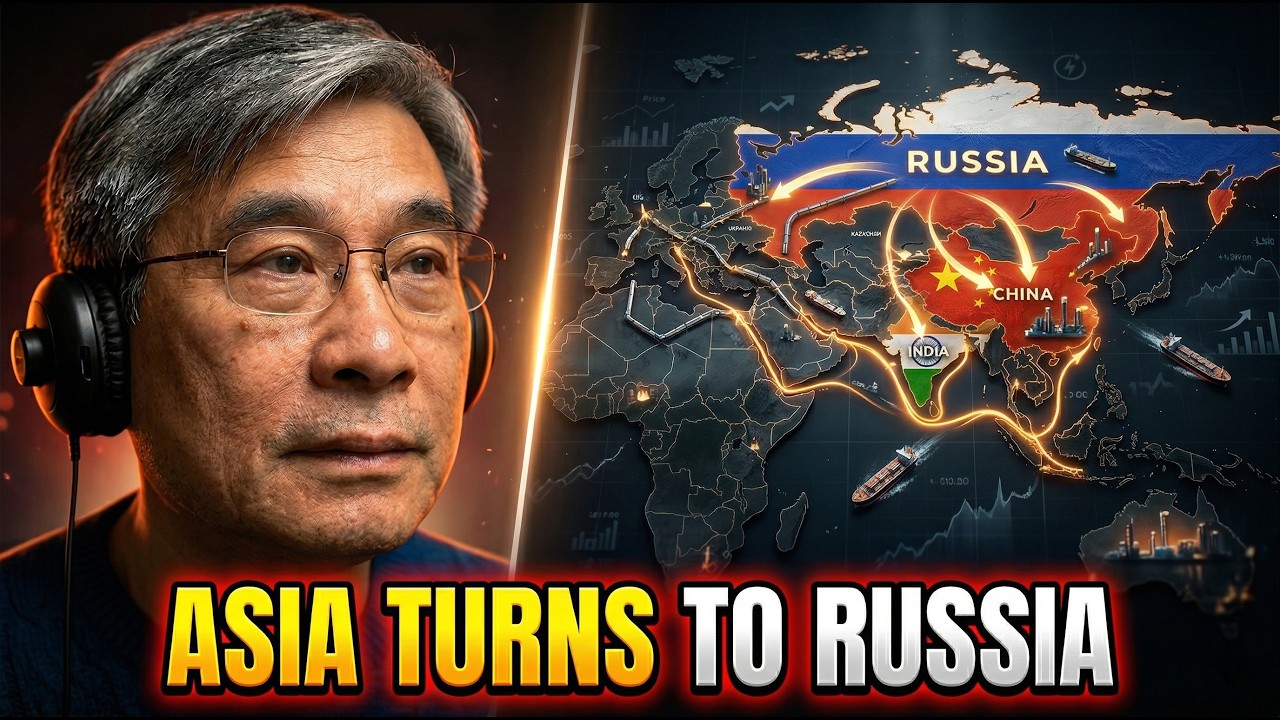
Why Asia Is Turning to Russia for Survival? | Prof. Jiang Xueqin
Professor Jiang Insights
Overview
This video explores the significant, yet often overlooked, shift in global energy dynamics, driven by recent geopolitical events. As instability in the Middle East and sanctions on Russia disrupt traditional energy flows, Asia, particularly China and India, is increasingly turning to Russia for reliable and affordable energy. This redirection is not merely a temporary fix but a structural transformation, leading to the creation of parallel energy markets. These markets operate with different pricing mechanisms and bypass traditional Western-aligned systems, weakening the leverage of established financial and political frameworks. The video argues that this evolution signifies a broader redistribution of global power, moving from a centralized system towards a more fragmented, multipolar order where strategic flexibility and national interest take precedence over ideological alignment. The implications extend beyond energy, impacting finance, trade, and the overall architecture of global influence.
This summary expires in 30 days. Save it permanently with flashcards, quizzes & AI chat.
Chapters
- •Geopolitical conflicts reshape systems, trade routes, and dependencies, not just borders.
- •The current global energy shock stems from uncertainty rather than absolute supply collapse.
- •Energy security is becoming as critical as energy production.
- •Asia's structural dependence on imported energy makes it vulnerable to disruptions.
- •Asian economies prioritize reliability and affordability in energy sourcing.
- •Ideological alignment is secondary to practical survival needs.
- •The need for alternatives drives new energy relationships.
- •Russia's adaptation to sanctions is central to this shift.
- •Western sanctions have redirected Russian energy exports eastward.
- •Russia offers discounted energy out of necessity, finding willing buyers in Asia.
- •This creates mutually beneficial arrangements for both Russia and Asian consumers.
- •The development of parallel energy markets, distinct from Western-aligned systems, is underway.
- •China pursues long-term energy security through contracts and infrastructure investments.
- •India adopts a flexible, opportunistic approach, balancing relationships and extracting advantages.
- •Both countries prioritize national interest and reduce vulnerability to external control.
- •Optionality and flexibility are becoming key strategic assets in geopolitics.
- •Sanctions' effectiveness is diluted when large economies find alternative pathways.
- •The creation of alternative energy markets weakens control over dollar-based financial systems.
- •Energy trade outside traditional systems reduces the leverage of intermediaries.
- •The architecture of global power is shifting as financial control diminishes.
- •The global energy system is transitioning from centralized to fragmented and political.
- •Established trade routes and pricing mechanisms are being reconfigured.
- •Russia's redirection of energy is a fundamental geopolitical development.
- •New pathways, once established, tend to persist and become permanent.
- •The China-Russia relationship is deepening strategically around energy security.
- •India's flexible approach allows it to benefit from multiple systems simultaneously.
- •This multipolar navigation reflects a broader trend of prioritizing national interest.
- •The Cold War logic of binary alignment is replaced by fluid strategic maneuvering.
- •The emergence of parallel energy markets challenges traditional tools of influence like sanctions.
- •Control over critical systems weakens when alternative pathways exist.
- •Power is becoming distributed, conditional, and contested in a multipolar system.
- •Changes in energy flows propagate through finance, trade, and security, reshaping the global order.
Key Takeaways
- 1Geopolitical events are fundamentally reshaping global energy flows and alliances.
- 2Asia's demand for reliable energy is driving a structural shift towards Russia.
- 3The rise of parallel energy markets challenges the dominance of Western-aligned financial and trade systems.
- 4Sanctions, while impactful, can inadvertently accelerate the creation of alternative global structures.
- 5Countries are increasingly prioritizing national interest and strategic flexibility over ideological alignment.
- 6The global power structure is becoming more multipolar and distributed, with energy as a key driver.
- 7This transformation is a gradual, systemic evolution rather than a sudden collapse of the old order.
- 8Control over energy flows is increasingly becoming a determinant of future global economic and political influence.