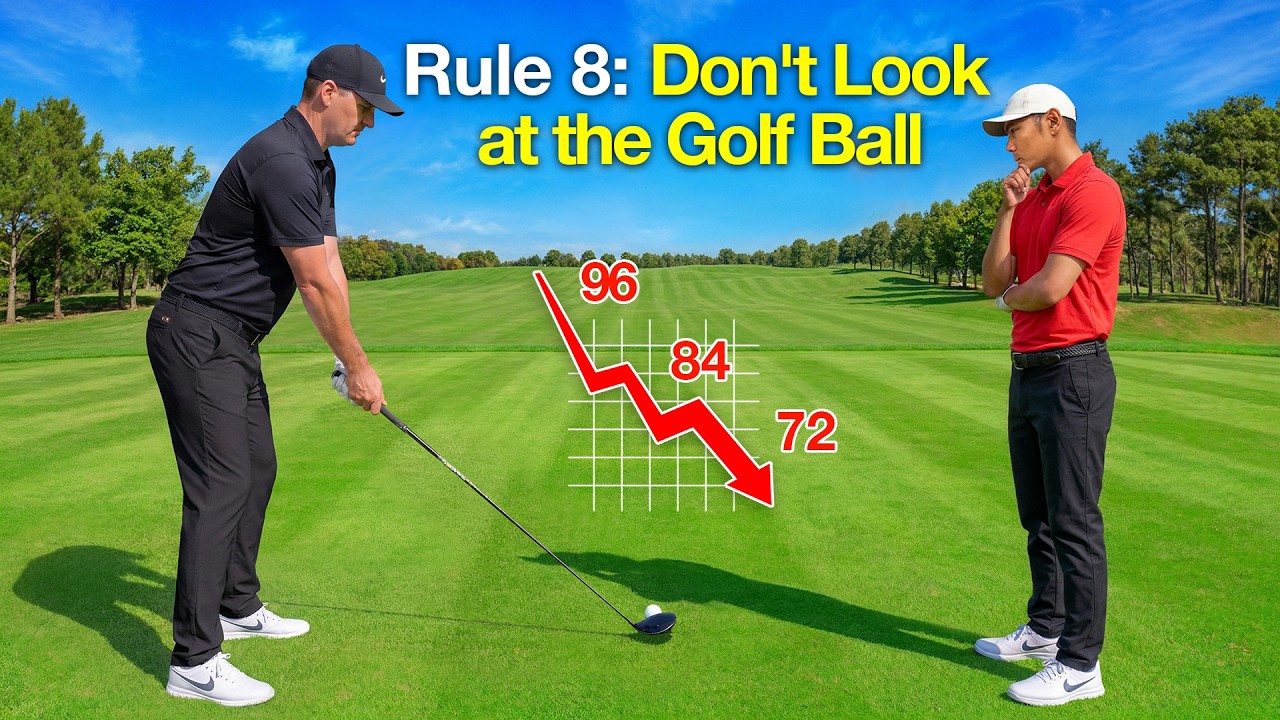
The Last 10 Rules You Will Ever Need to Easily Break 90 Every Time (It's Like Cheating)
Jerome Rufin
Overview
This video introduces a scoring system for golf designed to help amateur players break 90 and improve their overall game. The core philosophy shifts focus from swing mechanics to strategic course management and scoring. Key principles include playing conservatively on difficult holes, understanding "scoring zones," eliminating double and triple bogeys, and focusing on process over outcome. The video also touches on the mental game, handling pressure, and the importance of being present, illustrated by the coach's personal near-death experience. It emphasizes that consistent scoring comes from smart decisions and managing risk, not necessarily from having a perfect swing.
Save this permanently with flashcards, quizzes, and AI chat
Chapters
- Most golf instruction focuses on swing technique, neglecting actual scoring strategy on the course.
- The goal is to get the ball in the hole in fewer shots, which often means playing differently than perceived 'correct' golf.
- Amateurs often struggle to replicate range performance on the course due to a lack of strategic play.
- This lesson focuses on maximizing scoring ability by making smarter decisions, not just hitting better shots.
- Avoid playing aggressively on the first few holes of a round.
- Difficult holes, especially early in a round when not warmed up, are not the place to take excessive risks.
- Understand stroke index: play aggressively on easier holes (higher index) and conservatively on the hardest holes (lower index).
- The primary goal on tough holes is to avoid big numbers like double or triple bogeys.
- The most popular or common way to play a hole is not always the best strategy for your game.
- Great decisions often appear unusual initially but prove effective over time.
- Use different 'gears' of clubs (e.g., 5-iron, 3-wood, driver) based on the hole's difficulty and your current confidence.
- The goal is to put the ball in play safely, even if it means using a less-than-driver club.
- Focus on getting into a 'scoring zone' (typically within 100 yards of the green) in regulation (e.g., in two shots on a par 4).
- The secondary goal is to get down in three shots from that zone (making bogey).
- This strategy aims to eliminate double and triple bogeys, which are the score killers.
- Lowering expectations on difficult holes (e.g., aiming to be 'around the green' in two, not necessarily 'on the green') reduces pressure.
- Focus on executing the process (the shot, the strategy) rather than the final score.
- Remove the score from the scorecard and use simple checks (success/failure) for process goals.
- This reduces anxiety and frustration, allowing for better performance.
- The 'scoring zone' and 'getting down in three' are process goals.
- Cherish each moment and avoid worrying excessively about the future.
- Focus on the shot immediately in front of you, not the potential score or outcome.
- A near-death experience taught the coach the profound value of presence.
- Applying this to golf means focusing on the current shot, not the overall score or the next hole.
- Speed control on putts, especially long ones, is the most underrated skill.
- Effective lag putting allows for easy two-putts, forgiving mishits on approach shots or chips.
- It reduces the pressure of needing to make difficult putts.
- Training should emphasize distance control on putts to ensure tap-in range.
- Enter tournaments immediately, regardless of handicap or perceived readiness.
- Playing under pressure reveals weaknesses and forces more effective practice.
- Tension naturally rises in competition, impacting skill execution.
- Golf is a game of misses, not perfection; learn to manage them under pressure.
- Practice with intensity and focus, simulating pressure situations.
- Play rounds with a relaxed, strategic mindset, focusing on process goals.
- The goal is to build competence in practice so that playing becomes easier and more intuitive.
- This approach helps manage tension and improve decision-making on the course.
- Swing with complete freedom and trust, focusing on the desired shot, not on avoiding a miss.
- Steering or guiding the ball often leads to tension and poor results.
- The goal is to commit to a target and swing freely, allowing the natural skill to take over.
- A 'miss' in the intended direction (e.g., slightly long and right) is better than a 'guided' shot that goes wrong.
- Focus on a specific target area, not just the distance to the flag.
- Visualize the desired shot shape and trajectory.
- Understand where you absolutely cannot miss and choose a target that avoids those areas.
- The 'miss' should ideally be closer to the hole than a perfect shot that goes too far.
- The ultimate goal is to score, which requires translating swing mechanics into effective play on the course.
- Tension is often the primary barrier to scoring, not a lack of technical skill.
- Playing in tournaments and practicing under pressure helps manage tension.
- Honesty about your game and commitment to shots are crucial for improvement.
Key takeaways
- Golf scoring is a skill separate from swing technique, requiring strategic course management.
- Eliminating double and triple bogeys is more critical for lowering scores than hitting perfect shots.
- Playing conservatively on difficult holes and aggressively on easier holes, based on stroke index, is a key strategy.
- Focusing on process goals (e.g., reaching the scoring zone, getting down in three) reduces pressure and improves consistency.
- Lag putting speed control is essential for making pars and saving bogeys.
- Embracing competitive pressure early and often accelerates learning and improves performance under stress.
- True swing freedom comes from trust and commitment to a target, not from trying to avoid mistakes.
- Visualize specific targets and safe miss areas rather than just focusing on yardage.
- Manage tension by practicing under pressure and playing 'easy' on the course.
Key terms
Test your understanding
- How does focusing on the 'scoring zone' help eliminate double and triple bogeys?
- Why is it generally advised not to start a round aggressively, especially on difficult holes?
- What is the difference between 'freedom of swing' and 'freedom of miss' in golf, and why is the former more important?
- How can practicing under pressure (doing the 'hard stuff') lead to playing 'easy' on the golf course?
- Explain the concept of 'lag putting is everything' and how it contributes to a lower score.