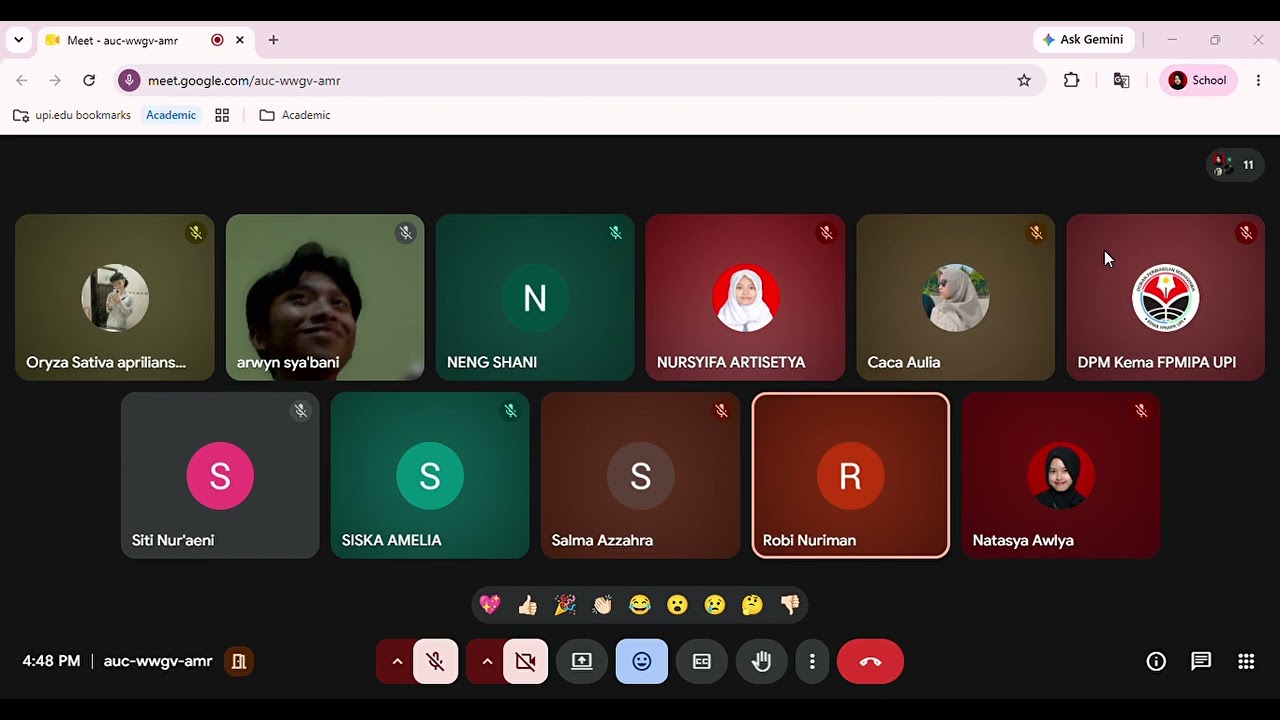
Meet Google Chrome 2026 06 08 16 40 35
혜수나NatasyaAwlya
Overview
This video documents a meeting focused on planning and refining program kerja (work programs) for an organization, likely a student body or similar group. Key participants, including leaders (Kabem, Wakabem) and representatives from DPM (Dewan Perwakilan Mahasiswa - Student Representative Council), discuss the process of developing and finalizing these programs. Emphasis is placed on ensuring program objectives are measurable, considering past policies for improvements and innovations, and fostering collaboration between different internal bodies. The meeting also touches upon logistical aspects like scheduling future work sessions and the importance of member participation and feedback.
Save this permanently with flashcards, quizzes, and AI chat
Chapters
- The initial part of the meeting involves checking in with participants and addressing any immediate questions or concerns.
- There's a brief mention of screening criteria, highlighting the need for fairness and avoiding arbitrary exclusions.
- The discussion touches upon the minimal implementation of certain aspects and the need to adjust based on specific requests.
- The feasibility of certain plans, like the frequency of activities, is questioned and open for feedback from DPM.
- The core of the discussion revolves around clarifying the details of proposed work programs (proker).
- Participants need to understand the programs thoroughly before selecting their priorities for the upcoming form.
- The goal is to avoid a 'gacha' or random selection process by ensuring clarity on what each program entails.
- The importance of having a clear scale of priority for selecting programs is emphasized.
- Leaders like Ibu Siska and Pak Robi (Kabem) provide their input and feedback.
- Pak Robi introduces himself as the person in charge of BEMKEMA and outlines expectations for program development.
- Key expectations include clearly defining program outputs and measurable achievements, aiming for tangible impact.
- The upcoming first Rapat Kerja (Work Meeting) on June 20th is highlighted as a crucial event for program ratification and requires mandatory attendance.
- Gloriardi from DPM provides feedback, emphasizing the need for measurable targets in program planning.
- DPM advises reviewing past policies to identify areas for improvement and innovation.
- The relevance of proposed programs to the current context and needs of the members/community is stressed.
- There's an acknowledgment that internal perspectives might be limited, and DPM's broader view is valuable for ensuring programs are relevant and impactful.
- The meeting concludes with affirmations and a call for continued collaboration.
- Participants are encouraged to provide their perspectives to broaden the understanding and impact of programs.
- The importance of prayer and good intentions is mentioned as a way to guide their efforts.
- Logistical arrangements for future meetings and informal follow-ups are discussed.
Key takeaways
- Effective program planning requires clear articulation of objectives and measurable outcomes to ensure accountability and impact.
- Reviewing historical policies and member feedback is essential for program relevance, innovation, and continuous improvement.
- Collaboration between different organizational bodies (e.g., BEMKEMA and DPM) is crucial for a comprehensive and well-rounded approach to program development.
- The Rapat Kerja (Work Meeting) is a critical formal step for ratifying programs and requires active participation from all members.
- Prioritizing and understanding program details before selection leads to more engaged and effective participation.
- The organization aims to create programs that have a tangible and positive impact on its members and community.
- Open communication channels are vital for addressing concerns, gathering feedback, and ensuring alignment throughout the planning process.
Key terms
Test your understanding
- What is the primary purpose of discussing program kerja (work programs) in this meeting?
- Why is it important for participants to understand the details of each program before selecting their priorities?
- How does the feedback from DPM contribute to the effectiveness of the planned programs?
- What are the key expectations for program development as outlined by the leadership (Kabem)?
- What is the significance of the upcoming Rapat Kerja (Work Meeting) mentioned in the discussion?