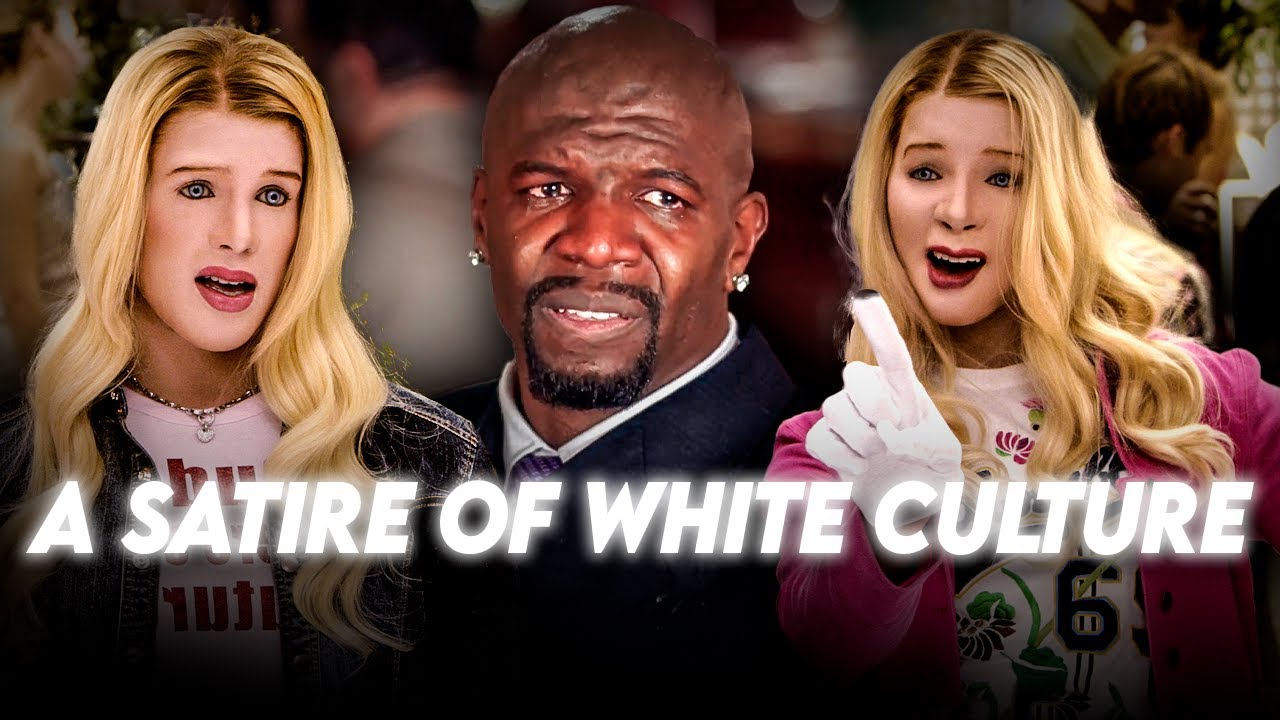
Race, Class, and the Comedy of Pretending | White Chicks | Tales & Thoughts
Tales and Thoughts
Overview
This video analyzes the 2004 comedy "White Chicks" not just as a film, but as a profound social commentary. It argues that the movie, through its comedic premise of two Black FBI agents disguising themselves as white women, offers a sharp critique of American society. The analysis highlights how the film exposes racial stereotypes, class privilege, and the complexities of identity, particularly for Black individuals navigating a predominantly white society. It explores themes of marginalization, the performance of identity, and the importance of empathy and understanding across different social groups, suggesting the film was ahead of its time in addressing these issues.
Save this permanently with flashcards, quizzes, and AI chat
Chapters
- "White Chicks" is more than a simple comedy; it uses humor to deliver a powerful critique of white American society.
- The film was ahead of its time in addressing issues of race, class, and identity that are more openly discussed today.
- The core premise involves two Black FBI agents going undercover as white women to protect heiresses, offering a unique perspective on societal dynamics.
- Kevin and Marcus, despite being FBI agents, are immediately subjected to racial stereotypes by the wealthy Wilson sisters.
- The sisters treat the agents as subservient staff, assigning them demeaning tasks like cleaning a dog carrier, echoing historical racial segregation.
- A car crash, caused by the sisters' insistence on the dog's comfort, leads to them blaming the agents, demonstrating entitled behavior and shifting responsibility.
- To complete their mission, Kevin and Marcus undergo a physical transformation into the Wilson sisters.
- This disguise allows them to mimic and satirize the behaviors, attitudes, and speech patterns of privileged white women.
- Their performance highlights societal biases, showing how being perceived as white women grants them a different level of respect and access.
- Disguised as the Wilson sisters, the agents navigate social events, encountering rivals, potential romantic interests, and gossip.
- The film explores themes of superficiality, social climbing, and the pressures of maintaining appearances in elite circles.
- Marcus's lactose intolerance and Kevin's pursuit of a reporter highlight the comedic challenges of maintaining their disguise amidst personal needs and romantic interests.
- The character Latrell Spencer, a Black athlete obsessed with white women, embodies harmful stereotypes about Black male sexuality.
- Latrell's preference for white women, even those with 'black women's curves,' suggests internalized racism and a devaluing of his own community.
- The film uses Latrell's character to critique how societal biases can lead individuals to seek validation through association with dominant groups.
- Marcus's relationship with Gina serves as a parallel narrative, illustrating the damaging effects of poor communication and assumptions.
- Gina's suspicion stems from Marcus's perceived neglect, while Marcus struggles to articulate his experiences and needs.
- The film suggests that empathy and active listening are crucial for overcoming misunderstandings in any relationship, personal or societal.
- The agents' disguises are eventually revealed, leading to chaos and their dismissal from the FBI.
- The real villains, the Vandereld family, are exposed as the masterminds behind a kidnapping plot.
- Kevin and Marcus, with the help of allies, expose the villains, leading to their reinstatement and a deeper understanding between characters.
Key takeaways
- Comedy can be a powerful tool for social commentary, offering insights into complex issues like race and class.
- Racial and class privilege often manifest as entitlement, leading to the stereotyping and marginalization of others.
- Performing or mimicking dominant identities can reveal the constructed nature of social norms and biases.
- Effective communication and empathy are essential for bridging divides and fostering understanding between different groups.
- Internalized biases can affect how individuals perceive themselves and their communities, influencing their relationships and aspirations.
- Experiencing the challenges faced by marginalized groups can foster empathy and lead to personal growth and changed perspectives.
- The film critiques societal expectations placed on women, such as body image and beauty standards, through the agents' experiences.
Key terms
Test your understanding
- How does "White Chicks" use comedy to critique white American society and its underlying racial dynamics?
- In what ways do the Wilson sisters' initial interactions with Kevin and Marcus demonstrate the impact of class privilege and racial stereotyping?
- What does the film suggest about the performance of identity when Kevin and Marcus disguise themselves as white women?
- How does the character of Latrell Spencer contribute to the film's commentary on race, sexuality, and internalized biases?
- What lessons about communication and empathy can be drawn from the parallel storylines of the agents' mission and Marcus's relationship with Gina?