9:30
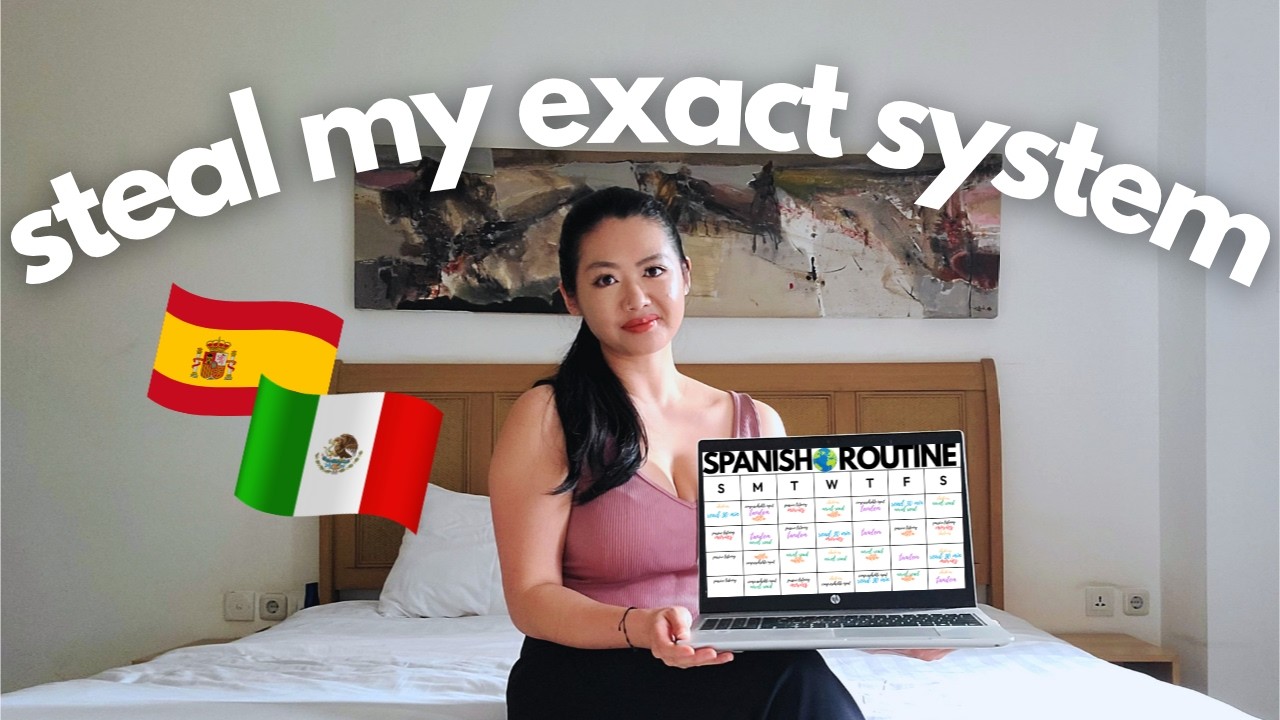
I did this every day to learn Spanish
Mindful Fluency - Language Learning Coach
Overview
This video outlines a structured, mindful approach to learning Spanish, focusing on sustainable progress and durable learning rather than overwhelming the learner. The system emphasizes limiting resources, strategically targeting weaknesses, and incorporating various practice methods like flashcards, writing, speaking, and self-testing. It highlights the importance of adapting to one's energy levels and learning style to maintain motivation and prevent burnout, ultimately aiming for fluency on the learner's own terms.
How was this?
Save this permanently with flashcards, quizzes, and AI chat
Chapters
- Limit learning resources to a maximum of five to prevent overwhelm and decision fatigue.
- Utilize one primary 'base resource' (like a textbook or workbook) to provide structure and a reference point for grammar and vocabulary.
- Recognize that most resources teach the same core concepts; the delivery method is what varies and should be tailored to individual learning preferences.
Establishing a clear, limited system prevents learners from getting lost in too many options and provides a solid foundation for consistent progress.
Using a textbook as a base resource to understand past conjugations, even if other resources are preferred for practice.
- Identify and focus on grammar points or vocabulary that are challenging or not yet comfortable to use.
- Set a monthly focus on one to three specific grammar topics to avoid overwhelming oneself.
- Adapt study intensity to personal capacity, prioritizing sustainable learning over prolonged, intense study sessions.
This approach ensures that learning efforts are directed where they are most needed, leading to more efficient improvement and preventing the development of ingrained errors.
Dedicate a month to mastering the past subjunctive and conditional verb tenses by actively seeking out and practicing phrases that combine them.
- Use flashcards with audio (e.g., on Quizlet or LingoDeer) for reviewing vocabulary and grammar, especially on low-energy days.
- Create flashcards with example sentences that demonstrate grammar concepts in context, such as the past subjunctive combined with the conditional.
- Review flashcards regularly (e.g., twice a week for 30-60 minutes) to internalize grammar structures and correct bad habits.
Flashcards provide a flexible and effective tool for reinforcing learned material, particularly for solidifying grammar rules and vocabulary through repeated exposure and active recall.
Making a flashcard for the sentence 'If I had known, I would have gone' to practice the past subjunctive and conditional.
- Engage in writing exercises (200-350 words) once a week, especially on high-energy days, to practice output and organize thoughts.
- Use writing to document progress and easily review corrections from a teacher or tutor.
- Incorporate corrections from writing into flashcards for double reinforcement of mistakes.
Writing forces deliberate thought and provides a tangible record of progress, allowing for targeted correction and deeper understanding of errors.
Writing an essay on a familiar topic, receiving corrections on grammar and vocabulary usage, and then adding those corrected phrases to flashcards.
- Take level tests periodically to identify areas of weakness in grammar and vocabulary, even if results are not perfectly accurate.
- Analyze incorrect answers on tests to understand the underlying grammatical or vocabulary errors.
- Engage in regular conversation practice, either with a teacher or through self-talk, to build confidence and fluency.
Regular assessment and active speaking practice are crucial for identifying gaps in knowledge and developing the confidence to use the language spontaneously.
Reviewing a missed question on a practice test, looking up the correct grammar rule, and adding it to a flashcard.
- Recognize that 'doing your best' varies daily based on energy and stress levels.
- Have alternative ways to approach the same learning activity to match your current energy level.
- Prioritize sustainability and enjoyment in language learning to avoid resentment, guilt, and burnout.
Flexibility in adapting study methods to personal energy levels is key to long-term commitment and prevents the negative emotional consequences of forcing oneself to perform beyond capacity.
On a low-energy day, reviewing vocabulary flashcards instead of attempting a lengthy writing assignment.
Key takeaways
- Sustainable language learning requires a structured system that limits resources and prioritizes consistency over intensity.
- Targeting specific weaknesses with focused monthly goals leads to more efficient and effective skill development.
- Flashcards are a versatile tool for reinforcing both vocabulary and grammar, especially when incorporating contextualized examples.
- Writing practice serves as a powerful output exercise that aids in organizing thoughts and documenting progress for targeted correction.
- Regular self-assessment through tests and active speaking practice are vital for identifying knowledge gaps and building conversational confidence.
- Adapting learning activities to match daily energy levels is crucial for maintaining motivation and preventing burnout.
- The goal of language learning should be fluency on one's own terms, emphasizing enjoyment and usefulness.
Key terms
Mindful Fluency MethodDecision FatigueBase ResourceGrammar PointsFlashcards with AudioOutput-Based ExerciseSolo Speaking HabitSustainable Learning
Test your understanding
- How does limiting the number of learning resources contribute to effective language acquisition?
- Why is it important to strategically target your weakest language skills rather than studying broadly?
- What is the benefit of creating flashcards with example sentences that demonstrate grammar in context?
- How can writing practice help document progress and refine specific errors in a language?
- Why is adapting your study routine to your daily energy levels crucial for long-term language learning success?