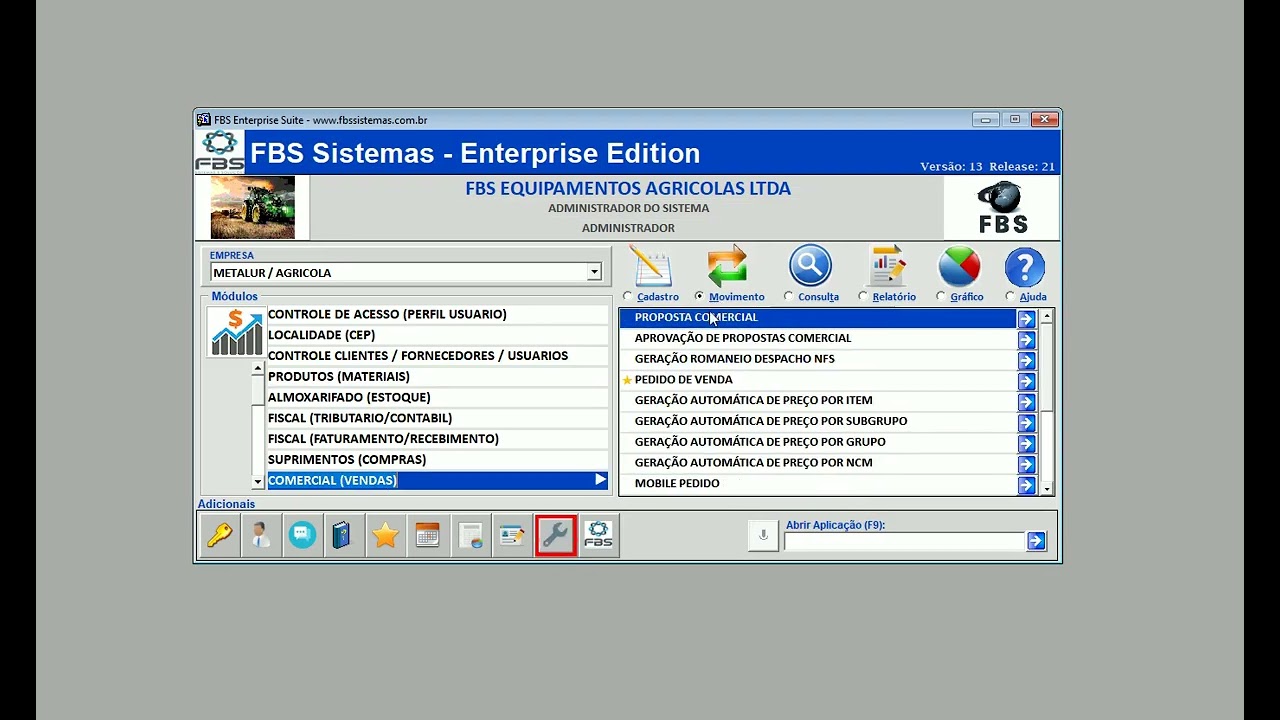
Produtos Customizados Criação de Preço de Venda
FBS Sistemas e Soluções
Overview
This video demonstrates the process of creating and pricing customized products within a business management system. It highlights how to efficiently generate a new product by cloning an existing one, allowing for modifications to its structure, components, and manufacturing time. The system automatically calculates the cost based on updated material prices and assembly times. It then shows how to generate a sales proposal with a suggested selling price derived from the product's cost and predefined margins or customer-specific price tables. Finally, the video illustrates how a approved proposal can be converted into a sales order, which then feeds into the production planning system (PCP), initiating the manufacturing process by generating production orders and material requisitions. The emphasis is on the system's ability to streamline the creation, pricing, and production of custom items.
Save this permanently with flashcards, quizzes, and AI chat
Chapters
- Introduction to FBS Temas Soluções and the focus on customized products.
- Explanation of the process for creating a sales price for a new, custom product.
- Overview of the workflow: product planning, budgeting, sales price construction, and order generation.
- The video aims to be brief and objective.
- Start with an existing, similar product as a base.
- Clone the existing product to create a new, customized version.
- Assign a new name and details to the customized product.
- The cloned product initially has no stock, sales value, or price list.
- Clone the structure (Bill of Materials) of a similar product.
- Modify the components: remove unnecessary items and add new ones.
- Update quantities for components.
- Adjust the assembly time required for the new product.
- The system can identify components with outdated cost prices.
- Manually update the cost price of a component based on market quotes.
- The system automatically updates the average cost and influences the product's overall cost.
- This ensures accurate cost calculation for pricing.
- Create a commercial proposal for the customized product.
- The system automatically suggests a sales price based on cost, markup, or customer price tables.
- Ability to review the product's engineering structure and cost breakdown.
- Print or send the commercial proposal to the client.
- Convert an approved proposal into a sales order.
- The sales order can be released to the production planning department (PCP).
- The PCP system schedules production based on sales orders.
- The system simulates production needs, considering stock and existing production.
- The system identifies required raw materials and components.
- It shows available stock, shortages, and potential purchase needs.
- Generate production orders (OPs) for manufacturing.
- Commit (emprenhar) materials from stock for production.
- Print material lists for the warehouse, organized by location.
- Generate technical sheets for each production step and sector.
- Recap the ease of creating and pricing customized products through intelligent cloning.
- Call to action for viewers to contact for demonstrations or quotes.
Key takeaways
- Cloning existing products is an efficient method for creating new customized items.
- Accurate product costing relies on up-to-date material prices and assembly times.
- The system automatically suggests sales prices, but allows for manual adjustments and negotiation.
- Approved sales proposals seamlessly convert into sales orders, triggering production planning.
- The production planning module (PCP) simulates needs, manages inventory, and generates production orders.
- The system provides detailed documentation for manufacturing, including technical sheets and material requisitions.
- Streamlining the custom product lifecycle from creation to production planning saves time and resources.