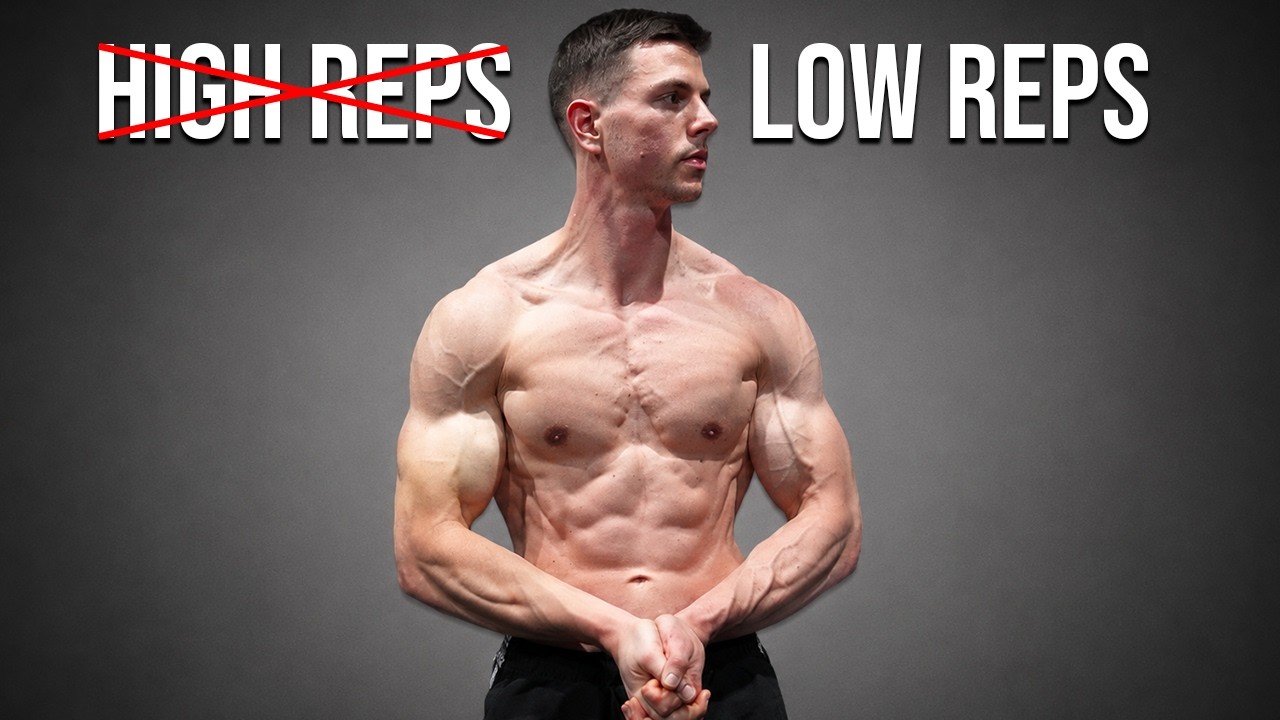
The Problem With High Rep Bodyweight Training
FitnessFAQs
Overview
This video explores the limitations of high-repetition bodyweight training, particularly for muscle growth (hypertrophy) and strength development. While high reps can build endurance and some muscle, the speaker argues that reliably reaching muscular failure, a key driver of hypertrophy, is difficult and uncomfortable at very high rep counts (30+). This is because fatigue at high reps is often due to systemic factors like the 'pump' or metabolic byproducts, rather than pure muscular fatigue, making it hard to gauge true failure. Lower rep ranges (5-15) with heavier loads or resistance are presented as more effective for building strength and muscle, while also allowing for better control over training intensity and recovery. The video advocates for a balanced approach, using lower rep ranges as the primary tool for strength and hypertrophy, with higher reps serving as a supplementary tool for variety or endurance.
Save this permanently with flashcards, quizzes, and AI chat
Chapters
- Muscle growth (hypertrophy) can occur across a wide rep range, from 5 to 50 reps, provided sets are taken close to muscular failure.
- Historically, high-rep calisthenics (e.g., 30+ reps) were considered as effective as lower-rep sets for hypertrophy.
- However, recent research highlights that reliably reaching true muscular failure is difficult at very high rep counts.
- At high reps (30+), the cessation of a set is often due to systemic fatigue (e.g., burning sensation, cardiovascular strain) rather than the muscle's inability to contract.
- This systemic fatigue can mask true muscular failure, meaning additional reps might still be possible if only muscular capacity was the limiting factor.
- Low-rep sets (e.g., 2-5 reps) clearly indicate muscular failure when the weight cannot be moved, a sensation distinct from high-rep fatigue.
- While tolerance to the discomfort of high reps can be trained, this adaptation doesn't necessarily translate to superior strength or hypertrophy.
- Constantly pushing high-rep sets can lead to excessive systemic fatigue, hindering recovery and overall training volume.
- Lower-rep training with higher loads removes the systemic fatigue component, allowing for more focused muscular work and potentially better long-term progress.
- High-rep training isn't inherently bad; it's about using the right tool for the job.
- For consistent, long-term strength and hypertrophy goals, lower to moderate rep ranges (e.g., 5-15) are generally more effective and efficient.
- Higher rep ranges can be incorporated for variety, endurance, or specific training phases, but shouldn't form the entirety of a program focused on strength and muscle gain.
- Strength developed in lower rep ranges with higher loads translates well to higher rep performance.
- Conversely, high-rep endurance training does not effectively translate to significant gains in maximal strength.
- This is because lower rep training enhances neural drive and force production, which are foundational for all types of physical output.
- Using weighted calisthenics or hybrid training allows for better control over intensity and rep ranges.
- A double progression model (e.g., starting at 4 reps, working up to 8 reps with a weight, then increasing the weight) is an effective way to ensure progressive overload.
- Constraining the rep range and focusing on increasing load or reps within that range is more effective than simply adding more reps indefinitely.
- Hypertrophy: High reps are at best equal to lower reps, while lower reps with higher loads are often more efficient.
- Strength: Lower rep ranges with higher loads are unequivocally superior for strength development.
- Fatigue & Recovery: Lower rep training results in substantially less fatigue per set and workout, aiding recovery.
- Connective Tissue Health: Lower rep/higher load training is better for strengthening tendons and joints.
Key takeaways
- True muscular failure is harder to achieve and less distinct at high repetition ranges (30+) due to systemic fatigue.
- Lower rep ranges (5-15) with adequate resistance are generally more effective for building maximal strength and hypertrophy.
- Strength gains from lower rep training transfer better to higher rep performance than vice versa.
- Focusing on progressive overload through increasing weight or reps within a constrained range is more efficient than endless rep increases.
- High-rep training can be a useful tool for variety or endurance, but shouldn't be the sole focus for strength and muscle-building goals.
- Training programs should align with specific goals, and traditional high-rep bodyweight dogma may not serve everyone.
- Weighted calisthenics and hybrid training offer more control over intensity, making it easier to manage rep ranges and progressive overload.
Key terms
Test your understanding
- Why is it more difficult to accurately gauge muscular failure during high-rep (30+) sets compared to low-rep (5-) sets?
- How does the transferability of strength and endurance differ between low-rep and high-rep training protocols?
- What are the primary reasons why lower rep ranges with higher loads are often recommended over very high rep ranges for muscle growth?
- Explain the concept of 'double progression' and how it facilitates progressive overload in training.
- How can an individual effectively incorporate high-rep training into their routine without compromising their primary strength and hypertrophy goals?