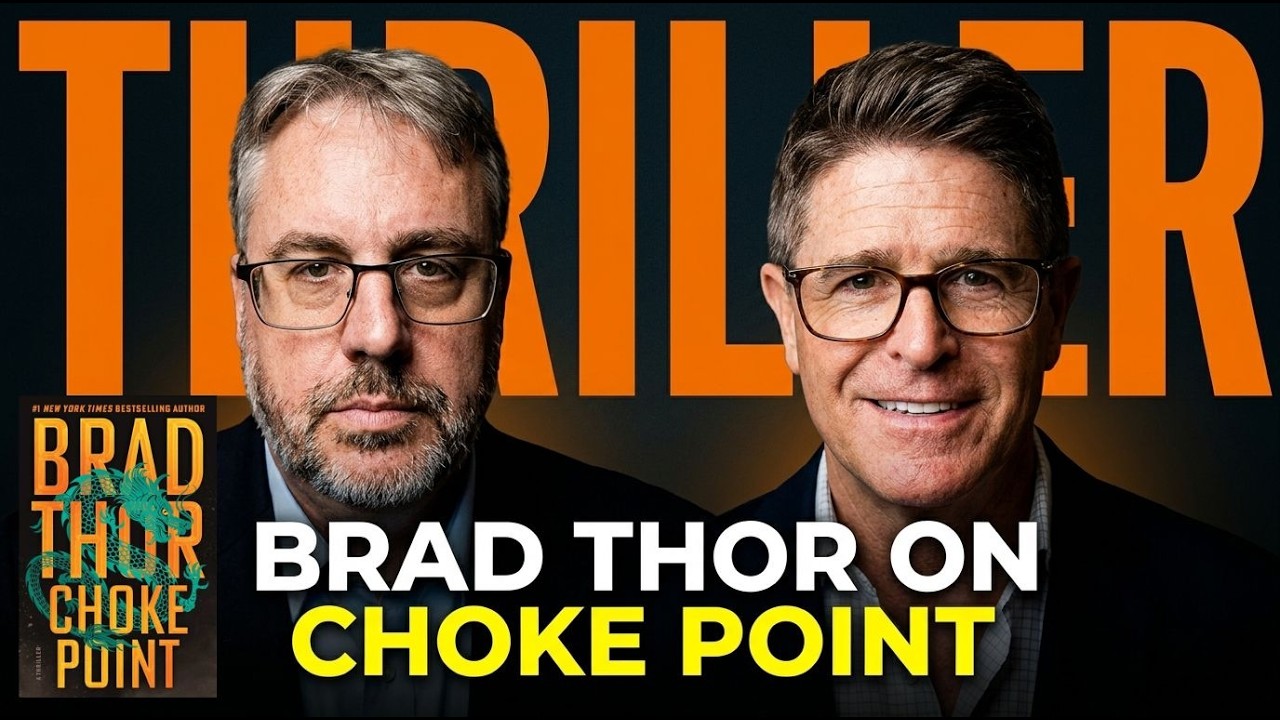
Brad Thor on Choke Point, Netflix’s Cold Zero, and the Future of Scot Harvath
Spy TV - Spybrary
Overview
This interview with author Brad Thor delves into his "Scot Harvath" thriller series, particularly the latest installment, "Choke Point." Thor discusses the evolution of his protagonist, the geopolitical themes in his work, and his meticulous research process, which includes consulting experts and consuming vast amounts of news. He also touches on the changing landscape of publishing, the impact of social media on reading habits, and his transition from a travel show host to a bestselling author. The conversation highlights Thor's dedication to realism in tradecraft and military tactics, his collaborative writing approach, and the upcoming Netflix adaptation of "Cold Zero."
Save this permanently with flashcards, quizzes, and AI chat
Chapters
- Scot Harvath was conceived as an American hero operating outside conventional constraints, driven by a strong moral compass to protect the nation.
- Harvath's character evolved from a defensive operative focused on counterterrorism to a sophisticated intelligence officer with a full range of espionage skills.
- The series began before 9/11 but gained significant relevance in the post-9/11 world, with early blurbs highlighting Harvath as a perfect hero for the era.
- Thor's writing aims to provide geopolitical insight, moving beyond terrorism to address threats from Russia, North Korea, Iran, and China.
- Thor's novels are grounded in specific geopolitical events and conflicts, using them as backdrops for his thrillers.
- Choke Point' centers on China's Belt and Road Initiative and its attempt to build a canal across Thailand to bypass the Strait of Malacca.
- Thailand's refusal to allow the canal is influenced by historical British objections and fears of increased Muslim insurgent activity.
- The novel incorporates elements of political instability in Thailand and potential Chinese-backed manipulation of internal conflicts.
- Thor emphasizes realistic tradecraft, bomb-making techniques, and military tactics in his novels.
- He relies on a network of active and former special operations personnel, intelligence officers, and law enforcement experts for accuracy.
- Research for 'Choke Point' involved understanding bomb-making (without revealing classified details) and the specific operational environment in Thailand.
- Thor's background as a travel show host informs his ability to vividly describe settings, often drawing on consultations with individuals who have operated in those locations.
- Thor has adapted his writing style to compete for attention in the digital age, shortening chapters and incorporating cliffhangers.
- This shift from longer chapters in early works like 'The Lions of Lousern' to shorter, cinematic chapters in 'Choke Point' aims to maintain reader engagement.
- The goal is to provide a sense of accomplishment with each chapter, encouraging readers to continue.
- Thor views his fellow authors not as rivals but as colleagues sharing the same audience, often promoting each other's work.
- Thor believes that while writing is an art, the rest of the process is business, requiring attention to industry trends and reader onboarding.
- He recommends starting with more recent books like 'Spymaster' rather than his earliest works, as the geopolitical context and writing style have evolved.
- The author sees social media, particularly Instagram, as a dopamine-driven distraction that competes with the deeper engagement required for reading.
- Thor is planning future collaborations and potentially standalone novels outside the Harvath universe, while also considering the long-term direction of the Harvath series.
Key takeaways
- Scot Harvath is a morally grounded, adaptable hero designed to operate effectively in complex geopolitical scenarios where traditional rules may not apply.
- Brad Thor's novels integrate current geopolitical issues, such as China's strategic initiatives and regional conflicts, into thrilling narratives.
- Authenticity in tradecraft and military detail is achieved through extensive research and consultation with subject matter experts.
- Thor has intentionally evolved his writing style, shortening chapters and increasing pace to capture and retain reader attention in the digital age.
- The author views the writing community as collaborative rather than competitive, focusing on serving a shared readership.
- Social media platforms like Instagram offer immediate gratification but can detract from the sustained focus required for deep reading.
- Choosing the right entry point into a long-running series is crucial for new readers, with more recent installments often providing a better reflection of current themes and style.
Key terms
Test your understanding
- How has Scot Harvath's role and skillset evolved throughout the series, and why is this evolution significant?
- What is the central geopolitical conflict explored in 'Choke Point,' and what are the key motivations of the involved nations?
- Describe Brad Thor's research methodology for ensuring realism in his novels, and provide an example of an expert he consulted.
- How has Thor adapted his writing style over his career, and what factors influenced these changes?
- What is Thor's perspective on the relationship between authors in the thriller genre, and how does he view competition from social media and streaming services?