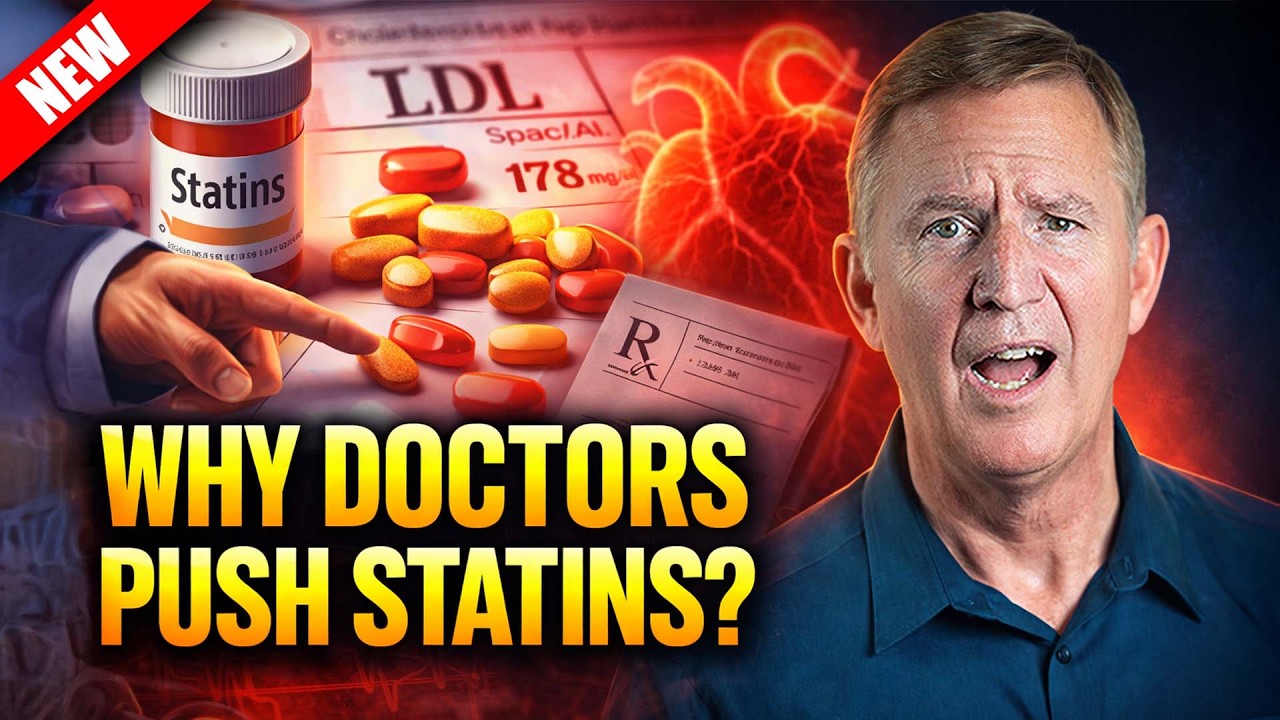
Why Your Doctor Wants You Taking a Statin (And Why You Might Not Need One)
Dr. Eric Westman - Adapt Your Life
Overview
This video explores the role and effectiveness of statins in managing cardiovascular health. It clarifies that statins primarily work by reducing the liver's cholesterol production, which in turn lowers LDL cholesterol in the bloodstream, rather than directly cleaning arteries or reversing existing plaque. While statins are effective at reducing LDL exposure and can stabilize plaques, potentially lowering the risk of heart attacks and strokes in high-risk individuals, they are not a cure-all. The discussion emphasizes that cardiovascular disease is complex, involving multiple factors beyond LDL cholesterol, such as insulin resistance, inflammation, and blood pressure. The video also highlights alternative and complementary approaches like lifestyle changes (diet, exercise) and newer medications (GLP-1 agonists), suggesting they may offer comparable or even superior benefits for some individuals. It cautions against unrealistic expectations of statins, stressing they reduce risk but do not eliminate it, and come with potential side effects that warrant careful consideration, especially for those at lower risk.
Save this permanently with flashcards, quizzes, and AI chat
Chapters
- Statins work by inhibiting an enzyme in the liver (HMG-CoA reductase) that produces cholesterol.
- This leads to the liver upregulating LDL receptors, pulling more LDL cholesterol from the blood.
- Statins reduce future LDL exposure to artery walls but do not 'clean out' existing plaque or reverse atherosclerosis.
- The primary effect is reducing the risk of new damage and slowing disease progression, not repairing existing damage.
- Cholesterol is essential for life, serving as a component of cell walls and a precursor to hormones.
- LDL particles are necessary for transporting fat-soluble substances in the bloodstream.
- Factors like insulin resistance, metabolic syndrome, and type 2 diabetes can be more significant risk factors than LDL cholesterol alone.
- Focusing solely on LDL ignores other critical 'lanes' of cardiovascular risk like inflammation and blood pressure.
- Statins are highly effective at reducing LDL cholesterol exposure and have a strong evidence base for reducing cardiovascular events in high-risk individuals.
- They can stabilize existing plaques by reducing inflammation, making them less likely to rupture.
- Statins do not eliminate cardiovascular risk entirely; they reduce it, and risk remains if other factors are unaddressed.
- They do not improve blood pressure, fitness, or compensate for poor lifestyle choices like smoking or lack of sleep.
- Lifestyle changes, including diet and exercise, can significantly reduce cardiovascular risk, potentially as much as or more than statins.
- Newer medications, such as GLP-1 agonists (weight loss drugs), have shown promise in reducing cardiovascular events through mechanisms other than LDL lowering.
- Targeting obesity itself can be a powerful strategy for improving overall metabolic health and reducing cardiovascular risk.
- The effectiveness of lifestyle interventions is often underestimated by healthcare professionals.
- Cardiovascular risk is probabilistic; statins lower risk but do not eliminate it, even with significant LDL reduction.
- Unrealistic expectations about statins (e.g., expecting them to 'fix' everything or replace lifestyle changes) lead to disappointment and mistrust.
- Potential side effects of statins include muscle pain, a small increased risk of diabetes, fatigue, and digestive issues.
- The decision to use statins should be individualized based on baseline risk, broader health profile, and consideration of trade-offs.
- While some argue high LDL isn't dangerous, large meta-analyses consistently show a link between higher LDL exposure and increased cardiovascular risk.
- Genetic evidence (Mendelian randomization) supports LDL's causal role in atherosclerosis.
- Counterarguments often focus on specific populations, reverse causation in frail individuals, or the role of oxidized LDL.
- The consensus among many clinicians is that LDL and ApoB are causal factors for atherosclerotic cardiovascular disease, even if not the sole cause.
- Statins are most clearly indicated for secondary prevention (after a heart attack/stroke) and for individuals with very high baseline risk (e.g., familial hypercholesterolemia, multiple risk factors).
- They can be a reasonable addition if lifestyle optimization alone hasn't sufficiently lowered LDL in high-risk individuals.
- Using statins as a substitute for addressing metabolic health (obesity, sedentary lifestyle, poor diet) is not advisable.
- Statins are powerful tools for reducing risk in specific situations but are limited and not a replacement for comprehensive health management.
Key takeaways
- Statins lower LDL cholesterol by reducing liver production, thereby decreasing future arterial damage, but they do not reverse existing plaque.
- Cardiovascular risk is multifactorial; insulin resistance, metabolic syndrome, and inflammation are critical factors often overlooked when focusing solely on LDL.
- While effective in reducing cardiovascular events for high-risk individuals, statins do not eliminate risk and come with potential side effects.
- Lifestyle modifications like diet and exercise can have a profound impact on cardiovascular health, sometimes rivaling or exceeding the benefits of medication.
- Newer medications like GLP-1 agonists offer alternative pathways to reduce cardiovascular risk, particularly by addressing weight and metabolic health.
- Managing expectations is key: statins reduce risk, they don't guarantee complete protection or replace the need for a healthy lifestyle.
- The decision to use statins should be personalized, considering an individual's overall risk profile, existing health conditions, and the trade-offs involved.
Key terms
Test your understanding
- How do statins work at a molecular level, and what is the primary effect they have on arteries?
- Beyond LDL cholesterol, what other physiological factors significantly contribute to cardiovascular risk?
- What are the main benefits and limitations of statin therapy in managing cardiovascular health?
- How can lifestyle changes and newer medications like GLP-1 agonists serve as alternatives or complements to statin treatment?
- Why is it important to manage expectations regarding the effectiveness and role of statins in preventing heart disease?