18:34
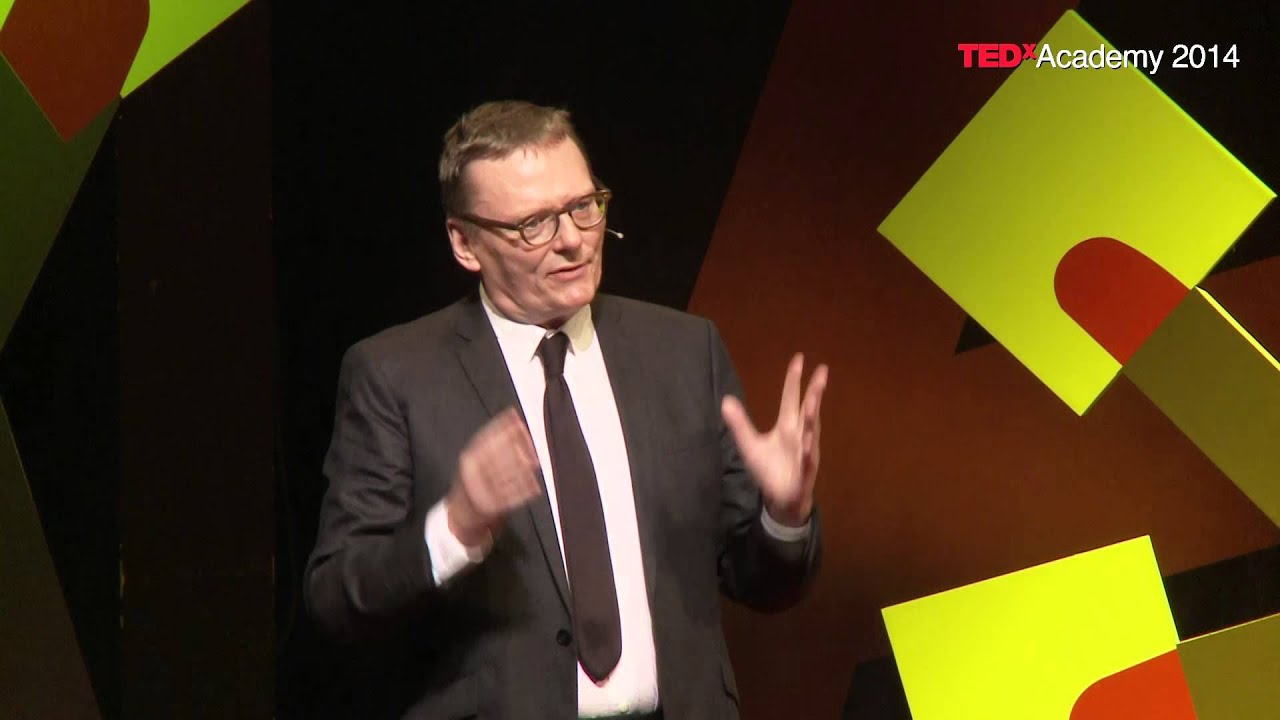
Why nations fail | James Robinson | TEDxAcademy
TEDx Talks
Overview
This video explains why some nations fail and others succeed by examining the underlying economic and political institutions. It argues that prosperity is not due to a lack of resources or technology, but rather to the presence of inclusive institutions that foster innovation and opportunity, versus extractive institutions that concentrate power and wealth. The key difference lies in how political power is distributed and how effectively the state can enforce rules, ultimately shaping the economic landscape and the well-being of a nation.
How was this?
Save this permanently with flashcards, quizzes, and AI chat
Chapters
- Observing the Korean peninsula at night reveals a dramatic difference in electricity usage, with South Korea brightly lit and North Korea largely dark.
- This visual disparity suggests that North Korea lacks access to basic technologies like electricity, which significantly limits its economic potential.
- Poor countries generally exhibit worse technology, lower education and health standards, and poorer public services compared to rich countries.
This initial comparison vividly illustrates the observable differences between prosperous and impoverished nations, setting the stage for a deeper explanation of the root causes.
The contrast between the illuminated cities of South Korea and the dark landscape of North Korea at night.
- The common belief that poor countries are simply too poor to afford development is challenged.
- Resources in poor countries are often wasted due to inefficient or corrupt systems, rather than being unavailable.
- The fundamental difference between rich and poor nations lies in their organization and the resulting incentives and opportunities for citizens.
This section reframes the problem of poverty from a lack of resources to a problem of institutional design, shifting the focus to how societies are organized.
The example of Robert Mugabe, president of Zimbabwe for 34 years, who also happened to win the lottery, implying that wealth and power can be concentrated through non-productive means.
- Inclusive economic institutions, like the U.S. patent system established in 1790, protect intellectual property and create incentives for innovation.
- The patent system was open to everyone, regardless of social background, allowing talent and creativity from all segments of society to flourish.
- This system harnessed latent talent, leading to technological advancements and economic prosperity.
- Extractive institutions, conversely, impede incentives and opportunities, leading to poverty.
The patent system serves as a clear, historical example of how inclusive institutions can foster innovation and economic growth by providing equal opportunity and protection.
Thomas Edison's patent for the light bulb, protected by the U.S. patent system, which incentivized further innovation.
- Bill Gates, an innovator from the U.S., built his fortune through entrepreneurship and creating new technologies in software.
- Carlos Slim, from Mexico, amassed wealth by creating and maintaining monopolies, which stifled competition and national income.
- Inclusive institutions in the U.S. rewarded innovation (Gates), while extractive institutions in Mexico allowed for monopolistic wealth accumulation (Slim).
Comparing Bill Gates and Carlos Slim highlights how the same economic principles of inclusive versus extractive institutions play out in contemporary global economies.
Bill Gates' innovation in computer software versus Carlos Slim's telecommunications monopoly in Mexico.
- The existence of inclusive or extractive economic institutions is ultimately rooted in political structures.
- Inclusive institutions arise when political power is broadly distributed, preventing oligarchies from controlling the system.
- A strong state is also necessary to enforce the rules and protect rights, ensuring that laws are applied universally.
- The reconciliation of broad political power (democracy) with a strong, effective state is crucial for sustained prosperity.
This section reveals that economic success is not solely about economic rules, but deeply intertwined with political power dynamics and the capacity of the state.
The U.S. anti-trust authority holding Bill Gates accountable, demonstrating a strong state enforcing laws, contrasted with Mexico's weak state unable to enforce anti-trust laws against Carlos Slim.
- Greece, despite economic successes, faces challenges in reconciling a strong, effective state with a broadly distributed democratic power.
- Difficulty in building a state based on universal rules, rather than political patronage (clientelism), hinders inclusive institutions.
- When the state becomes a tool for private interests rather than public good, it leads to unsustainable fiscal policies and debt.
- The solution lies in a political project to build inclusive institutions and a non-clientelistic state, not just fiscal austerity.
The Greek example illustrates the complex and often contradictory relationship between democratic power distribution and state strength, showing how this tension can undermine economic stability.
The fiscal problems in Greece are attributed not to technical economic errors, but to the political challenge of reconciling democracy with a strong, non-clientelistic state capable of enforcing universal rules.
Key takeaways
- Nations succeed or fail based on their institutional framework, not just their resources or technology.
- Inclusive institutions, which provide broad opportunities and incentives, foster innovation and prosperity.
- Extractive institutions, which concentrate power and wealth, stifle growth and perpetuate poverty.
- The distribution of political power is a critical determinant of whether a society develops inclusive or extractive economic institutions.
- A strong, effective state capable of enforcing universal rules is essential for inclusive institutions, but must be balanced with democratic accountability.
- Clientelism, where the state serves private interests, is a symptom of weak or improperly structured political institutions and leads to economic instability.
- Addressing national poverty requires fundamental political reform to build inclusive institutions, not just superficial economic fixes.
Key terms
Inclusive InstitutionsExtractive InstitutionsIntellectual Property RightsInnovationMonopolyPolitical Power DistributionStrong StateClientelismEconomic InstitutionsPolitical Institutions
Test your understanding
- What is the fundamental difference between inclusive and extractive economic institutions, and how do they impact a nation's prosperity?
- How does the distribution of political power influence the type of economic institutions a country develops?
- Why is a strong state necessary for inclusive economic institutions, and what are the potential dangers if this strength is not balanced with democratic accountability?
- Explain how clientelism can undermine a nation's economy, using the Greek example provided.
- What is the core argument regarding the root cause of why nations fail or succeed, according to the speaker?