59:01
Pompeii - Life and Death in a Roman Town ( Mary Beard )
Cardo Maximus
Overview
This video explores daily life in ancient Pompeii, moving beyond the dramatic eruption of Mount Vesuvius to understand the social structures, economic realities, and personal experiences of its inhabitants. By examining the remains of 54 individuals found in a cellar, alongside archaeological evidence from the town and nearby Herculaneum, the program challenges simplistic notions of a stark divide between the rich and the poor. It reveals a complex society with surprising levels of social mobility, international connections, and shared experiences, offering a nuanced portrait of Roman life just before its abrupt end.
How was this?
Save this permanently with flashcards, quizzes, and AI chat
Chapters
- The eruption of Mount Vesuvius in 79 AD preserved Pompeii, offering a unique window into Roman life.
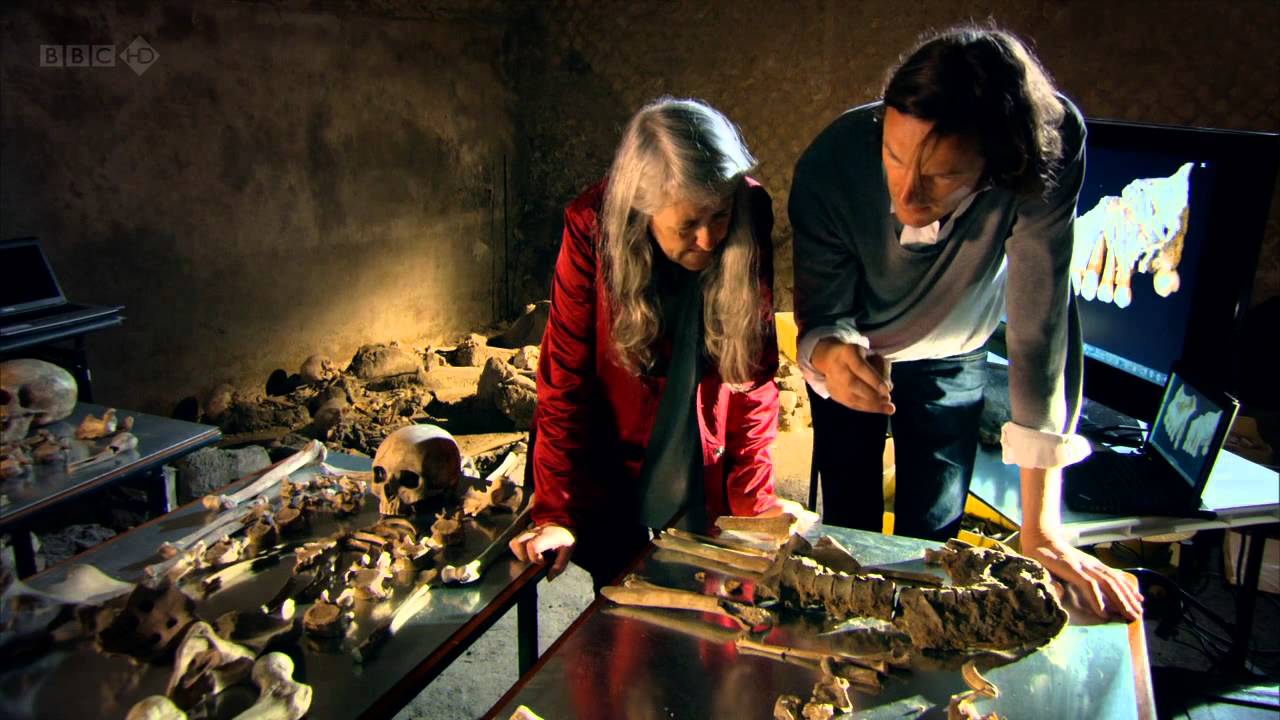
- While the plaster casts show how people died, the skeletons found in a cellar offer clues about how they lived.
- The program aims to challenge myths about Pompeii's society, particularly the perceived divide between rich and poor.
- Pompeii was a bustling town where ordinary people lived alongside the wealthy and hedonistic.
Understanding Pompeii's preservation allows us to study Roman society in unprecedented detail, moving beyond sensationalism to uncover the realities of daily life.
The discovery of 54 skeletons in a cellar near Pompeii, who were hiding from the eruption, provides a direct link to the lives of ordinary people.
- Skeletons found in the cellar can be broadly divided into two groups based on possessions found with them.
- One group carried money and jewels, indicated by green staining on bones from metal objects, suggesting wealth.
- The other group was found with no possessions, indicating a lower economic status.
- Forensic analysis of these skeletons provides a cross-section of Pompeian society, potentially revealing differences between social classes.
Examining the possessions of individuals found together in a place of refuge reveals stark economic disparities and provides tangible evidence for social stratification.
The 'green bones' of individuals indicate they were buried with metal objects like jewelry or coins, distinguishing them from those found with nothing.
- Pompeii was a vibrant town with essential Roman amenities like a forum, amphitheater, temples, and baths.
- The town was a mix of ordinary residents and wealthy visitors seeking leisure, challenging the idea of a purely austere or purely decadent society.
- Modern Naples offers echoes of Pompeii's street life, including multi-story buildings with living quarters above shops and similar architectural features.
- Graffiti and everyday objects found in Naples provide insights into the humor and social interactions of ancient Pompeians.
Comparing Pompeii to modern Naples helps visualize the bustling, multi-layered urban environment and the social dynamics that characterized Roman town life.
The presence of numerous fast-food establishments (thermopolia) in Pompeii suggests a culture of readily available, affordable food for the general populace.
- Skeletal analysis revealed infections, like a possible bone infection from a cut, suggesting that even with Roman bathing practices, hygiene was a challenge.
- The Roman baths, though often perceived as pristine, were communal spaces where water circulation was poor, potentially spreading germs.
- Evidence of congenital syphilis in two children challenges the timeline of the disease's arrival in Europe.
- Despite potential health issues, the care shown for the sick children suggests strong family support networks, even among the less affluent.
Investigating health and hygiene practices, particularly through skeletal remains and the function of public baths, reveals both the limitations and the social cohesion of Roman society.
The discovery of possible congenital syphilis in the teeth of twin children suggests a disease present in Roman times that was previously thought to have arrived much later in Europe.
- Phallic symbols were common in Pompeii, but their meaning is often misinterpreted as solely related to sexual debauchery.
- These symbols likely represented male power and masculinity within Roman culture, rather than just overt sexual themes.
- Paintings in bathhouse changing rooms, once thought to be 'menus' for brothels, were likely practical aids for remembering where belongings were stored.
- The town's only confirmed brothel reveals customer graffiti, but the overall depiction of sex in Pompeii is often sensationalized.
Deconstructing the common perception of Pompeii as a city obsessed with sex requires understanding the cultural context and power dynamics behind its symbols and art.
The paintings in the bathhouse changing rooms, depicting various sexual acts, are reinterpreted as a system of numbered references to help people locate their clothes, not as a brothel menu.
- Analysis of sewer contents and skeletal remains indicates that both the rich and the poor in Pompeii shared a similar, healthy diet.
- Worn teeth suggest a diet including bread made with stone-ground flour, which contained abrasive particles.
- Pompeii had extensive international trade, evidenced by imported goods like Egyptian emeralds and Indian ivory.
- The population was more multicultural than previously assumed, with evidence of individuals of African ancestry living in Pompeii.
Studying diet and imported goods reveals surprising dietary similarities across social classes and highlights Pompeii's integration into a vast global network.
The discovery of an ivory statuette of Indian origin in Pompeii demonstrates the town's awareness of and connection to distant parts of the Roman Empire.
- Roman slavery was complex, with opportunities for freedom and social advancement.
- Evidence suggests that individuals of African origin were not necessarily slaves and could achieve wealth.
- An ex-slave's tomb indicates he was wealthy enough to commission a large monument and engage in legal disputes.
- Slaves could hold high-status positions, such as doctors, even serving the emperor.
Understanding the nuances of Roman slavery, including manumission and the varied roles of enslaved people, complicates traditional views of Roman social hierarchy.
The inscription on a tomb reveals an ex-slave who became wealthy enough to commission a large monument and settle a dispute with a former friend in court.
- The people in the cellar were likely seeking refuge from the volcanic eruption, with some carrying their valuables.
- The presence of a fetus in the remains of a young woman highlights the personal tragedies of the eruption.
- Eyewitness accounts describe the chaos, darkness, and terror experienced during the eruption.
- The discovery of lamps suggests attempts to navigate the darkness and find comfort during the disaster.
The final moments of those in the cellar underscore the human cost of the eruption and provide a poignant conclusion to the exploration of their lives.
The discovery of a pregnant woman's remains, with a fetal pelvic bone indicating she was in her last month of pregnancy, powerfully illustrates the human tragedy.
Key takeaways
- Pompeii's preservation offers a unique, detailed snapshot of Roman life, challenging simplistic historical narratives.
- Skeletal remains provide crucial forensic data that complements archaeological findings, revealing aspects of health, diet, and social status.
- The perceived divide between the rich and poor in Pompeii was more complex, with evidence of shared experiences and social mobility.
- Roman society was more multicultural and globally connected than often assumed, with evidence of diverse origins and extensive trade.
- The interpretation of Roman artifacts and imagery requires careful consideration of cultural context to avoid sensationalism and misrepresentation.
- Slavery in the Roman world was not a monolithic institution; it allowed for manumission and varied social roles, including high-status professions.
- Daily life in Pompeii involved a mix of hardship and pleasure, with ordinary people sharing many experiences despite economic differences.
- The study of Pompeii continues to evolve, with new research constantly refining our understanding of this ancient civilization.
Key terms
VesuviusPompeiiHerculaneumPlaster CastsSkeletonsForensic AnalysisCellarOplontisThermopoliaRoman BathsCongenital SyphilisPhallic SymbolsTintinnabulumBrothelManumissionSewersDietGlobal TradeMulticulturalSlavery
Test your understanding
- How do the skeletons found in the cellar offer a different perspective on Pompeian life compared to the plaster casts?
- What evidence suggests that the economic divide in Pompeii was more nuanced than a simple rich vs. poor dichotomy?
- How did the Roman baths function as a social leveller, and what were their potential health drawbacks?
- What are some examples of Pompeii's international connections, and how do they challenge the perception of it as an isolated town?
- Explain the complexities of Roman slavery as presented in the video, including opportunities for freedom and social mobility.