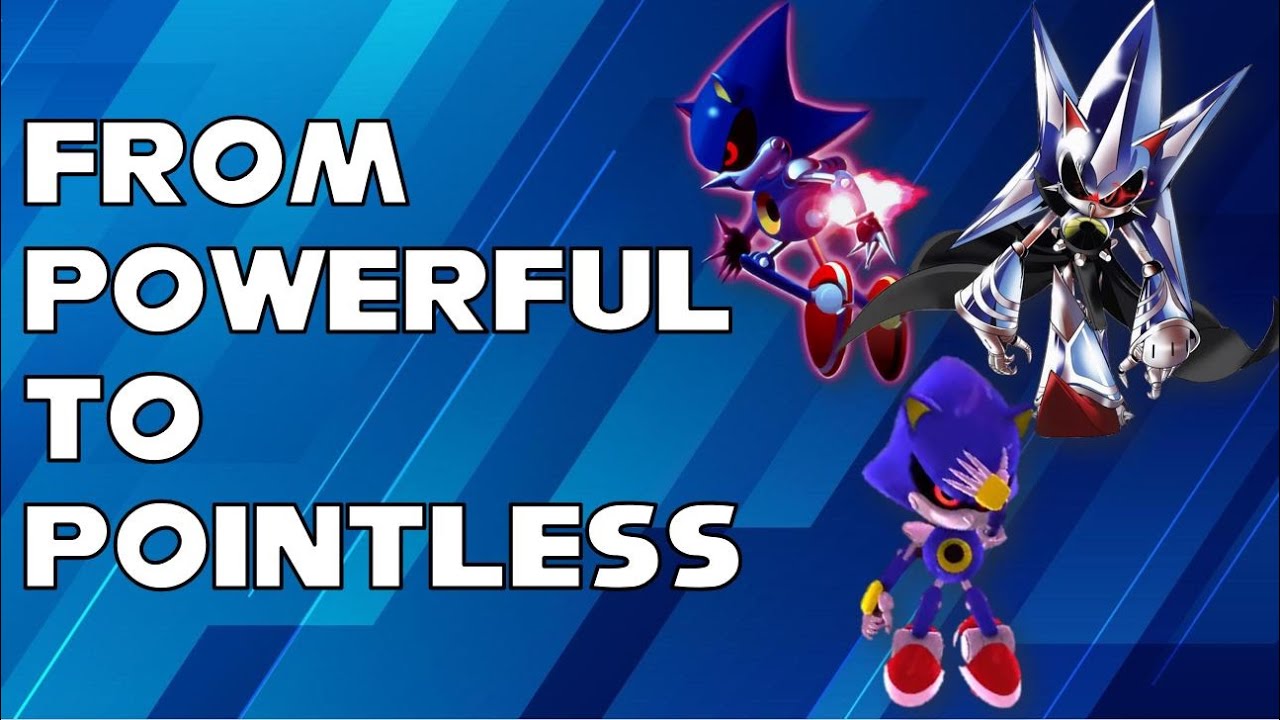
Why Metal Sonic Was A Brilliant Rival And How He Was Ruined
ThePJShow
Overview
This video analyzes the character arc of Metal Sonic, a robotic duplicate of Sonic the Hedgehog. It traces his origins in Sonic CD, highlighting his initial introduction as a formidable threat and his unique boss battle. The summary then explores his appearances in subsequent games, particularly Sonic Heroes, where he achieved his most complex portrayal as a villain with a clear motive to surpass Sonic. The video criticizes the decline in his characterization in later games, where he is often reduced to a generic boss or a mere selling point, lamenting the loss of his original depth and purpose. Finally, it touches upon his more recent appearances in comics and games, advocating for more meaningful roles over frequent, uninspired cameos.
Save this permanently with flashcards, quizzes, and AI chat
Chapters
- Metal Sonic was introduced in Sonic CD (1993) as a powerful robotic replica of Sonic.
- His initial appearance involved kidnapping Amy Rose, establishing him as a significant threat that Sonic couldn't immediately overcome.
- The boss battle in Sonic CD was unique, focusing on a high-speed race against Metal Sonic rather than a traditional combat encounter.
- Despite a strong introduction, his presence in Sonic CD was limited after the initial encounters.
- Metal Sonic reappeared in games like Knuckles' Chaotix, showcasing his combat abilities against multiple characters.
- In Knuckles' Chaotix, he transformed into Metal Sonic Kai after being exposed to a Dark Ring, demonstrating a new level of power.
- This transformation marked a significant escalation, positioning him as a final boss, surpassing even Dr. Robotnik in that role for the game.
- Sonic Heroes presented Metal Sonic's most complex characterization, where he orchestrated a plan to overthrow Dr. Robotnik.
- He impersonated Robotnik to gather data and abilities from Sonic's friends, ultimately leading to his own powerful transformations: Neo Metal Sonic and Metal Madness.
- Metal Sonic's motive was to prove his superiority over Sonic, seeing himself as the 'real Sonic' and seeking to fulfill his purpose of defeating him.
- This narrative highlighted his drive, ambition, and the depth of his existential purpose, making him a compelling antagonist.
- His final form, Metal Overlord, required the combined efforts of three teams to defeat, emphasizing his immense power.
- Following Sonic Heroes, Metal Sonic's appearances became less frequent in main series games but increased in spin-offs.
- In many 2010s games (e.g., Sonic Generations, Sonic 4), he was reduced to a generic boss fight with no significant character development or plot relevance.
- His inclusion often felt like nostalgia pandering or a 'selling point' rather than a narrative necessity.
- Even when used in unique ways, like an illusion in Sonic Forces, the execution was questioned due to his existing capabilities.
- Despite the general decline, some media like Sonic Free Riders and Sonic Mania offered brief moments of interesting characterization or powerful transformations.
- The IDW comic series provided a more substantial role, with Metal Sonic acting as a major villain and even displaying new forms like Super Neo Metal Sonic.
- A short story in the IDW annual, 'Reflections,' suggested Metal Sonic confronting his identity as a duplicate.
- The video argues that while Metal Sonic can still be a great character, his frequent, uninspired appearances diminish his impact and bore audiences.
Key takeaways
- Metal Sonic's initial introduction in Sonic CD established him as a unique and formidable rival through innovative boss mechanics and a clear threat.
- His character reached its peak in Sonic Heroes, where his complex motivations, transformations, and desire to prove his superiority over Sonic were explored.
- The decline in Metal Sonic's characterization in later games is attributed to overuse and a lack of meaningful narrative integration, reducing him to a generic boss or marketing tool.
- A compelling antagonist is often defined by their purpose and motivations, not just their power or design.
- Frequent, uninspired appearances can dilute a character's impact and lead to audience fatigue, even for well-established figures.
- While Metal Sonic's potential for depth remains, his current portrayal often fails to capitalize on it, leading to a diminished presence.
- The best character arcs involve consistent development and meaningful integration into the story, rather than superficial cameos.
Key terms
Test your understanding
- What made Metal Sonic's initial introduction in Sonic CD so effective in establishing him as a threat?
- How did Sonic Heroes elevate Metal Sonic's character beyond a simple robotic duplicate?
- Why does the video argue that Metal Sonic's character has been 'ruined' or diminished in recent games?
- What is the core motivation driving Metal Sonic's actions, as explored in the video?
- How can the overuse of a character, even a popular one like Metal Sonic, negatively impact their perceived value and appeal?