8:25
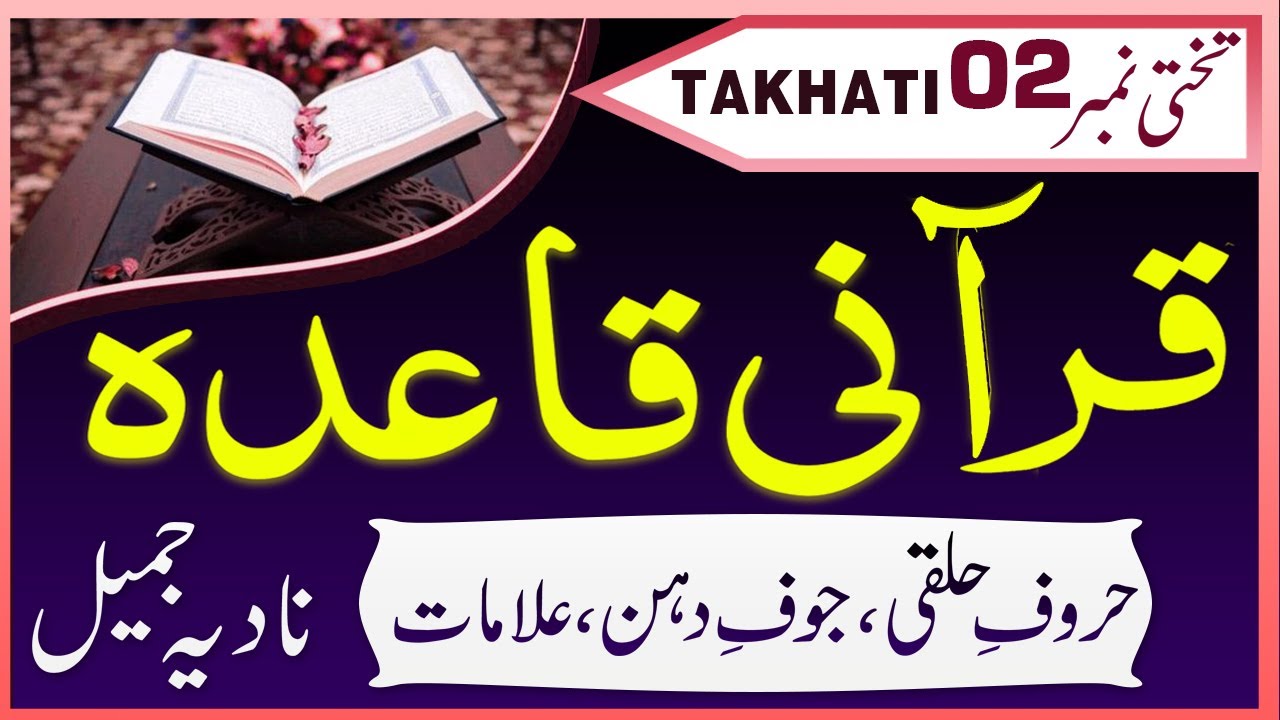
Haroof e Halqi - Halqi Makharij - Takhati No 2 - Makhraj Tajweed rules by Nadia Jameel@PyaamEQuran
Pyaam E Quran
Overview
This video introduces the concept of 'makharij' (points of articulation) in Tajweed, the rules for reciting the Quran. It explains that while there are 29 Arabic letters, there are 17 distinct makharij because multiple letters can share the same articulation point. The lesson focuses on the throat ('Halq') as an articulation area, detailing its three parts: the deepest part (Aqsa-e-Halq), the middle part (Wasat-e-Halq), and the part closest to the mouth (Adna-e-Halq). Specific letters are assigned to each of these throat sections, forming the six 'Haroof-e-Halqi' (throat letters).
How was this?
Save this permanently with flashcards, quizzes, and AI chat
Chapters
- Makharij refers to the specific place of articulation in the mouth or throat for each Arabic letter.
- There are 17 makharij for the 29 Arabic letters, as some letters share the same articulation point.
- Understanding makharij is essential for correct Quranic recitation (Tajweed).
Knowing the precise articulation points ensures that each letter is pronounced distinctly, preventing misinterpretations and preserving the intended meaning of the Quran.
The video explains that 'makhraj' is the singular form, meaning 'place of exit', and 'makharij' is the plural. For example, the letter 'Meem' and 'Ba' might share a lip-based makhraj.
- Jawf-e-Dahan is the empty space within the throat, mouth, and lips, extending from the chest to the lips.
- Three letters, Alif (ا), Waw (و), and Ya (ي), are articulated from this oral cavity.
- These three letters are also known as Haroof-e-Maddah (lengthened letters) when preceded by specific vowels (Fatha for Alif, Damma for Waw, Kasra for Ya).
This foundational articulation point is crucial for producing the long vowel sounds, which are fundamental to the flow and melody of Quranic recitation.
When reciting 'Ma' (مَا), the Alif (ا) sound originates from the Jawf-e-Dahan, following the Fatha on the preceding 'Meem'.
- The throat (Halq) is divided into three distinct articulation areas.
- These areas are Aqsa-e-Halq (deepest part, near the chest), Wasat-e-Halq (middle part), and Adna-e-Halq (closest part, near the mouth).
- Each of these three throat sections is responsible for articulating two specific Arabic letters.
Understanding the divisions of the throat allows for precise pronunciation of letters that originate from this complex area, differentiating sounds that might otherwise be confused.
The video uses the example of placing a finger on the middle of the throat while pronouncing 'Ain' (ع) or 'Ha' (ح) to feel the vibration and confirm the correct articulation point (Wasat-e-Halq).
- Aqsa-e-Halq (deepest throat) articulates Hamza (ء) and Ha (ه).
- Wasat-e-Halq (middle throat) articulates 'Ain (ع) and Ha (ح).
- Adna-e-Halq (throat closest to mouth) articulates Ghayn (غ) and Kha (خ).
- Collectively, these six letters are known as Haroof-e-Halqi (throat letters).
This systematic breakdown of the six throat letters ensures learners can accurately produce these distinct sounds, which are vital for correct Tajweed.
The letters Hamza (ء) and Ha (ه) are articulated from the very back of the throat, near the chest (Aqsa-e-Halq).
Key takeaways
- The 17 makharij are the specific exit points for Arabic letters, with some points serving multiple letters.
- The Jawf-e-Dahan (oral cavity) is the articulation point for the three lengthened letters: Alif, Waw, and Ya.
- The throat (Halq) is divided into three sections, each producing two distinct letters.
- Accurate pronunciation of Haroof-e-Halqi (throat letters) requires identifying the correct part of the throat.
- Mastering makharij is a fundamental step towards achieving proper Tajweed and beautiful Quranic recitation.
Key terms
MakhrajMakharijTajweedJawf-e-DahanHaroof-e-MaddahHalqAqsa-e-HalqWasat-e-HalqAdna-e-HalqHaroof-e-Halqi
Test your understanding
- What is the definition of a makhraj, and why are there fewer makharij than Arabic letters?
- How does the Jawf-e-Dahan function as an articulation point, and which letters are produced there?
- What are the three parts of the Halq, and what is the significance of distinguishing between them for Tajweed?
- Which specific letters are articulated from the Aqsa-e-Halq, Wasat-e-Halq, and Adna-e-Halq?
- Why is it important to correctly identify the makhraj for letters like 'Ain' and 'Ha'?