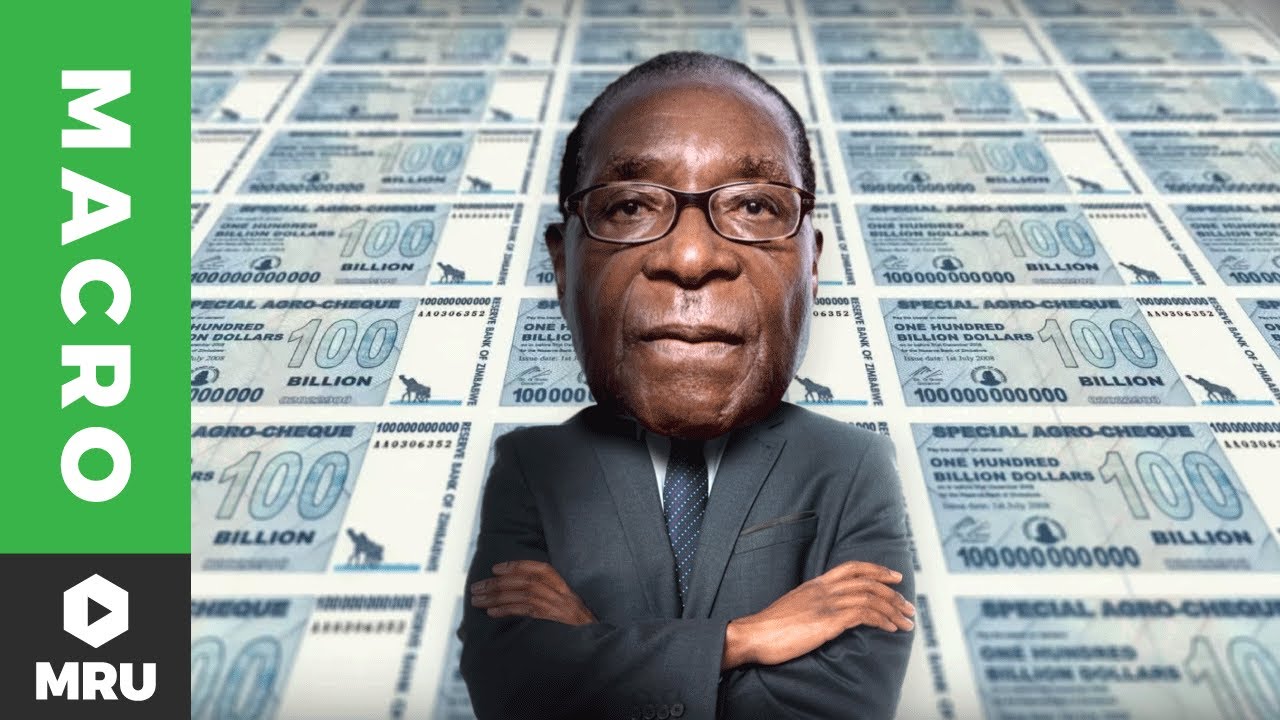
Zimbabwe and Hyperinflation: Who Wants to Be a Trillionaire?
Marginal Revolution University
Overview
This video explains the concept of hyperinflation using Zimbabwe as a case study. Facing political and financial pressures, Zimbabwean President Robert Mugabe resorted to printing excessive amounts of money. This action, without a corresponding increase in goods or services, led to a rapid devaluation of the Zimbabwean dollar, causing prices to skyrocket. The situation spiraled into a feedback loop of printing more money to combat rising prices, ultimately rendering the currency nearly worthless and forcing the government to adopt foreign currencies. The video highlights that hyperinflation, driven by an increased money supply, has occurred in other historical contexts as well.
Save this permanently with flashcards, quizzes, and AI chat
Chapters
- Dictators face constant threats to their power and need money to maintain control by rewarding allies and suppressing rivals.
- Robert Mugabe's Zimbabwean government, around 2000, faced a financial crisis due to heavy taxation and a lack of foreign investment, leading to economic hardship.
- With limited legitimate ways to raise funds, Mugabe turned to the government's ability to print money as a solution.
- Printing new money without increasing the production of goods or services leads to more money chasing the same amount of goods.
- This imbalance causes the purchasing power of the currency to fall, meaning prices begin to rise.
- A feedback loop is created: as prices rise, the government prints even more money to maintain its purchasing power, which further accelerates price increases.
- Inflation rates in Zimbabwe escalated dramatically, from 50% annually to thousands of percent per month.
- The currency devalued so rapidly that money lost its value within hours, leading people to spend it immediately.
- The government issued increasingly large denominations of currency, including 100 trillion dollar notes, to keep up with the runaway inflation.
- By late 2008, the Zimbabwean dollar had become virtually worthless, forcing the government to legalize foreign currency transactions.
- Zimbabwe's experience is not unique; similar hyperinflations have occurred in countries like Yugoslavia, China, and Germany.
- The common cause across these events is governments desperate for cash resorting to printing money.
- The fundamental principle illustrated is that inflation is directly caused by increases in the supply of money.
Key takeaways
- Governments may resort to printing money when facing severe financial and political pressures.
- Increasing the money supply without a corresponding increase in goods and services directly causes inflation.
- Hyperinflation is a destructive economic phenomenon where prices rise at an extremely rapid and accelerating rate.
- A feedback loop between rising prices and money printing can quickly spiral out of control.
- When a currency becomes worthless, people resort to using foreign currencies or other forms of exchange.
- The core driver of hyperinflation is an excessive increase in the amount of money in circulation.
Key terms
Test your understanding
- What are the primary reasons a government might resort to printing money, as seen in Zimbabwe?
- How does printing more money, without increasing production, lead to rising prices?
- Describe the feedback loop that accelerates hyperinflation.
- What were the ultimate consequences of hyperinflation for the Zimbabwean dollar and its citizens?
- What is the fundamental economic principle that connects money supply to inflation, as demonstrated by Zimbabwe's experience?