14:31
Exactly How Cardio IS programmed for each individual.
Performance First - Jeff Nichols
Overview
This video explains a mathematical and visual approach to programming cardio, specifically running, by analyzing pace splits. It argues against simply running more miles and instead advocates for understanding and improving an individual's aerobic and anaerobic thresholds. By charting splits, identifying points where performance drops, and implementing targeted interval and tempo training, runners can systematically improve their pace and achieve their goals. This method is presented as a scientific alternative to guesswork in coaching.
How was this?
Save this permanently with flashcards, quizzes, and AI chat
Chapters
- Cardio performance can be precisely programmed using mathematical analysis of pace splits, rather than arbitrary training.
- There are multiple ways to break down pacing goals: beating a previous time, achieving a goal time, or running by feel and analyzing splits afterward.
- Visualizing splits on a chart, similar to how it's done in physiology or track coaching, provides clear insights into performance.
- This data-driven approach is applicable beyond running to other endurance sports like swimming.
Understanding how to analyze your performance data allows you to move beyond guesswork and create a targeted training plan that addresses your specific weaknesses.
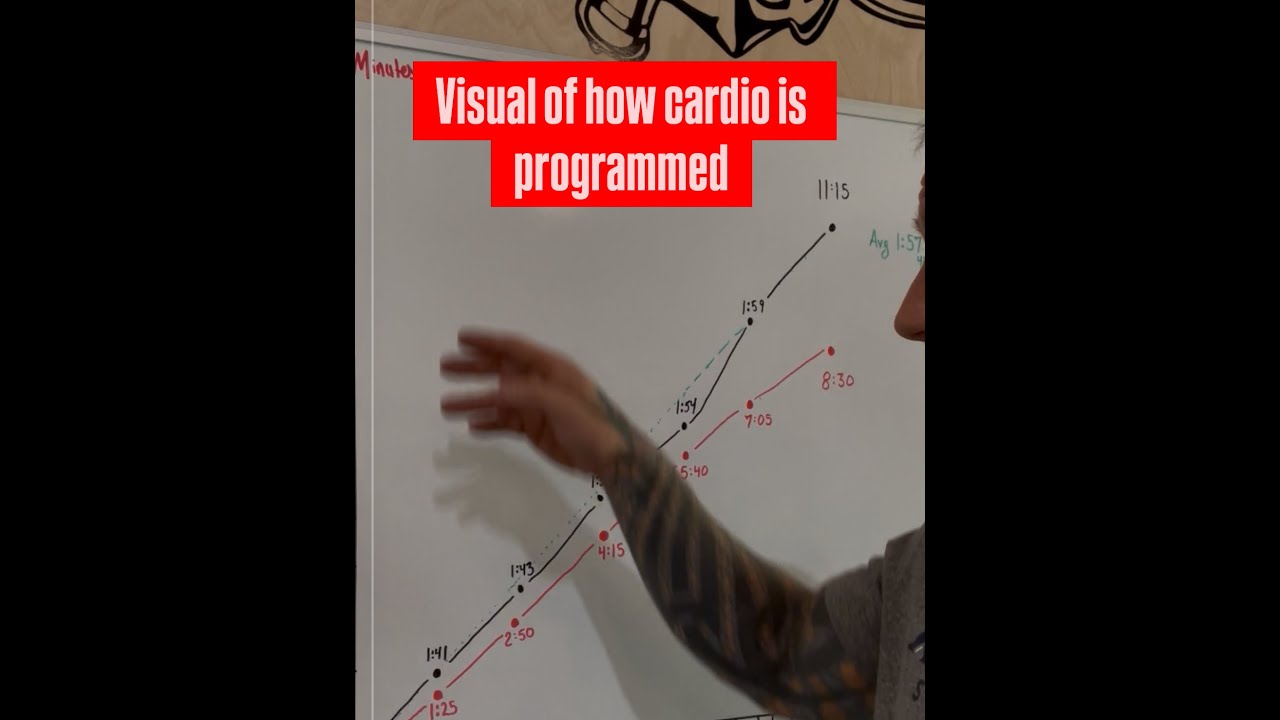
A runner's splits for a mile and a half race are charted, showing a progressive slowing down of each 400-meter segment.
- The 'mean line' (average pace) is calculated by drawing a straight line between the start and end points of your splits on a chart.
- If all splits were perfectly even, they would align with this mean line.
- Observing deviations from the mean line reveals where performance is dropping.
- Elite runners consistently use reverse splits (slowing down less in later stages) or even splits, with the first split often being slower to avoid hitting anaerobic thresholds too early.
Analyzing your splits against an average pace helps identify inefficiencies, and understanding the concept of reverse splits guides you toward more sustainable and faster race strategies.
A runner's splits show a consistent increase in time per 400m segment, indicating a drop-off in performance, while a hypothetical even split would stay close to the calculated mean.
- The chart visually highlights the point where an athlete's aerobic or anaerobic threshold is being exceeded, leading to significant performance drops.
- These drop-offs are often not gradual but occur in distinct stages, indicating compounding physiological limitations (e.g., breathing, oxygen delivery).
- The critical window for improvement is identified as the point where these threshold issues begin, typically occurring around the 4-5 minute mark in the example.
- Targeted training, such as interval sprints and tempo runs, should focus on improving performance within this specific 'threshold loss' window.
Pinpointing the exact point where your body struggles allows for highly specific training interventions, leading to more efficient gains than simply increasing overall mileage.
The chart shows a runner losing 2 seconds in the first 800m, then an additional 8 seconds in the next section, clearly marking the 'threshold loss' zone.
- Instead of adding more miles, focus training on improving the specific distance or time window where threshold performance degrades.
- Interval training and short, high-velocity work are crucial for building strength and buffering capacity in the identified weak zones.
- As threshold performance improves, the entire pace profile shifts downwards, bringing the athlete closer to their goal time.
- Adding volume without addressing threshold issues is ineffective, akin to trying to lift heavy weights without building strength at lighter loads first.
This targeted approach ensures that your training directly addresses the physiological bottlenecks preventing you from reaching your potential, leading to faster and more sustainable improvements.
By focusing on interval sprints and tempo runs within the 1200m to 1600m range where the runner previously failed, their overall pace improves, and the average pace line shifts downwards.
- Coaches who simply tell athletes to 'run more' or 'run harder' without data analysis are guessing and lack a scientific understanding of performance.
- This guesswork approach fails to address the root causes of performance plateaus, such as compromised thresholds.
- Elite training programs, like those for Navy SEALs or competitive track athletes, rely on precise, data-driven pacing and targeted interventions, not hope.
- Achieving running goals is a predictable outcome of structured, analytical training, not a matter of luck or sheer endurance.
Recognizing the difference between scientific programming and guesswork empowers you to seek out effective coaching and training methodologies that are proven to work.
The video contrasts coaches who 'hope' athletes improve with mileage against the precise, known pacing strategies used by Navy SEALs.
Key takeaways
- Pace splits are crucial data points for understanding and improving running performance.
- Visualizing splits on a chart helps identify specific areas of performance degradation.
- Improving your aerobic and anaerobic thresholds is key to faster and more sustainable running.
- Targeted interval and tempo training, focused on weak points, is more effective than simply increasing mileage.
- Elite athletes and special forces units use data-driven, precise training, not guesswork.
- Understanding your 'threshold loss' window allows for the most efficient training interventions.
- Reverse splits are often a sign of a well-managed race and a sign of improved threshold capacity.
Key terms
Pace SplitsMean LineAverage PaceThreshold (Aerobic/Anaerobic)Threshold LossInterval TrainingTempo RunsReverse SplitsEven SplitsForce Production
Test your understanding
- How can analyzing pace splits help an athlete improve their running performance?
- What is the 'mean line' in pace analysis, and how does it help identify performance issues?
- Why is it important to identify the specific 'threshold loss' window during a run?
- What types of training are most effective for improving an athlete's threshold capacity?
- What distinguishes scientific cardio programming from 'guesswork' coaching?