28:00
Gordon Ramsay's Ultimate Guide To Christmas Side Dishes
Gordon Ramsay
Overview
This video provides a guide to preparing several classic Christmas side dishes and accompaniments with a modern twist, emphasizing flavor, presentation, and efficient preparation. Chef Gordon Ramsay demonstrates how to elevate traditional recipes like scrambled eggs with smoked salmon, pumpkin soup, mulled wine, Brussels sprouts, stuffing, and cranberry-apple sauce. The focus is on using quality ingredients, minimizing waste, and incorporating techniques that enhance taste and texture, making festive meals both delicious and manageable.
How was this?
Save this permanently with flashcards, quizzes, and AI chat
Chapters
- Transform day-old croissants by toasting them in a dry pan until golden brown and buttery.
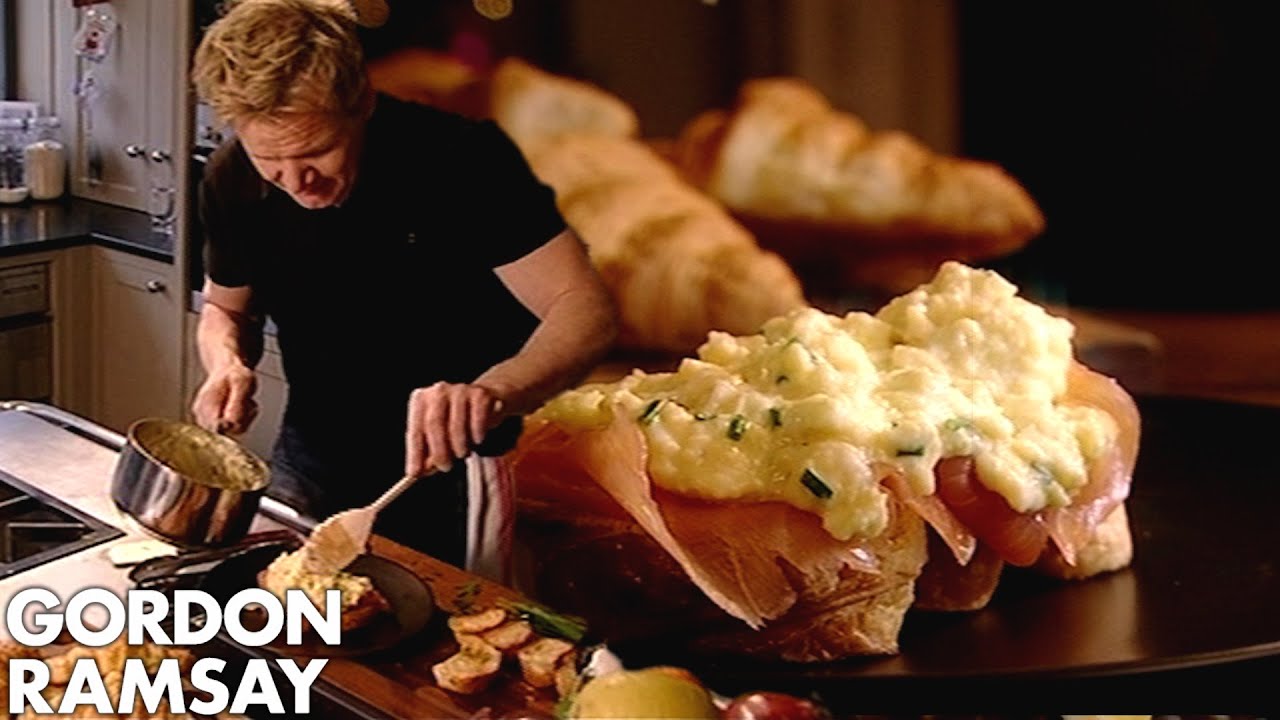
- Layer toasted croissants with smoked salmon before topping with creamy scrambled eggs.
- Make rich, creamy scrambled eggs by stirring constantly in a pan with butter, removing from heat to prevent overcooking, and finishing with a touch of cream and chives.
- The key to perfect scrambled eggs is continuous stirring and careful heat management to achieve a luxurious texture.
This recipe offers a quick, elegant, and delicious way to start Christmas morning, utilizing leftover croissants and demonstrating a technique for achieving perfectly creamy scrambled eggs.
Toasting sliced croissants in a dry pan until the butter inside melts and caramelizes, then layering them with smoked salmon before adding the finished scrambled eggs.
- Utilize the entire pumpkin by roasting its flesh and toasting its seeds, minimizing waste.
- Roast the pumpkin halves with rosemary and garlic to intensify sweetness and infuse flavor.
- Toast the cleaned pumpkin seeds until crisp for a flavorful snack or garnish.
- Create a velvety soup by blending roasted pumpkin flesh with sautéed onions, roasted garlic, nutmeg, Parmesan cheese, and ham stock.
- Finish the soup with a swirl of cream and top with sautéed wild mushrooms for added depth.
This recipe showcases how to make a flavorful and cost-effective soup by using the whole vegetable and incorporating techniques like roasting to enhance natural sweetness and texture.
Scraping out pumpkin seeds, cleaning them, seasoning, and toasting them in the oven until crisp, while the pumpkin flesh is roasted with rosemary and garlic.
- Elevate classic mulled wine by creating a fragrant bouquet garni with spices like cardamom, cloves, star anise, cinnamon, and lemongrass, tied in muslin.
- Infuse the wine with orange zest and wedges, demerara sugar, stem ginger, and ginger syrup for a balanced sweet, spicy, and citrusy flavor.
- Gently heat the mulled wine without boiling to preserve the alcohol content and allow flavors to meld.
- Prepare spiced nuts by toasting a mix of nuts with salt, cayenne pepper, paprika, and a sprig of rosemary for a crunchy, flavorful accompaniment.
This chapter provides a recipe for a warming festive drink and a complementary snack that can be prepared in advance, perfect for entertaining guests during the holiday season.
Tying cardamom pods, cloves, star anise, cinnamon stick, and lemongrass into a muslin cloth to create a 'tea bag' for infusing the mulled wine.
- Blanch Brussels sprouts for two minutes in salted boiling water to ensure they cook evenly and retain a crisp texture.
- Sauté finely diced pancetta until crisp to render its flavorful fat.
- Combine the blanched sprouts with the crispy pancetta and chopped chestnuts, cooking briefly to allow flavors to meld.
- Finish the dish with lemon zest and a squeeze of fresh lemon juice to brighten the flavors and harmonize the ingredients.
This recipe transforms humble Brussels sprouts into a sophisticated side dish by adding savory pancetta, sweet chestnuts, and a bright citrus finish, offering a delightful texture and flavor contrast.
Sautéing diced pancetta until crisp, then adding blanched Brussels sprouts and chopped chestnuts to the pan to cook together.
- Create a flavorful stuffing by combining pork mince with grated apple for sweetness and lightness, chopped apricots for fruitiness, and pistachios for texture and color.
- Incorporate lemon zest for a vibrant citrus note and fresh parsley for herbaceousness.
- Add a spicy element by encasing a traditional North African merguez sausage (or other spicy sausage) in the center of the stuffing.
- Wrap the stuffing mixture tightly in foil, optionally using sage leaves for aroma and presentation, to form a neat cylinder.
- This stuffing can be prepared a day in advance and baked just before serving.
This recipe offers a make-ahead stuffing that is visually appealing and packed with complex flavors and textures, including a spicy surprise from the encased sausage.
Forming the stuffing mixture around a merguez sausage, wrapping it tightly in foil, and baking it to create a compact, flavorful cylinder.
- Make a rich caramel base by melting caster sugar with star anise and crushed cardamom pods until deeply colored.
- Add fresh cranberries to the hot caramel; they will blister and break down, creating a tart base.
- Incorporate thinly sliced apples, a touch of salt and pepper to balance the sweetness and tartness, and a splash of port wine for deglazing.
- Finish with orange zest and juice for added fragrance and sweetness.
- Simmer the sauce until thickened, noting it will become even thicker upon cooling; this can be made several days in advance.
This homemade sauce provides a vibrant, flavorful accompaniment that cuts through the richness of Christmas dinner, offering a perfect balance of sweet, tart, and spicy notes.
Melting sugar to a deep caramel, then adding cranberries and sliced apples, along with orange zest and juice, to create a thick, flavorful sauce.
Key takeaways
- Minimize food waste by utilizing entire ingredients, such as roasting pumpkin seeds and flesh.
- Elevate classic dishes by incorporating unexpected flavor combinations and textures.
- Preparation is key for a stress-free holiday meal; many components can be made a day or two in advance.
- Balancing sweet, savory, tart, and spicy elements is crucial for creating complex and satisfying flavors.
- Presentation matters: simple techniques can significantly enhance the visual appeal of dishes.
- Techniques like roasting, caramelizing, and careful heat management are essential for maximizing flavor and achieving desired textures.
- Using fresh herbs and citrus zest adds brightness and depth to both savory and sweet dishes.
Key terms
Bouquet GarniCaramelizationPancettaMerguez SausageHarissaDemerara SugarStem GingerBlanchingDeglazingMulling
Test your understanding
- What is the purpose of adding cream to scrambled eggs at the end of cooking?
- How does roasting a pumpkin change its flavor and texture, and why is this beneficial for soup?
- Why is it important not to boil mulled wine when preparing it?
- What role does lemon zest play in the Brussels sprouts dish?
- How can preparing components like stuffing and sauces in advance contribute to a less stressful Christmas dinner?