An Opportunity Like This Won’t Come Again… (Emergency Update)
Felix & Friends (Goat Academy)
Overview
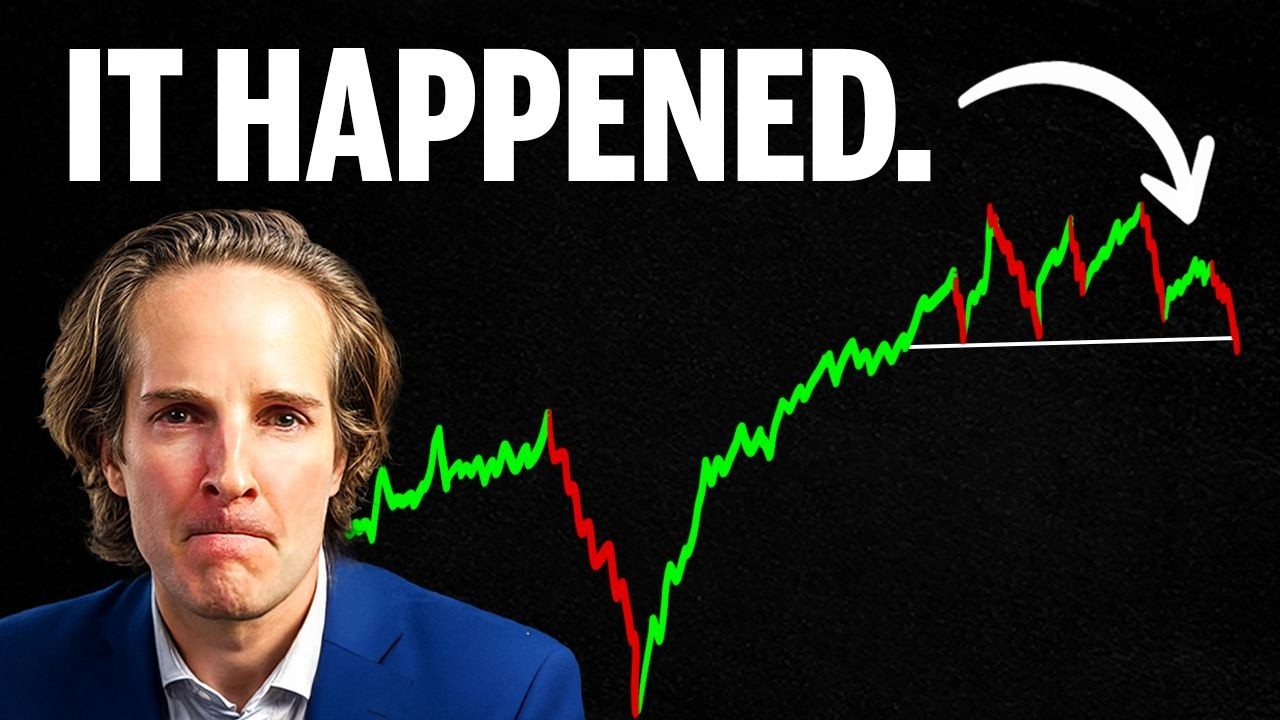
This video argues that the traditional "buy and hold" investment strategy is no longer effective due to rapid market shifts and technological disruption. The speaker, an economist and ex-banker, highlights that while major indices like the S&P 500 may appear strong, they mask a significant divergence between winning and losing stocks. Many investors unknowingly hold underperforming assets alongside winners, dragging down overall returns. The video identifies key sectors experiencing growth, such as commodities (gold, uranium, copper) and infrastructure, driven by inflation, global supply chain shifts, and technological demand like AI. It contrasts these with declining sectors like retail and publishing, urging investors to understand where money is flowing to avoid significant losses and improve wealth outcomes.
Save this permanently with flashcards, quizzes, and AI chat
Chapters
- Headline market indices (like the S&P 500) can show gains while a majority of underlying industries are declining.
- Investors often hold both high-performing and underperforming stocks within the same index fund without realizing it.
- This hidden divergence means a significant portion of an investor's portfolio could be losing value, impacting overall wealth.
- The speaker contrasts a stock up 523% (Micron) with one down 54% (Nike) within the S&P 500 to illustrate this point.
- The current market is characterized by 'rotations' where money moves between sectors, not a general crash.
- Inflation is a primary driver, making hard assets and commodities more attractive than paper-based assets.
- Professional money managers are nearly fully invested (97%), indicating limited new money to push prices higher and emphasizing the importance of money flow direction.
- Declining real wages mean consumers have less purchasing power, negatively impacting consumer-facing industries.
- Gold is a safe haven against inflation, with central banks increasing holdings and gold miners like Newmont (NEM) outperforming.
- Uranium is a growing sector due to global nuclear energy expansion and its classification as a national security asset, with Cameco (CCJ) as a key player.
- Copper is essential for modern infrastructure (EVs, data centers, grids) and faces a supply deficit, benefiting companies like Freeport-McMoRan (FCX).
- Energy stocks, like TotalEnergies (TTE), are top performers, benefiting directly from inflation and high energy costs.
- The commodity supercycle is fueling growth in infrastructure and defense industries, with construction and electronic components seeing massive gains.
- Technological advancements, particularly AI, are driving demand for semiconductors (Broadcom - AVGO) and the physical infrastructure supporting them (Comfort Systems - FIX).
- Data storage (Seagate - STX) and electronic manufacturing (Celestica - CLS) are critical components of the AI and cloud infrastructure boom.
- Increased global defense spending and rearmament, especially in Europe, are creating significant backlogs for defense companies like RTX and Rocket Lab (RKLB).
- Many industries, including shoe manufacturing, professional services, publishing, and advertising, are in significant decline.
- Holding index funds means you are exposed to these losing sectors, which actively detract from your overall returns.
- The difference in outcomes between investing in winning sectors versus holding a diversified index fund can be vast (e.g., $10k to $60k vs. $3k).
- Wall Street promotes 'buy and hold' to retail investors while institutional investors actively trade and profit from market rotations, collecting fees from index funds.
Key takeaways
- Headline market index performance can be misleading; a rising tide does not lift all boats.
- Understanding market rotations and the underlying economic drivers (inflation, wages, global events) is key to identifying growth opportunities.
- Commodities, energy, infrastructure, and defense sectors are currently showing strong performance due to fundamental economic shifts.
- The rapid pace of technological change, especially AI, is creating massive demand for specific infrastructure and components.
- The 'buy and hold' strategy can lead to significant underperformance by forcing investors to hold both winners and losers.
- Wall Street's promotion of 'buy and hold' may serve institutional interests more than retail investor wealth maximization.
- Actively monitoring where money is flowing, rather than passively holding an index, can lead to substantially better investment outcomes.
Key terms
Test your understanding
- How can an index fund show positive returns while a significant portion of its underlying assets are losing value?
- What are the main economic factors driving the current market rotations discussed in the video?
- Why are sectors like gold, uranium, and copper performing well in the current economic climate?
- How does the 'buy and hold' strategy potentially disadvantage retail investors compared to institutional investors?
- What is the relationship between AI development and the growth in infrastructure and technology sectors mentioned?