22:49
The Problem With Spirit Airlines’ Business Model
Wendover Productions
Overview
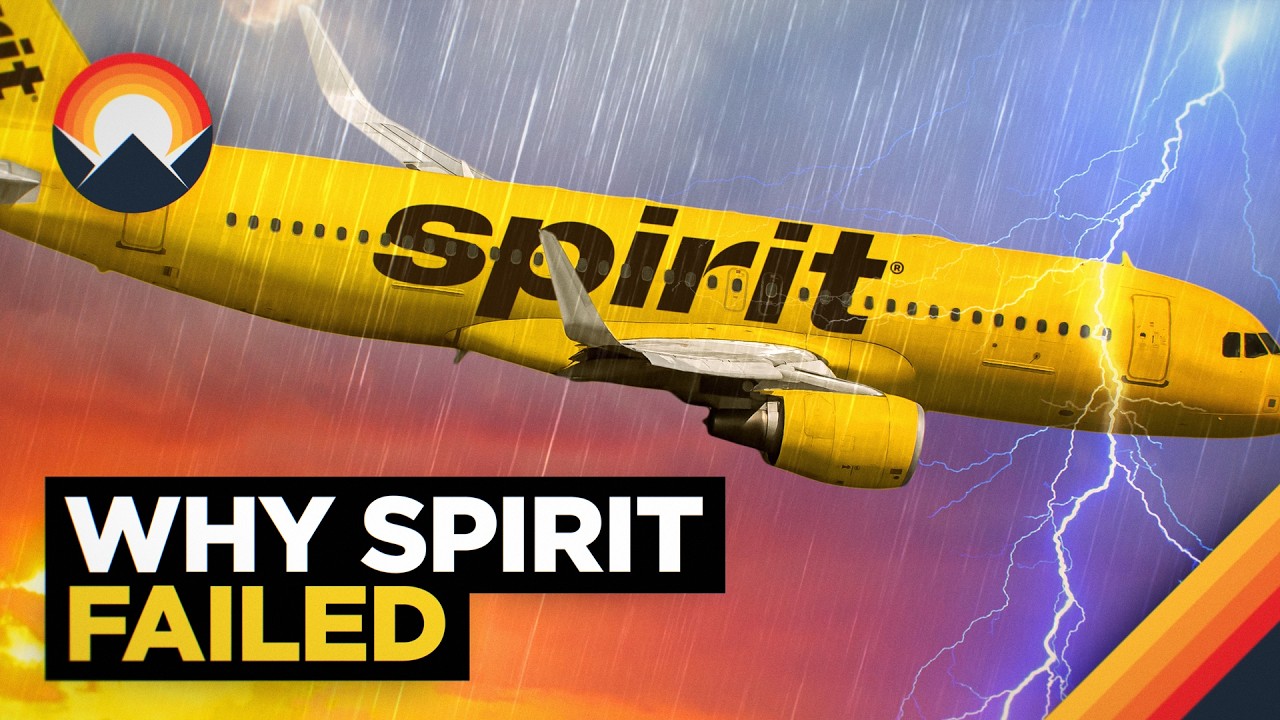
This video explores the rise and fall of Spirit Airlines, focusing on its unique ultra-low-cost business model. It details how Spirit carved out a niche by unbundling services, offering rock-bottom fares that appealed to budget-conscious leisure travelers. The summary traces the airline's evolution from its origins as a tour operator to its eventual bankruptcy, highlighting key strategic shifts, competitive challenges from legacy carriers and other low-cost airlines, and external factors like engine issues and market trends. Ultimately, the video argues that while Spirit's model was effective for a time, industry changes made its core offering unsustainable.
How was this?
Save this permanently with flashcards, quizzes, and AI chat
Chapters
- Spirit Airlines began as Charter 1 in 1983, operating as a tour operator for gambling destinations.
- It transitioned to scheduled passenger services in 1992, rebranding as Spirit Airlines and acquiring DC9s.
- The airline initially focused on budget-friendly leisure routes, primarily from the Northeast and Midwest to vacation spots like Florida and Myrtle Beach.
- In its early years, Spirit offered a basic but inclusive travel experience, including snacks, drinks, checked bags, and seat selection, similar to early Southwest.
Understanding Spirit's origins reveals its long-standing focus on leisure travelers and its initial attempts at a more traditional low-cost model, setting the stage for its later radical transformation.
The initial operations coordinating gambling itineraries from Detroit, Boston, and Providence to Atlantic City.
- Facing financial struggles in the late 1990s and early 2000s, Spirit needed a drastic change to compete.
- The appointment of Ben Baldanza in 2005 and the acquisition by Indigo Partners in 2006 marked a turning point towards an ultra-low-cost strategy.
- This strategy, termed 'unbundling,' meant the base fare covered only a seat, with all other services (checked bags, seat selection, even printing boarding passes) incurring extra fees.
- Key unbundling steps included fees for second checked bags (2007), no complimentary food/drinks, no free seat selection, fees for first checked bags, and eventually, fees for overhead bin space (2010).
The unbundling strategy fundamentally redefined the low-cost carrier model in the US, creating a new market segment and influencing competitors, but also leading to significant customer dissatisfaction.
The introduction of a $45 fee for carry-on bags in overhead compartments, which caused widespread public outcry.
- Spirit overhauled its fleet to exclusively use Airbus A320s, streamlining maintenance and maximizing seating capacity.
- This standardization, combined with the unbundling model, allowed Spirit to achieve significant cost savings and operational efficiency.
- The airline went public in 2011, with fees contributing over 30% of its revenue.
- By 2019, Spirit had grown dramatically, carrying nearly 34 million passengers and becoming a dominant player in the ultra-low-cost domestic leisure market.
Fleet standardization and the successful implementation of the unbundling model allowed Spirit to scale rapidly and achieve profitability, solidifying its niche in the market.
The transition to an all-Airbus A320 fleet, which simplified operations and allowed for more seats per aircraft.
- Post-COVID, a trend of 'premiumization' emerged, with travelers increasingly opting for premium economy and business class, bypassing ultra-low-cost carriers.
- Legacy airlines introduced 'basic economy' fares, mimicking Spirit's low prices and unbundled approach, but leveraging their established brand reputation for reliability.
- These factors, combined with Spirit's own operational challenges, led to declining profit margins.
- The introduction of Pratt & Whitney engine issues on newer A320 Neos caused significant aircraft groundings and operational disruptions, further straining finances.
Shifting consumer preferences towards premium travel and aggressive competition from legacy carriers offering similar low-cost options weakened Spirit's market position and profitability.
The recall and inspection process for Pratt & Whitney engines on Spirit's A320 Neos, which led to extended aircraft groundings and significant financial losses.
- Spirit attempted to merge with Frontier Airlines in 2022 to create a larger ultra-low-cost competitor.
- JetBlue made a competing, higher offer, but Spirit's board rejected it, fearing antitrust challenges from the Biden administration.
- The Department of Justice successfully sued to block the JetBlue merger on antitrust grounds, arguing it would reduce competition and increase fares.
- Spirit subsequently faced severe financial distress, including Chapter 11 bankruptcy, exacerbated by rising fuel costs, ultimately leading to its cessation of operations in May 2026.
The failed merger attempts and subsequent antitrust ruling by the DOJ, coupled with ongoing financial pressures, sealed Spirit's fate, highlighting the complex regulatory and market forces impacting airline consolidation.
The Department of Justice suing to block the JetBlue acquisition of Spirit, citing concerns about reduced consumer choice and higher fares.
Key takeaways
- Spirit Airlines pioneered the unbundled, ultra-low-cost model in the US, demonstrating the market's demand for extremely cheap air travel.
- While effective for a time, Spirit's business model was vulnerable to shifts in consumer preferences towards premium offerings and increased competition from legacy carriers.
- Operational issues, such as engine defects, can have catastrophic financial consequences for airlines, especially those with thin margins.
- Antitrust regulations and regulatory bodies play a crucial role in shaping the airline industry landscape, particularly concerning mergers and acquisitions.
- The airline industry is highly sensitive to external economic factors like fuel prices, which can rapidly alter profitability and viability.
- Spirit's legacy lies in its ability to make air travel accessible to a broader segment of the population, despite its often-criticized service.
- The narrative surrounding Spirit's demise is complex, with multiple contributing factors including market trends, regulatory actions, and operational challenges.
Key terms
Ultra-low-cost carrier (ULCC)UnbundlingLeisure travelBudget-conscious travelersLegacy carriersBasic EconomyPremiumizationAntitrust lawChapter 11 bankruptcyFuel costs
Test your understanding
- How did Spirit Airlines' 'unbundling' strategy differ from traditional low-cost carriers like Southwest?
- What market trends emerged post-COVID that negatively impacted Spirit's ultra-low-cost model?
- Why did the Department of Justice intervene in the proposed JetBlue-Spirit merger, and what were the stated reasons?
- What were the primary operational challenges Spirit faced in its later years, and how did they contribute to its financial decline?
- In what ways did Spirit Airlines make air travel more accessible, and what was the trade-off for consumers?