28:33
The Caribbean East Indians, Part 1 of 2
CaribNation TV
Overview
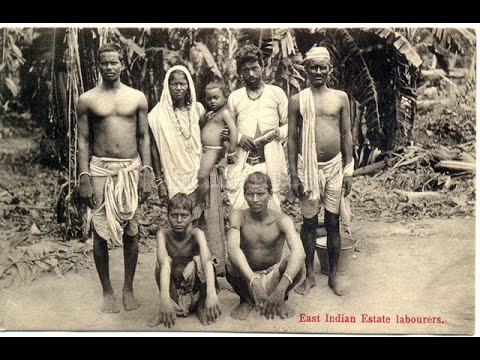
This video explores the history and experiences of East Indians in the Caribbean, focusing on their migration from India under the indenture system, the conditions they faced, and their evolving identity. It discusses the reasons for their migration, the similarities and differences between indentureship and slavery, the role of women in maintaining culture, and the complex process of cultural assimilation and identity formation in Caribbean societies. The program features a panel of experts who share insights into the socio-cultural and historical impact of East Indians on nations like Trinidad and Guyana.
How was this?
Save this permanently with flashcards, quizzes, and AI chat
Chapters
- East Indians were brought to the Caribbean during the indenture period, which lasted from approximately 1834 to 1917.
- The British, French, and Dutch colonial powers recruited indentured laborers from India to work primarily on sugar plantations.
- Countries like Guyana, Trinidad, and Suriname received significant numbers of East Indian indentured laborers, with smaller groups sent to Jamaica and other islands.
- While recruitment was often presented as voluntary, devious tactics and misleading information were used to compel individuals to leave India.
- The journey to the Caribbean was perilous, with high mortality rates due to disease outbreaks on ships.
Understanding the indenture system is crucial because it explains the origins of the East Indian diaspora in the Caribbean and the difficult circumstances under which they arrived, shaping their subsequent experiences.
The ship 'Ulysses' saw approximately 17% of its passengers die during the voyage to the Caribbean due to diseases like malaria and dysentery.
- Indentured laborers replaced ex-slaves on plantations after emancipation, and conditions were often similar to slavery.
- Laws under indentureship, such as requiring passes to leave plantations, mirrored those of slavery.
- Brutality, including whipping and the application of salt and pepper to wounds, was a feature of both systems.
- The colonial powers used the indenture system as a 'new form of slavery' or a 'modified version of slavery' to maintain labor control.
- Towards the end of the indenture period, some relaxations occurred, allowing for greater personal freedoms like moving out of barracks upon marriage.
Comparing indentureship to slavery highlights the exploitative nature of the labor system and helps learners understand the shared struggles and resilience of marginalized populations in the Caribbean.
Adamson's book 'Sugar Without Slaves' argues that East Indian indentureship was essentially a new form of slavery, with similar laws and brutalities.
- Women were instrumental in maintaining East Indian domestic culture and traditions during indentureship.
- Initially, fewer women migrated due to planters viewing their importation as less economically profitable and because many men left wives behind in India.
- Early female migrants often came from vulnerable backgrounds, including being single, widowed, or separated from husbands.
- Despite initial challenges, the family unit and cultural practices like religion were more easily retained compared to the systematic disruption of families under slavery.
- Recruitment tactics often misled individuals, with many believing they were going to other parts of India or lands of opportunity, not realizing the vast distance and difficult conditions.
Examining the role of women and family structures reveals the social dynamics and cultural preservation efforts within the harsh realities of indentureship.
The first ship from Calcutta to Guyana, the 'Widowbee,' carried very few women, reflecting the initial reluctance of planters to import them.
- East Indians employed various strategies to cope with indentureship, including suicide, feigning illness, speaking out, and running away.
- While not characterized by widespread armed rebellion like some instances of slavery, there were significant strikes and protests, particularly in the late 1880s and early 1890s.
- The indenture system officially ended in 1917, influenced by nationalist movements in India, such as the Indian National Congress led by figures like Pandit Madan Mohan Malaviya and the lobbying efforts of leaders like Gandhi.
- Many East Indians chose to stay in the Caribbean after their contracts expired due to establishing roots, kinship ties, and opportunities for land ownership and farming.
- The colonial powers encouraged settlement by offering land to cancel return tickets, preventing a mass exodus of labor similar to what occurred after the abolition of slavery.
Understanding the forms of resistance and the eventual end of indentureship provides insight into the agency of indentured laborers and the political forces that led to the system's abolition.
Strikes occurred in the late 1880s and until 1892, demonstrating organized labor action against plantation conditions.
- Over 160 years, East Indians in the Caribbean have navigated complex identity formations, evolving from 'East Indians' to Indo-Caribbean, Indo-Guyanese, or Indo-Trinidadian identities.
- Initial acceptance into Caribbean societies was slow, with the African segment of the population sometimes hesitant to fully integrate East Indians.
- Increased participation in education and politics allowed East Indians to carve out a more distinct identity and gain recognition.
- Cultural pluralism exists, with ethnic groups maintaining distinct identities within the broader national framework.
- Shared experiences, particularly in sports like cricket, often serve as unifying moments, temporarily transcending ethnic divisions and fostering a sense of West Indian identity.
Exploring the evolution of identity is essential for understanding how diasporic communities integrate into new societies while retaining cultural heritage, and the ongoing dialogue about belonging and nationhood.
During cricket matches, East Indians and the African population often unite as West Indians, showcasing a shared identity in a specific context.
- Caribbean societies, characterized by a medley of ethnic groups, exhibit significant cultural mixing and adaptation.
- Chutney music exemplifies cultural hybridity, blending Indian lyrics with local dialects and a Calypso beat, originating from African-Caribbean musical traditions.
- East Indians have increasingly participated in mainstream Caribbean cultural events like Carnival, with some leading major bands.
- While African-Caribbean culture often has a dominant presence in the global perception of the Caribbean, East Indians have significantly contributed to its cultural landscape.
- The celebration of 'Arrival Day' by East Indians, marking their entry into indentureship, contrasts with the celebration of 'Emancipation Day' by the African community, reflecting different historical experiences and consciousness.
Analyzing cultural adaptation and hybridity demonstrates how diverse influences create unique cultural forms and how communities negotiate their heritage within a multicultural context.
Chutney music incorporates Indian lyrical themes with a Calypso rhythm and local dialect, illustrating a fusion of cultural elements.
Key takeaways
- The indenture system was a complex labor mechanism that brought millions of Indians to the Caribbean under conditions that were often exploitative and harsh, though distinct from chattel slavery.
- Despite the hardships, East Indians managed to preserve significant aspects of their culture, religion, and family structures, often facilitated by colonial policies aimed at preventing solidarity with the African population.
- The journey from indentured laborer to establishing roots and contributing to nation-building involved significant adaptation, resistance, and the forging of new, hybrid identities.
- Cultural exchange and acculturation are evident in the Caribbean, with traditions like chutney music and increased participation in events like Carnival showcasing the blending of Indian and African-Caribbean influences.
- The concept of identity for East Indians in the Caribbean is multifaceted, evolving over generations and often defined by a tension between ethnic heritage and national belonging.
- While often facing initial exclusion, East Indians have become integral to the social, cultural, and political fabric of Caribbean nations, contributing to their unique multi-ethnic character.
- The historical experience of East Indians highlights themes of resilience, cultural preservation, and the ongoing negotiation of identity in diasporic communities.
Key terms
Indenture SystemIndentured LaborersPlantocracyEmancipationCultural PluralismAcculturationHybridityChutney MusicArrival DayCalypso
Test your understanding
- What were the primary reasons for the implementation of the indenture system in the Caribbean, and how did it differ from chattel slavery?
- How did the colonial powers utilize the indenture system to manage labor and social dynamics in the Caribbean?
- What role did women play in the preservation of East Indian culture during the period of indentureship, and what challenges did they face?
- Describe the various forms of resistance and adaptation employed by East Indian indentured laborers.
- How has the identity of East Indians in the Caribbean evolved over time, and what factors have influenced this evolution?