24:42
KILL EVERY Mosquito The AMISH Way. SAFE For Honey Bees & Pets!
Elias Yoder
Overview
This video explains a safe and effective method for mosquito control, inspired by Amish practices. It emphasizes eliminating mosquito breeding sites by removing standing water and using a natural larvicide called BTI (Bacillus thuringiensis israelensis). The method also includes repelling adult mosquitoes with essential oils and incorporating natural predators like purple martins. The approach is presented as a cost-effective, environmentally friendly alternative to commercial pest control, prioritizing the health of pollinators and pets.
How was this?
Save this permanently with flashcards, quizzes, and AI chat
Chapters
- Mosquitoes do not come from external sources like woods or wind; they are born in standing water on your own property.
- Even small amounts of standing water, like a bottle cap's worth, are sufficient for mosquitoes to lay eggs.
- A female mosquito can lay 100-300 eggs at a time, and if water remains for more than four days, these eggs will hatch.
- The fundamental solution is to either eliminate standing water or treat it to prevent eggs from hatching.
Understanding that mosquitoes breed on your property is crucial because it shifts the focus from killing adult mosquitoes to preventing them from ever developing, addressing the problem at its source.
A clogged gutter holding half a cup of rainwater for four days is enough for mosquitoes to breed.
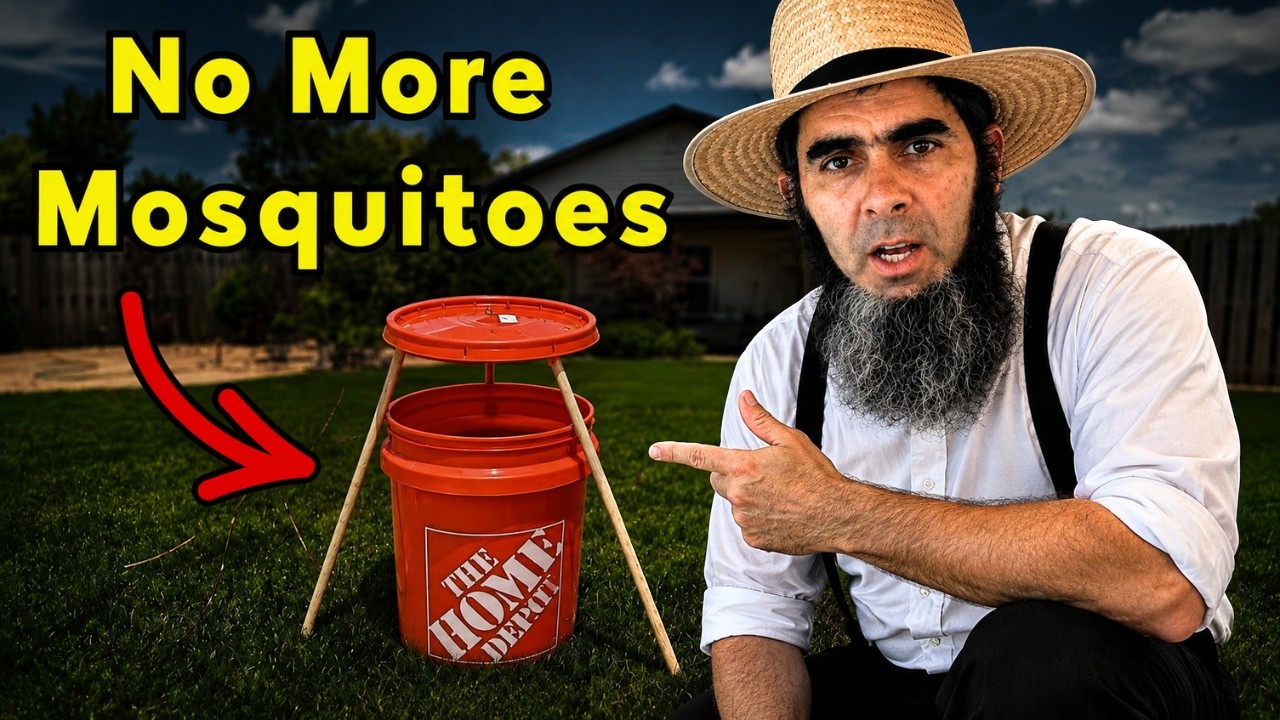
- Create a 'counterfeit swamp' using a dark-colored 5-gallon bucket, half-filled with water.
- Add grass clippings or dead leaves to the water to mimic natural breeding conditions and attract female mosquitoes.
- Sprinkle a spoonful of 'mosquito bits' (containing BTI) onto the water's surface.
- BTI is a naturally occurring bacterium that specifically targets mosquito larvae, killing them within 24 hours by creating holes in their stomachs.
- BTI is safe for humans, pets, pollinators like bees and butterflies, and other beneficial insects.
This method provides a targeted, safe, and inexpensive way to kill mosquito larvae before they become flying adults, directly addressing the breeding cycle without harming the environment or other creatures.
A dark-colored bucket filled halfway with rainwater, a handful of grass clippings, and one spoonful of mosquito bits.
- To cover a larger area, deploy multiple buckets (at least three) in hidden spots around your property, away from living spaces.
- For areas where buckets aren't feasible, use 'mosquito dunks' (donut-shaped BTI products) in rain barrels, stock tanks, or low-lying areas.
- Regularly treat clogged gutters with mosquito bits, as they are significant, often overlooked, breeding grounds.
- The goal is to strategically place BTI treatments across all potential standing water sources.
Implementing a distributed system of BTI treatment ensures comprehensive coverage of all potential breeding sites, maximizing the effectiveness of the larvicide across your entire property.
Tossing a mosquito dunk into a rain barrel by the back porch at the beginning of each month.
- While BTI handles larvae, adult mosquitoes still need to be managed.
- Use essential oils like cedarwood, rosemary, clove, garlic, lemongrass, or peppermint as repellents.
- Apply these oils using a pump-up garden sprayer, targeting the undersides of leaves, shrubs, and shaded resting places where adult mosquitoes hide during the day.
- Avoid spraying open air (oils evaporate quickly) or directly onto blooming flowers, which can deter pollinators.
- This treatment is effective for 2-3 weeks and is safe for bees and pets.
This step complements larvicide treatment by eliminating existing adult mosquitoes, providing immediate relief and preventing them from laying more eggs, all while using natural, non-toxic compounds.
Spraying the underside of leaves in bushes and hedges with a mixture of water and essential oils using a pump-up sprayer.
- Purple martin houses, placed in open areas on tall poles, attract these birds which consume larger flying insects, indirectly helping with mosquito control.
- While martins eat fewer mosquitoes than commonly believed, they contribute to a balanced ecosystem that naturally suppresses pests.
- A traditional method involves smoldering dried herbs (rosemary, sage, lavender) in a tin can with charcoal to create a smoke that repels mosquitoes from a small area.
- These methods are supplementary, enhancing the overall pest management strategy through natural means.
Incorporating natural predators and traditional smoke repellents further reduces reliance on chemical treatments and fosters a healthier, more balanced environment that is less hospitable to mosquitoes.
Setting up a purple martin house on a 15-foot pole in an open yard.
- Mosquitoes are dangerous disease vectors, spreading serious illnesses like West Nile virus, EEE, and malaria globally.
- Commercial pest control often uses broad-spectrum chemicals that harm beneficial insects, including vital pollinators like honeybees.
- The Amish method, combining source reduction, BTI, essential oils, and natural allies, is significantly cheaper and safer than monthly professional spraying.
- This approach empowers individuals to manage mosquitoes effectively and affordably, protecting both their health and the environment.
Choosing safe, effective, and economical mosquito control methods is essential for public health, environmental sustainability, and supporting crucial ecosystems, particularly pollinator populations.
Comparing the cost of a $17 container of mosquito bits lasting a summer versus monthly professional spraying contracts costing hundreds of dollars.
Key takeaways
- Mosquitoes breed in standing water, making source reduction (eliminating water) the most critical first step.
- BTI (Bacillus thuringiensis israelensis) is a highly specific, safe, and effective larvicide that kills mosquito larvae without harming other wildlife or pollinators.
- A multi-pronged approach, including treating breeding sites, repelling adults, and fostering natural predators, is more effective than relying on a single method.
- Safe mosquito control methods are readily available and significantly more cost-effective than commercial spraying services.
- Protecting pollinators like honeybees is vital, and choosing bee-safe mosquito control methods is crucial for environmental health.
- Traditional and natural methods, when understood and applied correctly, offer powerful solutions to common pest problems.
- Empowering yourself with knowledge allows for independent, sustainable, and environmentally conscious pest management.
Key terms
Standing waterMosquito larvaeBTI (Bacillus thuringiensis israelensis)Mosquito bitsMosquito dunksSource reductionEssential oilsPollinatorsCounterfeit swampPurple martins
Test your understanding
- What is the primary breeding ground for mosquitoes, and why is eliminating it the first step in control?
- How does BTI work to kill mosquito larvae, and why is it considered safe for bees and pets?
- Describe the 'counterfeit swamp' method and explain the role of each component (bucket color, organic matter, BTI).
- Beyond larvicides, what methods can be used to manage adult mosquitoes and why is targeting their resting places effective?
- Why is the Amish approach to mosquito control presented as a more sustainable and economical alternative to commercial pest control services?