3:30
I Jumped From Space (World Record Supersonic Freefall)
Red Bull
Overview
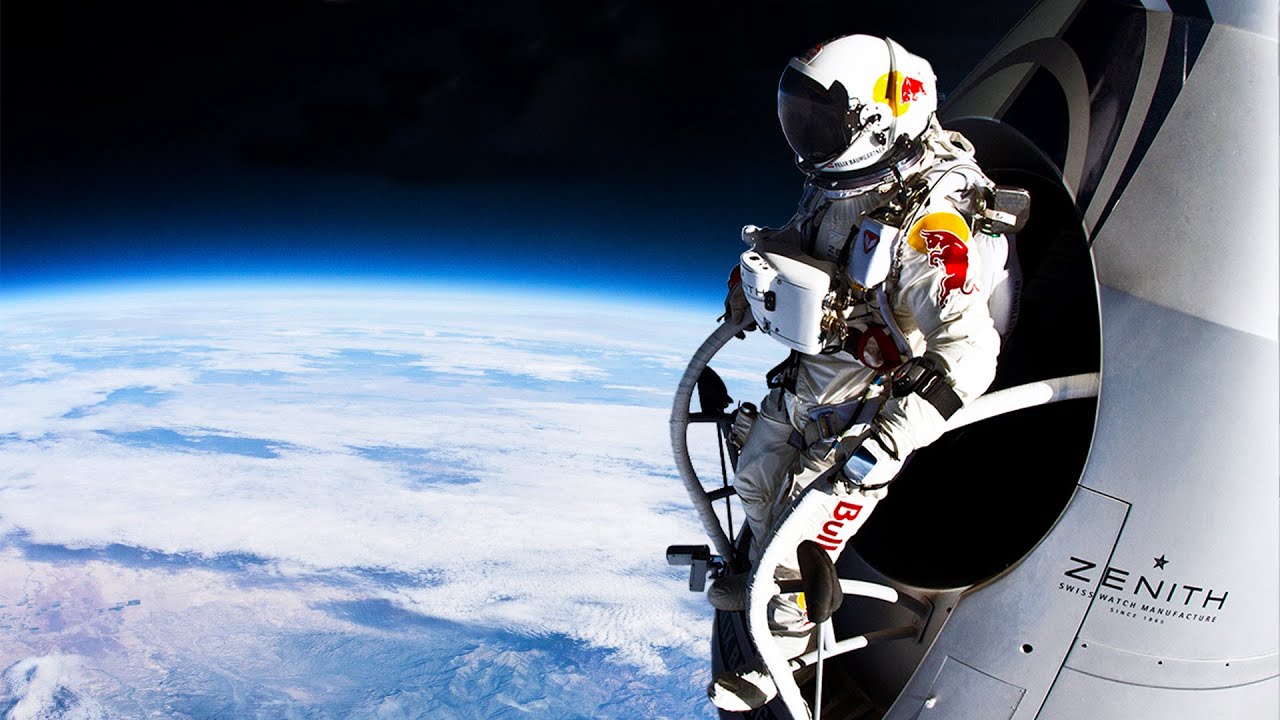
This video chronicles Felix Baumgartner's record-breaking supersonic freefall jump from the edge of space. It details the immense preparation, the critical moments during the jump including overcoming a dangerous spin, and the successful landing. The narrative highlights the scientific challenges, the intense physical forces involved, and the psychological battle for survival, ultimately culminating in a historic achievement.
How was this?
Save this permanently with flashcards, quizzes, and AI chat
Chapters
- The primary objective was to be the first human to break the sound barrier outside of an aircraft.
- This jump aimed to achieve a supersonic freefall from an extreme altitude.
- The mission involved significant scientific and engineering challenges, with predictions varying on potential outcomes like uncontrolled spinning.
This sets the stage for the extreme nature of the endeavor and the high stakes involved, emphasizing the unprecedented aspect of the mission.
The speaker's desire to be the first human outside an aircraft to break the sound barrier.
- The initial 25 seconds of the jump appeared to be under control.
- The sound barrier (Mach 1) was broken approximately 34 seconds into the freefall.
- The jump involved extreme forces, including twice the normal body weight.
This describes the critical early phase of the jump, establishing the timeline and the immediate physical sensations and forces experienced.
Hitting Mach 1 and breaking the speed of sound after 34 seconds.
- Despite initial hopes, the freefall devolved into an uncontrolled, accelerating spin.
- This spin presented a life-threatening situation due to the lack of air resistance to slow down.
- The speaker attempted to regain control by moving his arms, with temporary but ultimately insufficient results.
This highlights the most critical survival challenge, demonstrating how quickly a planned feat can turn into a desperate fight for life.
The suit slowly starting to spin faster and faster in the opposite direction.
- The extreme speed and spin threatened to cause fatal blood flow issues (e.g., blood leaving the skull through the eyeballs).
- A device called a 'G-Whiz' was designed to deploy a drug shoot to pull the jumper out of the spin.
- The speaker's actions, like placing his hands in a specific position, were intended to activate or utilize this survival system.
This explains the ingenious technical solution developed to overcome the most dangerous aspect of the freefall, showcasing problem-solving under extreme conditions.
The 'G-whiz' device firing a drug shoot to pull him out of the flat spin.
- After activating the survival system, the spin was corrected, and the body stabilized.
- The suit's depressurization was visible as it flapped during the fall.
- The visual transition from a black sky to a blue sky indicated the descent back into the Earth's atmosphere.
- Flares were used to provide directional guidance for the wingsuit.
This marks the transition from immediate danger to controlled descent, showing the successful recovery and the return to a breathable atmosphere.
Seeing the sky change from black back to blue.
- The landing was executed perfectly, concluding the mission.
- Breathing normal air again after hours in the spacesuit was a moment of immense relief and happiness.
- The achievement represented the culmination of extensive preparation and overcoming unforeseen challenges.
This provides closure to the narrative, emphasizing the successful completion of the mission and the profound emotional impact of achieving such a dangerous goal.
Breathing regular air for the first time after hours inside the spacesuit.
Key takeaways
- Extreme challenges require innovative solutions and robust survival systems.
- Human physiology is vulnerable to extreme G-forces and rapid rotation.
- Preparation is crucial, but adaptability is essential when facing unforeseen critical events.
- The transition from a controlled environment (like a capsule) to freefall introduces unique risks.
- Breaking speed records in extreme environments involves managing both physical forces and psychological pressure.
- Visual cues, like the changing color of the sky, are important indicators during high-altitude descents.
- The successful completion of a high-risk mission brings immense personal satisfaction and relief.
Key terms
Supersonic FreefallSound BarrierMach 1G-ForcesSpinning (uncontrolled rotation)Flat SpinG-WhizDrug ShootDepressurizationWingsuit
Test your understanding
- What was the primary goal of the jump, and why was it considered so dangerous?
- How did the uncontrolled spin during the freefall pose a life-threatening risk?
- What was the 'G-Whiz' device, and how was it intended to help the jumper survive?
- What visual cues indicated the jumper's return to the Earth's atmosphere?
- Why was breathing regular air after the jump a significant moment for the jumper?