14:33
The SpaceX IPO
Benjamin Cowen
Overview
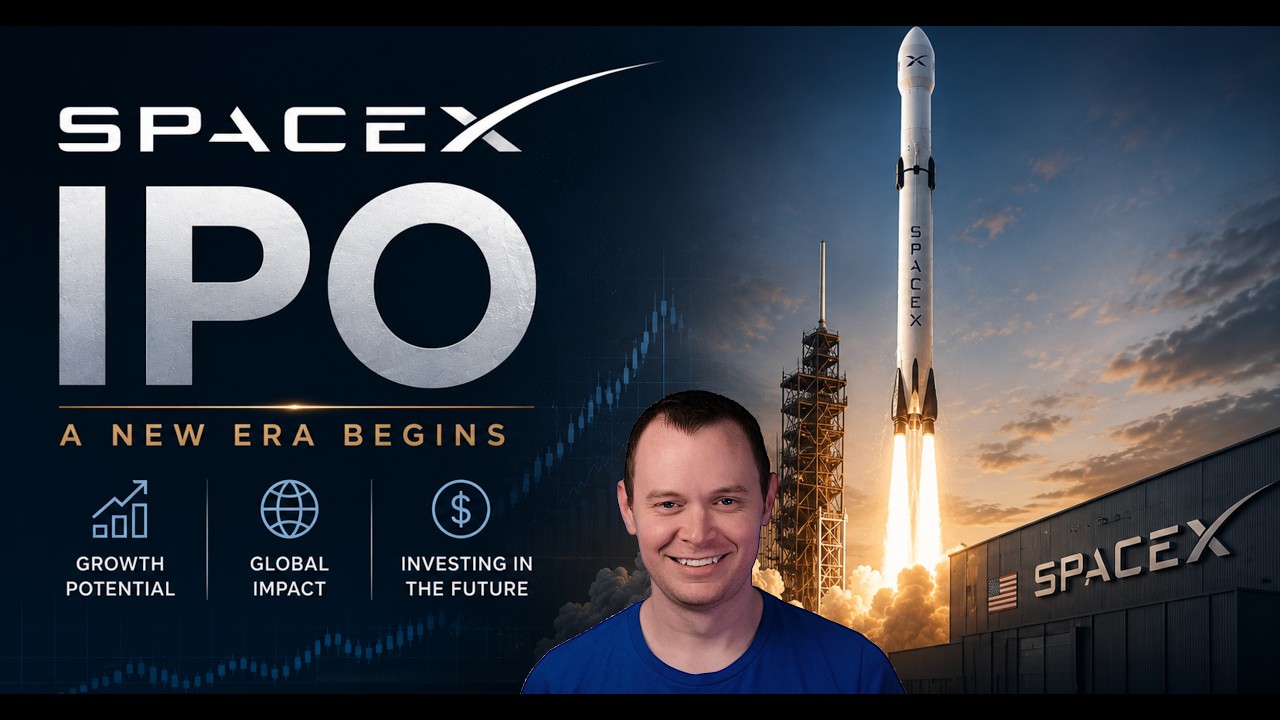
This video discusses the recent IPO of SpaceX, drawing parallels with historical IPOs of successful tech companies like Tesla, Microsoft, and Apple. It emphasizes the importance of strong leadership, particularly Elon Musk's track record, as a key factor in a company's long-term success. The analysis suggests that while initial IPO surges are common, pullbacks are also typical for successful companies, often presenting a valuable buying opportunity for long-term investors, especially considering historical patterns in midterm years.
How was this?
Save this permanently with flashcards, quizzes, and AI chat
Chapters
- SpaceX recently had its IPO, with an expected initial price surge.
- Post-IPO price surges can last from days to weeks, followed by a potential pullback.
- Long-term investment in successful companies often involves weathering short-term volatility.
- The speaker is generally bullish on SpaceX due to its leadership and market demand.
Understanding the typical post-IPO price behavior helps investors set realistic expectations and identify potential entry points.
The speaker notes that after an IPO, a price surge is common, which might last a few weeks before a potential fall.
- Many companies fail not due to their products, but due to poor leadership.
- Elon Musk has a proven track record of successfully leading multiple companies.
- Betting on proven leaders like Musk is often a sound investment strategy.
- Individuals who bet against Musk have historically lost money, while those who bet on him have profited.
Recognizing the critical role of leadership allows investors to better assess the long-term viability of a company beyond its immediate performance.
The speaker frequently states, 'I like to bet on people,' highlighting Elon Musk's consistent success across ventures as a prime example.
- Successful IPOs often experience an initial price surge followed by a significant pullback.
- Companies like Tesla, Microsoft, and Apple all exhibited this pattern after their IPOs.
- Despite initial drops, these companies went on to achieve long-term success.
- These pullbacks, even if substantial (e.g., 30-70%), did not define the companies' ultimate trajectories.
Examining historical IPOs of established companies provides a framework for understanding and anticipating SpaceX's potential future performance.
Microsoft's IPO saw a 40% rally, followed by a price drop, after which it experienced massive growth.
- Both SpaceX and Tesla were led by Elon Musk and launched in June of a midterm year.
- Tesla's IPO in June 2010 saw an initial surge of approximately 60% from its starting price.
- SpaceX's IPO has shown a similar initial surge of about 50% from its open price.
- Tesla experienced a significant drop of about 51% within a month after its IPO surge, before beginning a sustained upward trend.
The striking similarities between the Tesla and SpaceX IPOs suggest a potential for a similar post-IPO pattern, including a future buying opportunity.
Tesla's stock surged 60% post-IPO, then dropped 51% within a month, marking a low from which it consistently rose.
- Historically, midterm years often experience market corrections, particularly in the second half.
- Examples from 2022, 2018, and 2014 show corrections occurring in both halves of midterm years.
- A potential pullback in SpaceX's stock price in the second half of the year could present a good long-term buying opportunity.
- Investors should be prepared for significant stock price drops (30-50%) as a normal part of investing in volatile stocks.
Understanding seasonal market trends, like midterm year corrections, can help investors anticipate volatility and identify strategic entry points for long-term investments.
The speaker points to 2022, 2018, and 2014 as examples where stock markets experienced corrections in the second half of midterm years.
- Not all IPOs are successful; some companies continue to decline after their initial launch.
- Rivian, an EV company, is cited as an example of an IPO that surged initially but then dropped over 90%.
- SpaceX is expected to be a successful company, unlike those that fail due to poor leadership or product issues.
- Long-term investors should focus on the fundamental strength of companies like SpaceX, rather than short-term price fluctuations.
Differentiating between companies with strong fundamentals and those without is crucial for avoiding significant investment losses and capitalizing on genuine growth opportunities.
Rivian's IPO saw a nearly 70% rally, followed by a drop of over 95%, illustrating a less successful post-IPO trajectory compared to companies like Tesla.
Key takeaways
- Elon Musk's consistent success as a leader makes him a reliable bet for long-term investment.
- Initial IPO surges are often followed by pullbacks, which can be buying opportunities for strong companies.
- Historical IPO data from Tesla, Microsoft, and Apple shows a pattern of surge, drop, and then sustained growth.
- Midterm years tend to experience market corrections, potentially offering entry points for long-term investors.
- Investors must be prepared for significant volatility and drops in stock prices, especially with growth companies.
- Long-term success is driven by strong leadership and fundamentals, not just initial IPO hype.
- Betting against proven leaders like Elon Musk has historically been a losing strategy.
Key terms
IPO (Initial Public Offering)Equity VersePrice SurgePullbackDurable JourneyLeadershipBetting on PeopleTesla IPOMicrosoft IPOApple IPOMidterm YearMarket CorrectionRivian IPOLong-term Investment
Test your understanding
- Why is Elon Musk's track record considered a significant factor when evaluating the SpaceX IPO?
- What is the typical pattern observed in the stock prices of successful companies immediately following their IPO?
- How do historical IPOs of companies like Tesla and Microsoft inform the potential trajectory of SpaceX's stock?
- What is the significance of midterm years in relation to stock market performance, and how might this affect SpaceX's stock?
- What key difference distinguishes companies like SpaceX from those that fail after their IPO?