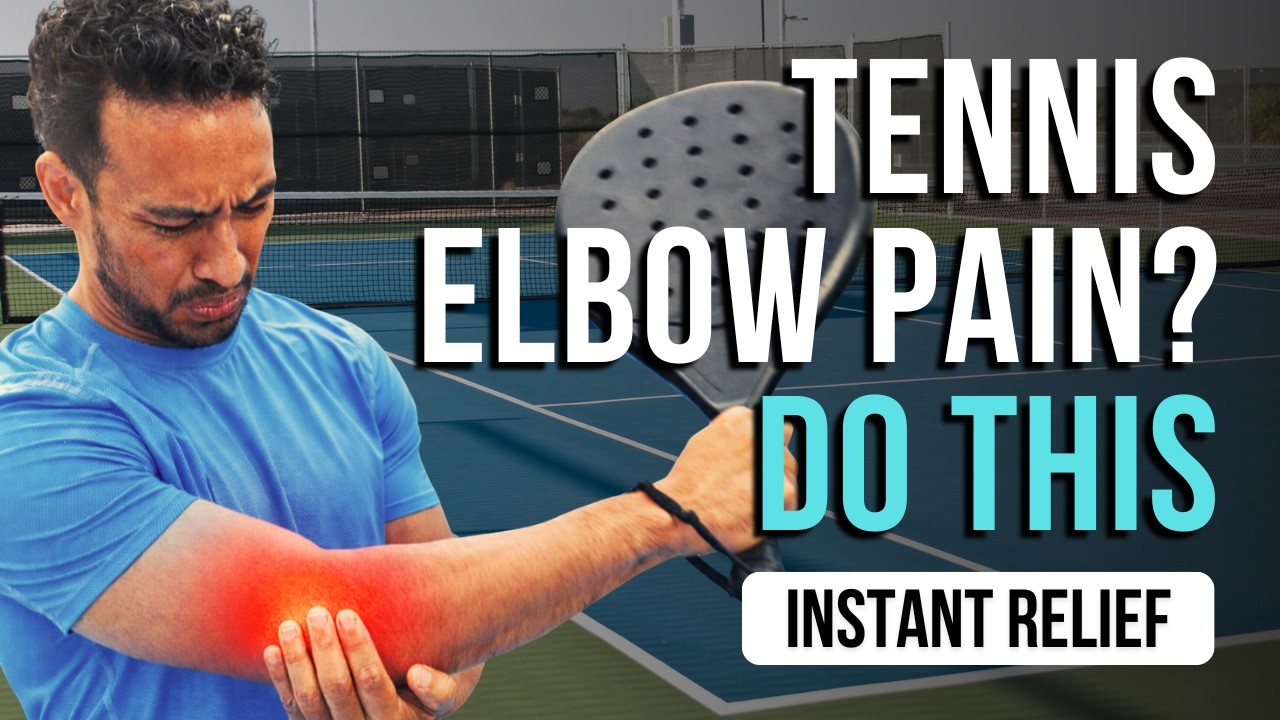
Tennis Elbow: 5 Steps to Success (plus 2 big mistakes)
Balwyn Sports & Physiotherapy Centre
Overview
This video explains tennis elbow, also known as lateral epicondylitis, which is an overuse injury affecting the tendons on the outside of the elbow. It details common causes, self-diagnostic tests, and critically, highlights two major mistakes to avoid: massaging the sore spot and getting early cortisone injections. The video then presents five practical steps for managing tennis elbow at home, focusing on relative rest, using a brace, performing isometric holds, addressing potential nerve involvement from the neck, and a specific lateral glide technique. The goal is to reduce pain and promote tendon healing through controlled loading and movement.
Save this permanently with flashcards, quizzes, and AI chat
Chapters
- Tennis elbow is an overload injury to the tendon on the outside of the elbow, often caused by repetitive gripping motions.
- It's common in beginner/intermediate tennis players due to excessive racket grip tension, but also occurs from activities like gardening or prolonged computer mouse use.
- Self-tests like the squeeze test and third finger extension test can help identify the condition and track progress.
- Mistake 1: Massaging the direct sore spot on the outside of the elbow can irritate the damaged tendon.
- The only safe area for massage is further down the forearm muscles, not directly on the tendon insertion point.
- Mistake 2: Opting for a cortisone injection too early can provide temporary pain relief but may worsen the long-term outcome and disrupt tendon healing.
- Research shows that cortisone injections can lead to poorer results at 12 weeks compared to other treatments and can make rehabilitation more difficult.
- Complete rest is not effective for tendon healing; tendons require some load to strengthen.
- Relative rest means reducing the intensity or frequency of aggravating activities to a level the tendon can tolerate.
- The goal is to decrease the load on the tendon to below its current capacity, allowing it to recover without being completely immobilized.
- A brace or tape can help manage pain by applying pressure to the forearm muscles, reducing stress on the elbow tendon.
- The brace should be positioned about three finger-widths below the elbow crease, not directly on the sore spot.
- Proper placement of the brace can significantly reduce pain during movement, facilitating rehabilitation.
- Isometric exercises involve holding a contraction without changing muscle length, which loads the tendon without aggravating it.
- Use a relatively heavy weight (e.g., 6kg or more) for these holds, as heavier loads are often better tolerated by the tendon.
- Perform three sets of 30-60 second holds with pain levels kept below a 4 out of 10.
- This is a crucial, often missed, stage of tendon strengthening.
- A significant percentage of tennis elbow cases have a nerve component originating from the neck.
- Nerves supplying the elbow area can become sensitized in the neck, contributing to elbow pain.
- Mobilizing the neck and performing neural glides can help alleviate this nerve-related component.
- While professional help may be needed for neck mobilization, simple neural gliding exercises can be done at home.
- A lateral glide involves applying a specific movement to the elbow joint, which has strong evidence for reducing pain.
- This technique helps change the compression on the tendon, leading to immediate pain reduction.
- Combine the glide with a 3-second grip hold, repeating for a total duration that reaches the 30-second threshold.
- This research-based technique is highly effective but not commonly performed by individuals themselves.
Key takeaways
- Tennis elbow is an overuse injury of the elbow's outer tendons, not exclusive to tennis players.
- Avoid direct massage on the sore spot and early cortisone injections, as these can hinder recovery.
- Relative rest, not complete immobilization, is key to allowing tendons to heal and strengthen.
- A forearm brace can effectively reduce pain by altering pressure distribution.
- Isometric holds with relatively heavy weights are crucial for rebuilding tendon strength.
- Consider nerve involvement from the neck as a potential contributing factor to persistent elbow pain.
- The lateral glide technique offers significant pain relief and aids faster rehabilitation.
Key terms
Test your understanding
- What is the primary mechanism behind tennis elbow, and how does it differ from golfer's elbow?
- Why are direct massage of the sore spot and early cortisone injections considered detrimental to tennis elbow recovery?
- How does the principle of 'relative rest' differ from complete rest in managing tendon injuries like tennis elbow?
- What is the purpose of performing isometric holds, and why is using a heavier weight often recommended?
- How can issues originating in the neck contribute to pain experienced in the elbow, and what is a simple exercise to address this?