10:38
Lithium-ion battery, How does it work?
Sabin Civil Engineering
Overview
This video explains the fundamental principles behind lithium-ion batteries, a crucial technology for modern portable electronics and electric vehicles. It details how electrochemical potential drives the movement of lithium ions and electrons between a metal oxide and graphite, generating electricity. The explanation covers the role of the electrolyte, separator, and current collectors, as well as the importance of the Solid Electrolyte Interphase (SEI) layer for battery longevity. It also touches upon battery management systems, thermal regulation, cell balancing, and future advancements in battery technology.
How was this?
Save this permanently with flashcards, quizzes, and AI chat
Chapters
- Portable power is essential for modern technology, with lithium-ion batteries being a key component.
- Electric cars, powered by induction motors, are superior to internal combustion engines but require efficient power storage.
- Lithium-ion cells, as used by Tesla, offer a solution to the power supply bottleneck for electric vehicles.
Understanding the driving forces behind the development of lithium-ion batteries highlights their significance in advancing technologies like electric vehicles.
The comparison between induction motors and internal combustion engines, and the potential for electric cars.
- Lithium-ion batteries operate on the principle of electrochemical potential, which is a metal's tendency to lose electrons.
- Lithium has the highest tendency to lose electrons, making it ideal for battery applications.
- Pure lithium is highly reactive, but it becomes stable when part of a metal oxide.
- Electricity is generated by separating lithium atoms from a metal oxide and guiding the resulting electrons through an external circuit.
This foundational concept explains the core chemical driving force that allows lithium-ion batteries to store and release energy.
Alessandro Volta's first battery using zinc and silver, based on electrochemical potential, and lithium's high tendency to lose electrons compared to other metals.
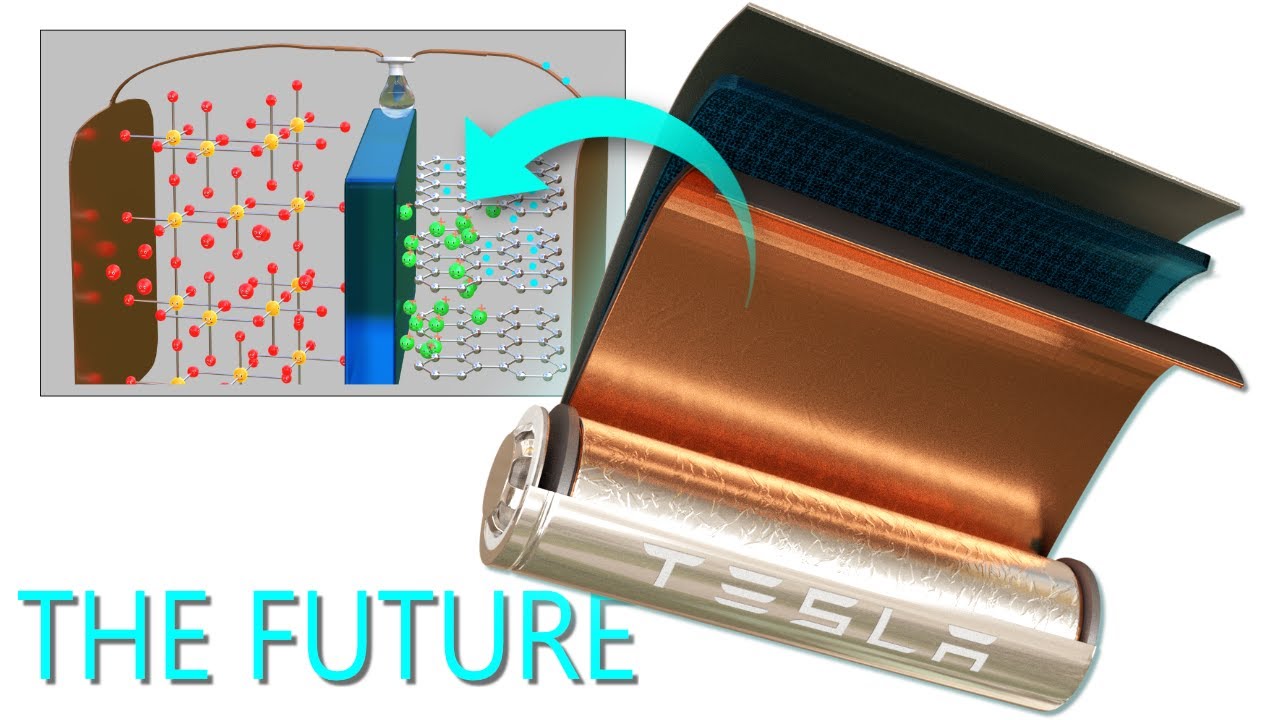
- A practical lithium-ion cell uses a metal oxide (cathode), graphite (anode), an electrolyte, and a separator.
- During charging, lithium ions move from the metal oxide through the electrolyte to the graphite, while electrons travel through an external circuit.
- Graphite's layered structure easily stores lithium ions; the electrolyte allows only ions to pass, not electrons.
- When a load is connected after charging, lithium ions move back from the graphite to the metal oxide, and electrons flow through the load, creating an electrical current.
This explains the step-by-step mechanism of charging and discharging, illustrating how electrical energy is produced and stored.
Lithium ions moving through the electrolyte to be stored in the graphite layers during charging, and then flowing back to the metal oxide when a load is connected.
- A separator, permeable to ions but not electrons, prevents short circuits and potential fires.
- Copper and aluminum foils act as current collectors for the anode and cathode, respectively.
- An organic lithium salt dissolved in a solvent forms the electrolyte, coated on the separator.
- These components are wound together compactly into a cylindrical cell.
Understanding the physical construction and safety mechanisms reveals the engineering considerations necessary for a functional and safe battery.
The separator preventing direct contact between the anode and cathode, thus avoiding short circuits and fires.
- Multiple cells are connected in series and parallel to form modules and battery packs for higher voltage and capacity.
- A Battery Management System (BMS) is crucial for monitoring and controlling temperature, charge, voltage, and cell health.
- Active cooling systems, like glycol circulation, manage heat generated during operation to prevent performance decay.
- Cell balancing ensures all cells charge and discharge equally, preventing over/under-voltage issues.
This section highlights the complex engineering required to manage large numbers of cells, ensuring safety, efficiency, and longevity in applications like electric cars.
The BMS using cell balancing to ensure all cells in a pack charge and discharge at the same rate, preventing damage from voltage imbalances.
- The SEI layer forms on the graphite anode during the first charge cycle as lithium ions and electrolyte solvent molecules react with graphite.
- This layer is crucial because it prevents direct contact between electrons and the electrolyte, protecting the electrolyte from degradation.
- While consuming about 5% of lithium, the SEI layer significantly enhances battery lifespan and performance.
- Scientists have optimized the SEI layer's thickness and chemistry through research.
The SEI layer is a critical, albeit accidental, discovery that dramatically improves the durability and reliability of lithium-ion batteries.
The formation of the SEI layer during the initial charging process, which acts as a protective shield for the electrolyte.
- Current lithium-ion batteries can last around 3,000 charge cycles, with research aiming for 10,000 cycles.
- Replacing graphite with silicon as the storage medium could increase energy density by over five times.
- The lithium-ion battery market is experiencing rapid growth and is expected to become a multi-billion dollar industry.
This provides insight into the ongoing innovation and potential for significant improvements in battery performance and lifespan.
Research into using silicon instead of graphite to store lithium ions, which could lead to batteries holding five times more energy.
Key takeaways
- Lithium-ion batteries generate electricity by leveraging the tendency of lithium to lose electrons, a principle known as electrochemical potential.
- The charging process involves moving lithium ions and electrons apart, storing energy, while discharging allows them to recombine, releasing energy.
- Key components like the electrolyte, separator, and current collectors work together to facilitate ion and electron flow safely and efficiently.
- The SEI layer is vital for battery longevity, preventing electrolyte degradation by forming a protective barrier on the anode.
- Battery management systems and thermal regulation are essential for the safe and optimal operation of large lithium-ion battery packs.
- Future advancements, such as using silicon anodes, promise significantly higher energy densities and longer battery lifespans.
Key terms
Lithium-ion batteryElectrochemical potentialElectrolyteGraphiteMetal oxideLithium ionElectronSeparatorCurrent collectorSolid Electrolyte Interphase (SEI) layerBattery Management System (BMS)Cell balancing
Test your understanding
- How does the electrochemical potential of lithium enable the operation of a lithium-ion battery?
- What is the role of the electrolyte and the separator in a lithium-ion cell?
- Explain the process of charging and discharging in a lithium-ion battery.
- Why is the Solid Electrolyte Interphase (SEI) layer important for the performance and lifespan of a lithium-ion battery?
- What functions does a Battery Management System (BMS) perform for a large lithium-ion battery pack?