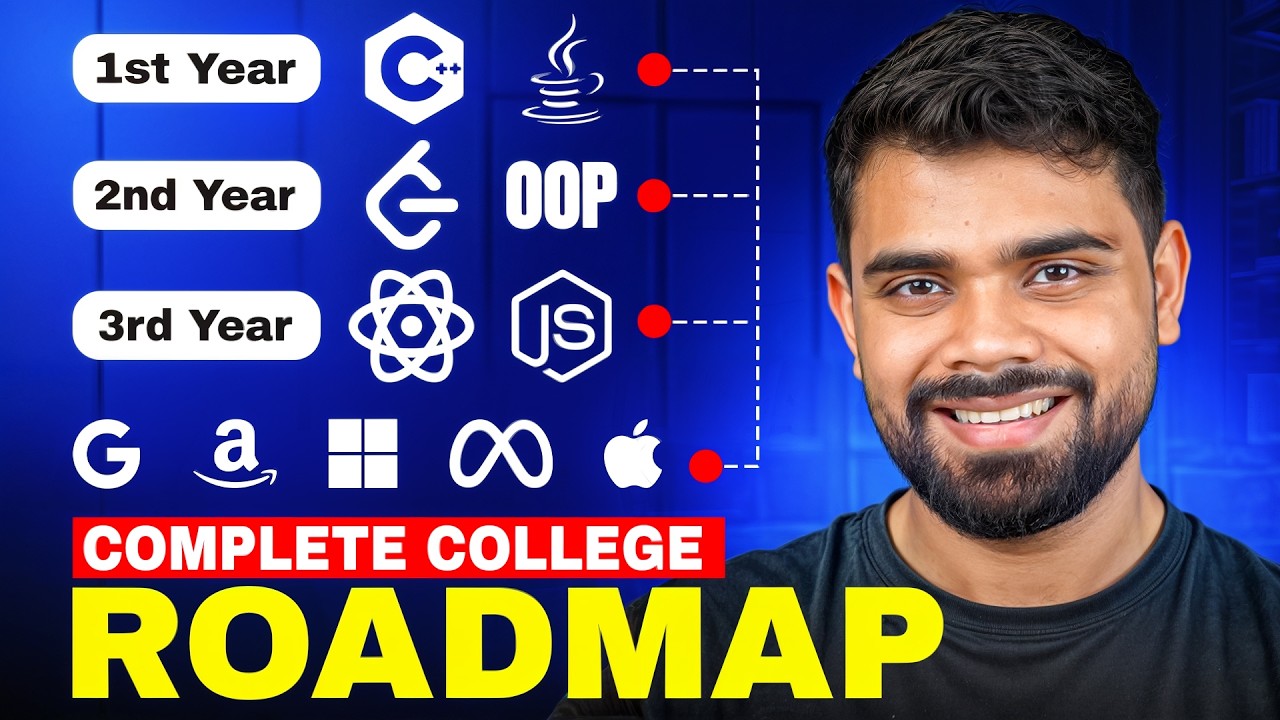
Ultimate Roadmap from Tier 3 to FAANG | Semester Wise College Roadmap Btech and BCA
Fraz
Overview
This video provides a comprehensive, semester-by-semester roadmap for B.Tech and BCA students, particularly those from tier 3 colleges, aiming for placements in top tech companies like FAANG. It emphasizes practical skills, consistent effort, and strategic planning over solely relying on college curriculum or tier status. Key advice includes building a strong peer group, maintaining a good CGPA, developing versatile communication skills, and avoiding common pitfalls like procrastination and resource hopping. The roadmap details specific actions for each year, from foundational programming and DSA to specialized development and project building, culminating in internships and pre-placement offers.
Save this permanently with flashcards, quizzes, and AI chat
Chapters
- Your peer group significantly influences your subconscious drive and career trajectory; choose like-minded individuals focused on similar goals.
- Maintain a CGPA of at least 7.5-8 to be eligible for most on-campus placements, with higher scores needed for top-tier companies or further studies.
- Develop versatility and open-mindedness by interacting with diverse individuals to improve communication skills, crucial for interviews.
- Avoid common mistakes like excessive bunking without productive use of time, last-minute exam cramming, and constantly switching learning resources.
- The first semester is for exploring career paths (job, business, masters) and improving communication and personality by interacting with more people.
- Join college societies and clubs to gain exposure and build a network, but ensure they complement, not detract from, your studies.
- Focus on maintaining a high CGPA in the first semester due to lighter, often familiar subjects, laying a strong academic foundation.
- College syllabi are often outdated; self-preparation for job-ready skills is essential, starting with programming fundamentals.
- By the second semester, decide on your career path (research, job, masters) and begin specializing.
- Master at least one programming language (C++ or Java recommended) and start Data Structures and Algorithms (DSA) if targeting top companies, a process that takes 6-12 months.
- Utilize summer breaks effectively for continuous DSA practice, exploring platforms like LeetCode, and seeking help from peers or seniors when stuck.
- Begin learning core development skills (web, Android, ML, AI, data science) and immediately apply them by building projects to solidify learning.
- Focus on building practical projects in your chosen development field (web, Android, ML, etc.) to demonstrate applied skills.
- Participate actively in hackathons and competitions to showcase skills, network, and potentially secure direct hiring opportunities.
- Start preparing your resume and portfolio, highlighting projects, hackathon achievements, and learning experiences.
- Secure an internship, ideally in the summer break after the second year or during the third year, as it's a significant factor for full-time job offers.
- For students who prepared well in previous years, the fourth year often involves securing a Pre-Placement Offer (PPO) from an internship or receiving full-time job offers.
- If not yet placed, utilize this year to complete any missed internships, focus on core CS subjects (OOP, DBMS, OS, CN), and apply for full-time roles.
- Companies prefer hiring fresh graduates directly; avoid extended breaks after graduation as it can disadvantage your application.
- Even from tier 3 colleges, consistent effort in DSA, development, and projects can lead to high-paying jobs, often comparable to those from tier 1 institutions.
Key takeaways
- Consistent, daily effort is more impactful than sporadic bursts of intense study.
- Your peer group is a powerful, often underestimated, factor in achieving career goals.
- A strong CGPA (7.5+) is a necessary, though not sufficient, condition for most campus placements.
- Self-directed learning and project building are essential to bridge the gap between outdated college curricula and industry demands.
- Internships are critical stepping stones for securing full-time job offers and should be pursued proactively.
- Don't let your college tier define your potential; dedicated effort can overcome perceived disadvantages.
- Mastering DSA and core development skills are fundamental for high-paying tech roles.
- Effective communication and networking are as important as technical proficiency for career success.
Key terms
Test your understanding
- How can a strong peer group positively impact a student's career trajectory, and what are the risks of associating with a group with different goals?
- Why is maintaining a minimum CGPA of 7.5-8 crucial for on-campus placements, and how does this requirement differ for specialized roles or further studies?
- Describe the importance of DSA preparation, including the estimated time commitment and recommended learning strategies for targeting top tech companies.
- What role do projects and internships play in a student's job search, and how can a student effectively showcase these on their resume and portfolio?
- How can students from tier 3 colleges overcome the perceived disadvantages compared to tier 1 institutions to secure high-paying tech jobs?