1:08:42
Leaders Eat Last : Why Some Teams Pull Together and Others Don't
Microsoft Research
Overview
This video explores the concept of leadership, drawing from Simon Sinek's work, particularly his book "Leaders Eat Last." It delves into why some teams foster cooperation and trust while others struggle, attributing this to the leadership style. The core idea is that effective leaders create environments where people feel safe and valued, leading to greater engagement and success. The presentation contrasts this with environments that prioritize individual gain over collective well-being, highlighting the detrimental effects on team cohesion and performance.
How was this?
Save this permanently with flashcards, quizzes, and AI chat
Chapters
- Many modern workplaces are designed in ways that make employees feel unfulfilled and uninspired.
- This lack of fulfillment stems from environments that don't bring out the best in people or make them feel good about their work.
- The speaker finds it both exciting and depressing that basic concepts about fulfillment and inspiration need to be discussed.
Understanding the common pitfalls of current work environments is crucial for recognizing the need for better leadership and for motivating change.
The speaker expresses dismay that simple ideas about fulfillment and inspiration are noteworthy, implying that these are not common experiences in most workplaces.
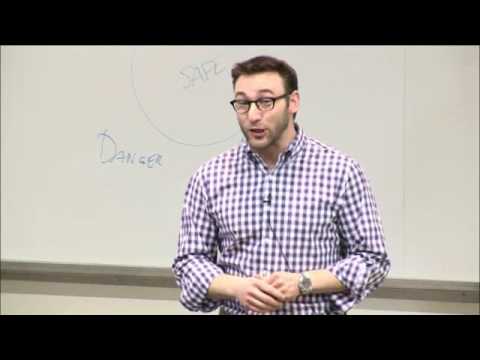
- True leadership is about creating a "Circle of Safety" where people feel secure and protected.
- Within this circle, individuals are willing to take risks, be vulnerable, and prioritize the group's needs over their own.
- This safety allows for cooperation, trust, and innovation to flourish.
The 'Circle of Safety' is the fundamental mechanism by which leaders can build cohesive, high-performing teams that are resilient in the face of challenges.
The concept of leaders eating last, a metaphor for prioritizing the team's well-being before their own, exemplifies creating a 'Circle of Safety'.
- Human beings are biologically wired for cooperation and empathy, driven by chemicals like oxytocin.
- When leaders create a safe environment, oxytocin is released, fostering trust and connection.
- Conversely, environments of fear and competition trigger stress hormones like cortisol, which undermine cooperation.
Understanding the biological underpinnings of trust helps explain why certain leadership approaches are more effective and sustainable than others.
The release of oxytocin in a safe environment encourages people to help each other, similar to how a parent cares for a child, illustrating the biological basis for altruism.
- Many organizations prioritize short-term gains (like quarterly profits) over long-term stability and employee well-being.
- This focus on immediate results can lead to a culture of fear, competition, and a breakdown of trust.
- Leaders who chase short-term metrics often sacrifice the health of their organization and their people.
Recognizing the detrimental effects of short-term thinking is essential for leaders aiming to build sustainable, healthy, and productive organizations.
A company laying off employees to meet short-term financial targets, despite the long-term damage to morale and loyalty, exemplifies the dangers of prioritizing immediate gains.
- Leaders are responsible for establishing and maintaining the 'Circle of Safety'.
- They must prioritize the well-being of their people above all else, especially during times of stress.
- Effective leaders are willing to make sacrifices for the good of the group, embodying the 'leaders eat last' principle.
The leader's actions directly shape the culture and performance of the team, making their commitment to safety and sacrifice paramount.
A leader who stays late to help their team solve a problem, rather than leaving at 5 PM, demonstrates a commitment to the team's success and safety.
Key takeaways
- True leadership creates a 'Circle of Safety' where team members feel secure and valued.
- Cooperation and trust are biological imperatives, fostered by environments of safety and empathy.
- Prioritizing short-term gains over long-term well-being erodes trust and team cohesion.
- Leaders must embody the principle of 'leaders eat last' by consistently prioritizing their team's needs.
- A leader's primary responsibility is to protect their people and foster an environment where they can thrive.
- Environments driven by fear and cortisol lead to competition and breakdown, while those fostering oxytocin promote collaboration.
Key terms
Circle of SafetyLeaders Eat LastOxytocinCortisolFulfillmentInspirationCooperationTrustShort-term thinkingLong-term stability
Test your understanding
- What is the 'Circle of Safety' and why is it essential for effective leadership?
- How do hormones like oxytocin and cortisol influence team dynamics and cooperation?
- Why is prioritizing short-term gains detrimental to an organization's long-term health?
- What does the phrase 'leaders eat last' signify in the context of leadership?
- How can a leader actively cultivate a 'Circle of Safety' within their team?