1:34:48
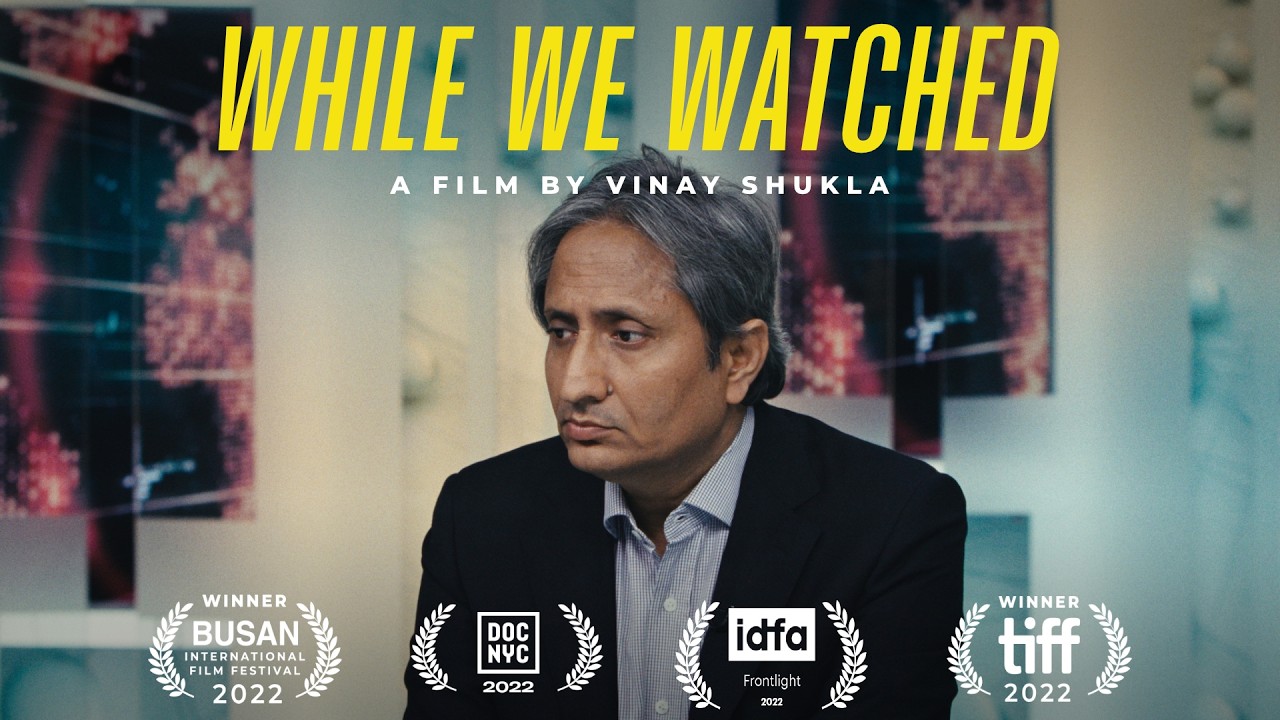
While We Watched (2022) a film by Vinay Shukla | Full Documentary
Kunal Kamra
Overview
This documentary, "While We Watched," offers a critical look at the state of Indian journalism through the lens of journalist Ravish Kumar. It highlights the increasing pressure on independent media, the rise of nationalist rhetoric, and the manipulation of news for political agendas. The film showcases the challenges faced by journalists who strive for truth in an environment often dominated by propaganda, fear, and the erosion of democratic values. It emphasizes the importance of critical viewing and the enduring struggle for authentic journalism.
How was this?
Save this permanently with flashcards, quizzes, and AI chat
Chapters
- The documentary opens with the arrest of activists, lawyers, and poets, signaling a crackdown on dissent.
- The term 'Urban Naxal' is introduced as a label used to demonize critics and create a new enemy of the state.
- This narrative is amplified through social media, aiming to silence opposition and control public discourse.
- The government uses propaganda to suppress questioning voices and maintain its narrative.
This chapter establishes the hostile environment for free speech and journalism, illustrating how dissent is systematically targeted and delegitimized through manufactured narratives.
The arrest of five human rights activists, journalists, lawyers, and poets by Pune police across the country.
- The personal toll of journalistic work is highlighted, with threats and fear impacting journalists and their families.
- Ravish Kumar describes how teaching and engaging with students provided solace amidst personal threats.
- The documentary shows the psychological impact of constant fear, including vivid nightmares and anxiety about loved ones.
- Journalism's fight becomes a personal battle when the state targets individuals for their work.
This section humanizes the struggle of journalists, revealing the deep personal sacrifices and emotional burdens they carry while upholding their professional duties.
Ravish Kumar's description of his daughters' fear and his own coping mechanism of teaching, which acted as a 'medicine' against the threats.
- The film critiques the weaponization of nationalism, where it's used to define who is 'anti-national'.
- Nationalism is presented as a prerequisite for journalism by some, while others see it as a tool to suppress dissent.
- The definition of nationalism is manipulated, often conflating it with religious or ethnic identity.
- This manufactured nationalism aims to dismantle democratic institutions and silence critical voices.
This chapter explains how the concept of nationalism is distorted and used as a political tool to consolidate power and undermine democratic principles.
The statement 'I am a nationalist and I believe that being a nationalist is a prerequisite to being a journalist,' contrasted with the critique that nationalism is used to end democracy.
- The documentary points to the decline of media independence, with channels becoming mouthpieces for the government ('Godi Media').
- News channels are accused of prioritizing propaganda and sensationalism over factual reporting, focusing on Hindu-Muslim debates.
- The pressure to conform leads to self-censorship and the abandonment of critical journalism.
- The film suggests that media's focus on manufactured issues distracts from real problems like unemployment and economic distress.
This section addresses the critical issue of media capture and how it distorts public perception, diverting attention from substantive issues and eroding the media's role as a watchdog.
The observation that news channels are more interested in Hindu-Muslim debates than discussing issues like unemployment or the economy.
- Journalists and activists critical of the government face threats, online abuse, and even physical attacks.
- The film highlights incidents like the attack on Umar Khalid and the murder of Gauri Lankesh as examples of this violence.
- Media outlets are accused of amplifying these threats by labeling individuals as 'anti-national' or 'traitors'.
- The goal is to create an environment where questioning the government is perceived as an act of treason.
This chapter underscores the dangerous consequences of state-sponsored narratives and media complicity in targeting dissenting voices, leading to real-world violence.
The attack on student leader Umar Khalid near Parliament, with media outlets subsequently labeling him as anti-national.
- Propaganda is portrayed as a sophisticated tool that manipulates public perception and controls thought.
- The constant barrage of fear-mongering and divisive narratives creates a 'fear psychosis' among the populace.
- This manufactured reality makes it difficult for citizens to discern truth from falsehood.
- The film argues that this systematic disinformation campaign is a threat to democracy itself.
This section explains the psychological mechanisms through which propaganda operates, highlighting its effectiveness in shaping public opinion and undermining critical thinking.
The comparison of WhatsApp University's spread of lies to the amplification of these lies by television channels, solidifying false narratives.
- Despite immense pressure, some journalists continue to fight for truth and uphold journalistic ethics.
- The film celebrates the resilience of journalists like Ravish Kumar who refuse to be silenced.
- It emphasizes the importance of the audience's role in supporting independent media by seeking out and valuing factual reporting.
- The documentary concludes with a call to action for viewers to remain critical and support journalism that serves the public interest.
This chapter offers a message of hope, emphasizing that the fight for truth is ongoing and that the audience plays a crucial role in sustaining independent journalism.
Ravish Kumar's acknowledgment of his 'zero TRP' status but emphasizing the value of viewers who critically engage with content.
Key takeaways
- Nationalism is often manipulated by governments to suppress dissent and control public discourse.
- Independent journalism faces significant threats from state pressure, propaganda, and the rise of 'Godi Media'.
- The personal lives and mental well-being of journalists are deeply affected by the threats and pressures they face.
- Propaganda and fear-mongering are used to shape public perception and distract from critical issues.
- Audiences have a crucial role in supporting truthful journalism by being critical viewers and seeking out reliable sources.
- The erosion of media independence poses a significant threat to democratic values and informed citizenship.
- Resisting state-sponsored narratives and upholding journalistic integrity is a continuous and vital struggle.
Key terms
Urban NaxalGodi MediaPropagandaNationalismDissentMedia IndependenceFear PsychosisDemocratic ValuesTRP (Television Rating Point)WhatsApp University
Test your understanding
- How is the term 'Urban Naxal' used to suppress dissent in India?
- What are the personal and psychological challenges faced by journalists like Ravish Kumar?
- How do governments weaponize nationalism to control public discourse and silence critics?
- What is 'Godi Media,' and how does it contribute to the erosion of media independence?
- What role can audiences play in supporting authentic journalism in the current media landscape?