19:27
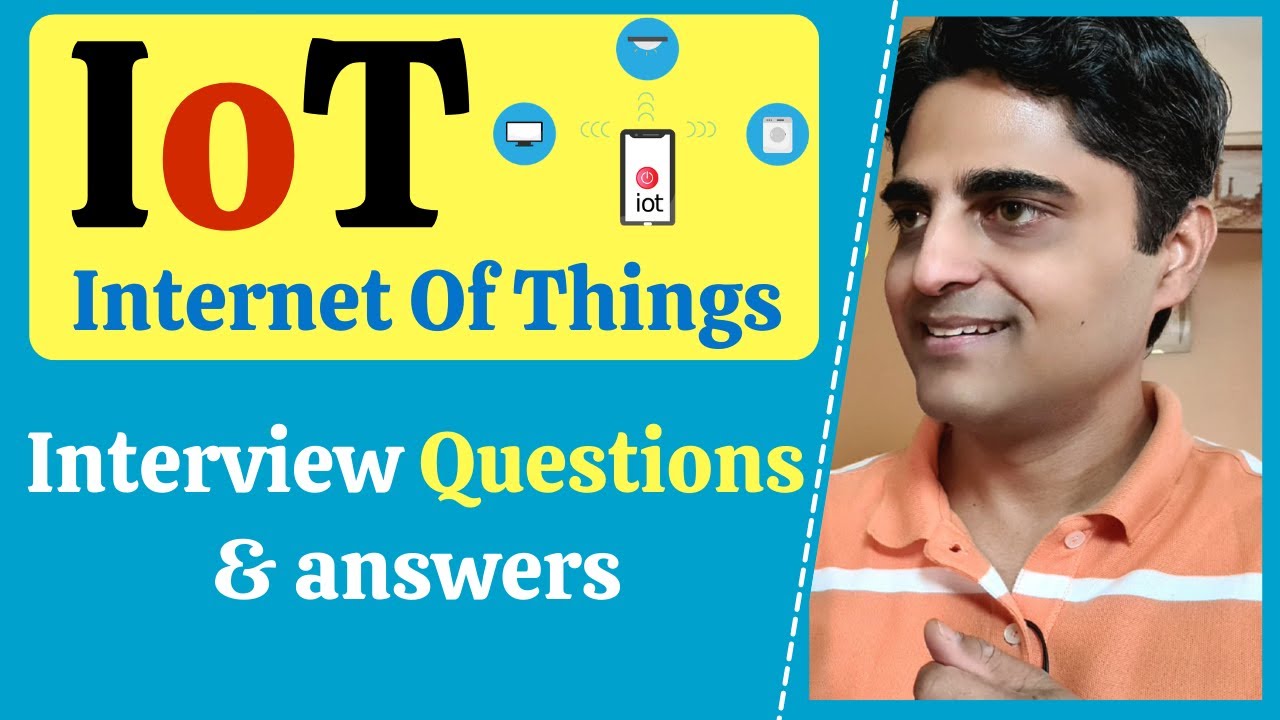
20 IoT, Internet of Things Interview Questions for TCS, Accenture, Infosys, Wipro, HCL, Amazon
CareerRide
Overview
This video covers fundamental concepts of the Internet of Things (IoT), focusing on interview questions relevant to IT professionals. It defines IoT, lists common devices and components, and explains different sensor types. The video also delves into platforms like Raspberry Pi and Arduino, their applications, and the distinctions between them. Communication models, real-world applications in smart homes, healthcare, agriculture, and smart cities are discussed, along with security risks and suitable databases. Finally, it touches upon GPIO, Bluetooth Low Energy, and Arduino programming concepts.
How was this?
Save this permanently with flashcards, quizzes, and AI chat
Chapters
- IoT refers to a network of smart devices that communicate and share data over the internet.
- These devices, often called 'things,' are equipped with sensors, processing capabilities, and software to enable connectivity and data exchange.
- The number of IoT devices is rapidly growing, projected to reach 25.4 billion by 2030.
Understanding the core definition and scale of IoT is crucial for grasping its impact and potential in various industries.
Examples include smart refrigerators, smartwatches, smart door locks, fitness trackers, and smart security systems.
- IoT devices typically comprise four main components: sensors, connectivity, data processing, and user interface.
- Sensors convert physical environmental inputs (like temperature) into digital signals for processing.
- Connectivity (e.g., Bluetooth, Wi-Fi) enables data transfer from sensors to processing units.
- Data processing translates raw data into meaningful information, and the user interface allows for interaction and understanding.
Knowing these components helps in understanding how IoT systems function and how data flows from the physical world to actionable insights.
A temperature sensor collects ambient temperature and converts it into a digital value that a computer can interpret.
- Raspberry Pi is a low-cost, credit-card-sized computer with a microprocessor, capable of running an operating system and multitasking.
- Arduino is a circuit board with a programmable microcontroller, designed for controlling electronic components and simpler, repetitive tasks.
- Key differences lie in their processing units (microprocessor vs. microcontroller), complexity, operating system presence, power consumption, and primary use cases (multitasking vs. single tasks).
Distinguishing between platforms like Raspberry Pi and Arduino is essential for selecting the right tool for specific IoT projects based on complexity and requirements.
Raspberry Pi can function as a mini-desktop for web browsing, while Arduino is ideal for controlling a simple LED light based on sensor input.
- Common IoT communication models include Request-Response, Publish-Subscribe, Push-Pull, and Exclusive Pair.
- IoT applications span various sectors, including smart homes (automated lighting, security), healthcare (remote monitoring, ECG trackers), and agriculture (drip irrigation, soil sensors).
- Smart cities leverage IoT for services like smart parking, waste management, and public safety through sensor networks and data analysis.
Understanding these models and applications demonstrates the practical implementation and diverse impact of IoT in improving efficiency and quality of life.
In smart waste management, sensors in garbage bins alert authorities when they are full, optimizing collection routes.
- Significant security risks in IoT include weak authentication, lack of data encryption, inconsistent security standards, and outdated firmware.
- General Purpose Input/Output (GPIO) pins allow microcontrollers to interface with external electronic devices and sensors.
- Bluetooth Low Energy (BLE) is a power-efficient wireless technology optimized for IoT applications requiring low power consumption and intermittent data transfer.
Addressing security vulnerabilities and understanding low-level technical interfaces like GPIO and BLE are critical for building secure and functional IoT systems.
BLE is used in fitness trackers to send heart rate data to a smartphone with minimal battery drain.
Key takeaways
- IoT connects everyday objects to the internet, enabling data sharing and automation.
- The core components of an IoT system are sensors, connectivity, data processing, and user interfaces.
- Raspberry Pi and Arduino are popular platforms for IoT development, each suited for different project complexities.
- IoT has transformative applications in smart homes, healthcare, agriculture, and urban planning.
- Security is a major concern in IoT, with risks stemming from weak authentication, encryption, and outdated software.
- Understanding communication models and low-level interfaces like GPIO and BLE is essential for IoT development.
- Effective data processing and user interfaces are key to making IoT data meaningful and actionable.
Key terms
Internet of Things (IoT)SensorsConnectivityData ProcessingUser InterfaceRaspberry PiArduinoMicrocontrollerMicroprocessorGPIO (General Purpose Input/Output)Bluetooth Low Energy (BLE)Smart CityPublish-Subscribe ModelFirmware
Test your understanding
- What are the four primary components of an IoT device and how do they interact?
- How does a Raspberry Pi differ from an Arduino in terms of hardware and typical use cases?
- Explain the Publish-Subscribe communication model in the context of IoT.
- What are the main security risks associated with IoT devices and why are they significant?
- How can IoT technology be applied to improve services in a smart city?