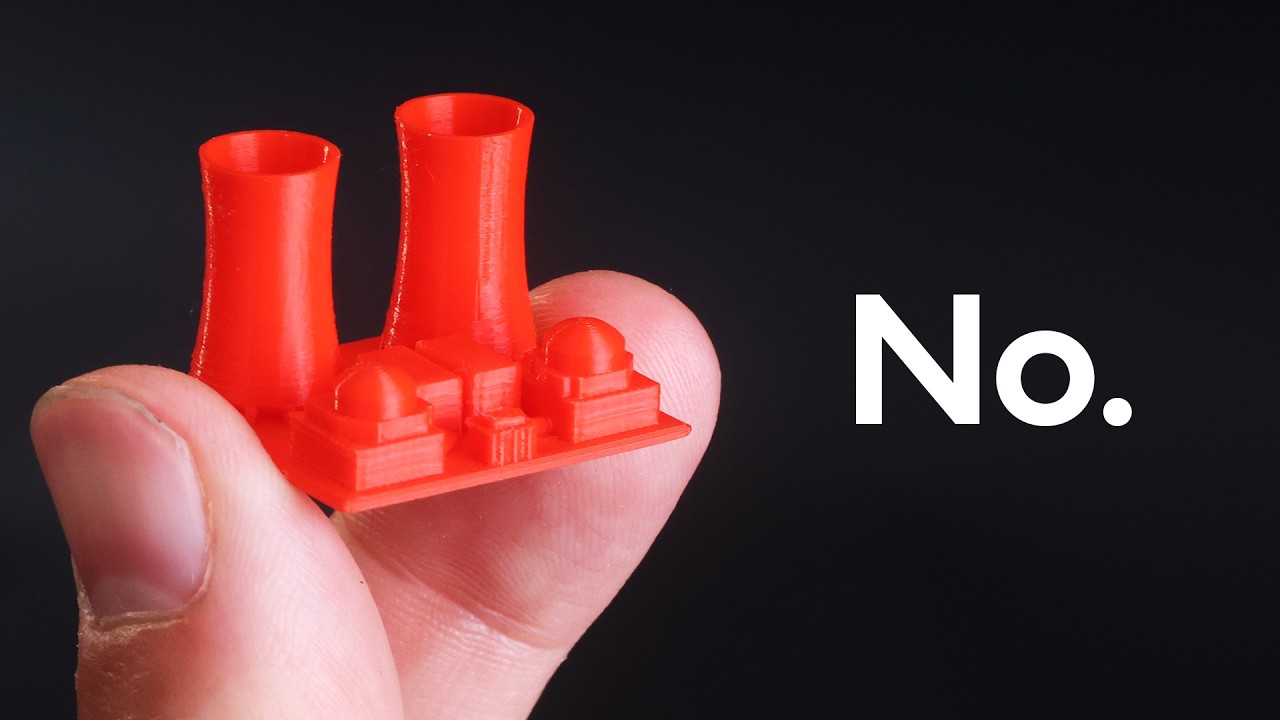
Can tiny nuclear reactors save us?
Simon Clark
Overview
This video explores the potential of Small Modular Reactors (SMRs) as a climate solution, contrasting them with traditional nuclear power and existing renewable energy sources. It delves into the historical context of nuclear energy, its pros and cons (sustainability, security, cost, safety), and then introduces SMRs as a potentially more affordable and safer alternative due to their modular design and passive safety features. The video also debunks a myth about coal plant sites being too radioactive for nuclear facilities and examines the current status and future prospects of SMR deployment, particularly for data centers and remote communities, while emphasizing the urgency of immediate emission reductions through established renewables.
Save this permanently with flashcards, quizzes, and AI chat
Chapters
- Nuclear power currently provides about 9% of global electricity, primarily through fission.
- Traditional nuclear power offers sustainability (low carbon emissions) and energy security (baseload power) but faces challenges with high and increasing costs and public perception due to past accidents like Chernobyl and Fukushima.
- Despite high-profile accidents, nuclear power is statistically one of the safest energy sources per unit of energy produced, and waste transport has a strong safety record.
- The primary trade-off for traditional nuclear power has been its high cost compared to renewables like wind and solar, which have seen significant price drops.
- SMRs are nuclear reactors with a capacity between 10-300 MW, designed to be smaller, modular, and incorporate passive safety features.
- Modularity allows for factory production of components, enabling mass manufacturing and potentially reducing costs through repetition, similar to aircraft production.
- Smaller size and fuel load reduce upfront costs, lower investment risk, and allow for placement closer to energy consumers, with smaller evacuation zones in case of an incident.
- Passive safety measures, utilizing natural forces like gravity, and improved cooling due to a higher surface-area-to-volume ratio in smaller cores enhance safety without human intervention.
- A common myth that old coal power plants are too radioactive to be converted for nuclear use is debunked; coal ash contains only trace amounts of radiation, which are negligible compared to background levels.
- While small nuclear reactors have been used for military propulsion for decades, only two electricity-generating SMRs are currently operational globally: one in Russia and one in China.
- These first-generation SMRs have not yet realized the cost savings of modularity, as supply chains and factory production are still developing.
- Despite limited operational examples, there is significant hype and growing orders for SMRs worldwide, driven by government support and investment.
- Governments are supporting SMR development through policy changes (e.g., criteria-based site selection) and direct funding.
- The UK government is a strong proponent, allocating significant funds and signing contracts for the first SMRs to connect to its grid, aiming for a levelized cost of energy below £70/MWh.
- Major tech companies like Amazon and Google are investing in SMRs to power their energy-intensive data centers, seeing them as a solution for reliable, 24/7 clean power.
- SMRs could also serve remote communities where solar and wind may not be consistently viable, though community ownership is less likely than for renewables.
- The biggest challenge for SMRs is time; their deployment is projected for the mid-2030s, which may be too late for the urgent need to drastically cut emissions in the next decade.
- Relying on future technologies like SMRs for immediate climate solutions risks delaying crucial emission reductions, potentially leading to worse climate outcomes.
- Established renewable energy sources like wind and solar are already cheap, scalable, and rapidly decarbonizing electricity grids, and can fill energy gaps with storage solutions.
- While SMRs might play a role in a fully decarbonized grid by providing firm power, or in niche applications like data centers and remote areas, they are not a necessity and should not detract from current mitigation efforts.
Key takeaways
- Small Modular Reactors (SMRs) offer potential advantages over traditional nuclear power, including lower upfront costs, enhanced safety through passive systems, and modular manufacturing.
- Despite their promise, SMRs are still in early development, with only a few operational units globally, and face significant time constraints in addressing the immediate climate crisis.
- Traditional nuclear power provides reliable baseload energy and is carbon-free during operation but struggles with high costs and public perception issues.
- Renewable energy sources like wind and solar are already scalable, cost-effective, and are the most viable immediate solutions for rapid decarbonization of electricity grids.
- The urgency of climate change necessitates prioritizing and scaling existing technologies that can deliver rapid emissions reductions now, rather than solely relying on future technological fixes.
- While SMRs may eventually contribute to a decarbonized energy mix, particularly for specific applications like data centers or remote communities, they are not a substitute for immediate, widespread deployment of renewables.
- Skepticism is warranted regarding claims that SMRs alone will 'save the planet'; current solutions are more critical for near-term climate mitigation.
Key terms
Test your understanding
- What are the main advantages SMRs are designed to offer compared to traditional large nuclear reactors?
- Why is the 'time factor' a critical consideration when evaluating SMRs as a climate solution?
- How do SMRs aim to address the cost and safety concerns associated with conventional nuclear power?
- What role do existing renewable energy sources like wind and solar play in the context of SMR development and climate action?
- What are the primary use cases identified for SMRs beyond national electricity grids, and what are the limitations for these applications?