2:30
Introducing iPhone Air
Apple
Overview
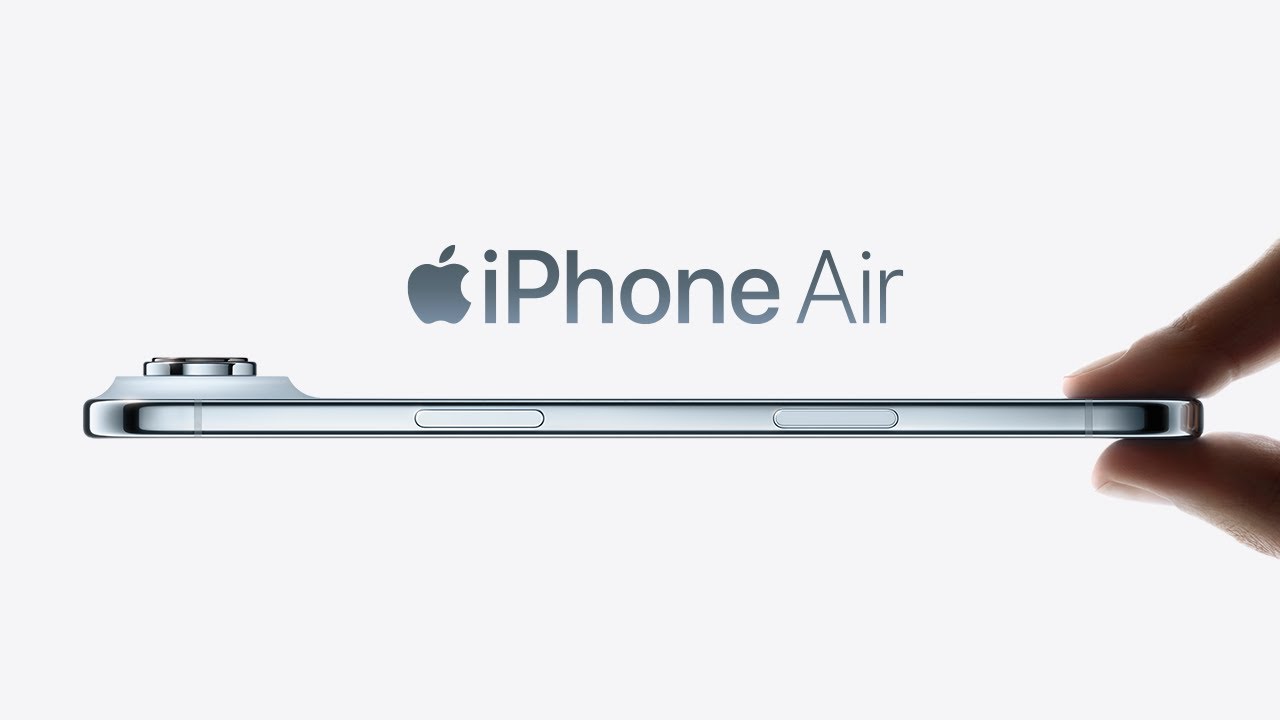
The video introduces the iPhone Air, emphasizing its revolutionary thin and light design achieved through advanced materials like spacecraft-grade titanium and a redesigned internal architecture. It highlights enhanced durability with Ceramic Shield, a new camera system featuring Center Stage and a 48-megapixel Fusion camera, and the powerful A19 Pro chip enabling Apple Intelligence. The design prioritizes a seamless user experience, offering all-day battery life and an expansive display within an impossibly thin profile, creating a device that feels futuristic and is a paradox of power and lightness.
How was this?
Save this permanently with flashcards, quizzes, and AI chat
Chapters
- The iPhone Air was designed to feel like a piece of the future, balancing power with an extremely thin and light form factor.
- Its core structure uses Grade 5 spacecraft titanium for strength, lightness, and durability.
- The titanium frame features a polished, mirrored finish and is available in colors that evoke lightness.
Understanding the materials and design philosophy explains how the iPhone Air achieves its unique feel and aesthetic, setting it apart from previous models.
The use of Grade 5 spacecraft titanium for the radically thin frame.
- For the first time, Ceramic Shield now encloses the titanium frame on both sides.
- A high-temperature process creates nanocrystals in the Ceramic Shield, significantly improving toughness.
- The front display is now three times more scratch-resistant than previous iPhones, making it more durable overall.
This section details advancements in material science that contribute to the phone's resilience, addressing a key concern for users regarding device longevity.
The Ceramic Shield front being three times more scratch-resistant than before.
- The iPhone's internal architecture was rethought to achieve the thinness, starting with a redesigned camera plateau.
- The new camera plateau is precisely sculpted to house custom chips, components, and innovative camera systems.
- The Center Stage camera automatically frames selfies in both portrait and landscape modes without user intervention.
- The Fusion camera captures high-resolution 48-megapixel photos, advanced portraits, landscapes, and low-light images.
This explains the engineering innovations required to pack advanced features into a slim design, focusing on how the camera system has been significantly upgraded.
The Center Stage camera perfectly framing selfies automatically in both portrait and landscape.
- The redesigned plateau also accommodates the latest A19 Pro chip, engineered for Apple Intelligence.
- All available space was utilized for a high-density battery, enabling remarkable all-day battery life.
- The impossibly thin profile allowed for a larger display without increasing the phone's overall bulk.
This highlights how the phone's compact design doesn't compromise on performance or battery longevity, crucial factors for user experience.
Achieving remarkable all-day battery life by dedicating every last bit of space to a high-density battery.
- The iPhone Air represents a paradox: it is the thinnest iPhone ever, yet it contains the power of Pro models.
- Its impossibly thin profile is a key design achievement, offering a unique tactile experience.
- The device is presented as a tangible piece of the future that must be held to be fully appreciated.
This chapter synthesizes the key features, framing the iPhone Air as a groundbreaking device that challenges conventional trade-offs between size, power, and design.
The phone being described as a paradox you have to hold to believe.
Key takeaways
- The iPhone Air prioritizes a futuristic feel through extreme thinness and lightness, achieved via advanced materials and internal redesign.
- Durability is significantly enhanced through the use of spacecraft-grade titanium and improved Ceramic Shield technology.
- Internal architecture was re-engineered, particularly the camera plateau, to integrate new camera and chip technologies efficiently.
- The new camera system offers advanced features like Center Stage for automatic selfie framing and a high-resolution Fusion camera for superior photo quality.
- Despite its slim profile, the iPhone Air delivers powerful performance with the A19 Pro chip and impressive all-day battery life.
- The design successfully integrates a larger display within a smaller, thinner form factor, enhancing the visual experience without adding bulk.
Key terms
iPhone AirSpacecraft TitaniumCeramic ShieldNanocrystalsCenter Stage CameraFusion CameraA19 Pro ChipApple IntelligenceHigh-density battery
Test your understanding
- What are the primary materials used in the iPhone Air's construction, and why were they chosen?
- How does the iPhone Air improve upon the durability of previous models?
- Explain the significance of the redesigned camera plateau in the iPhone Air.
- What capabilities does the new A19 Pro chip bring to the iPhone Air?
- How does the iPhone Air achieve both a thin profile and all-day battery life?