25:58
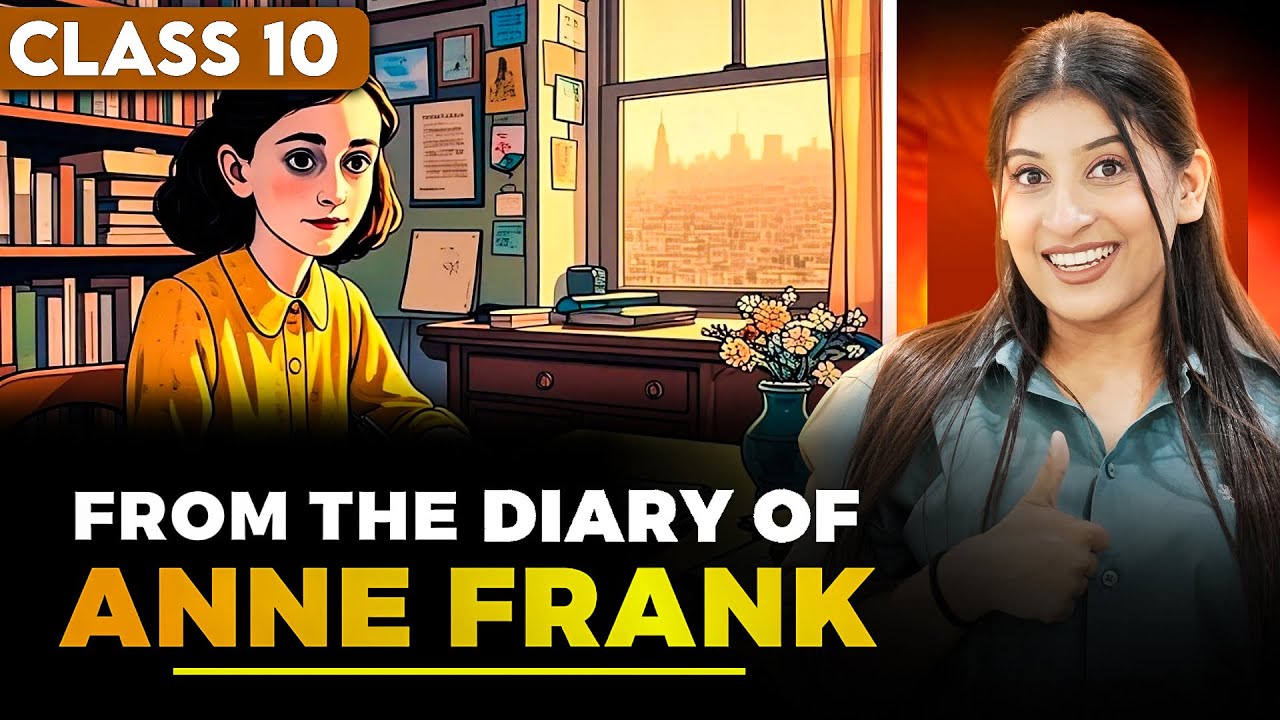
From the diary of Anne Frank Class 10🔥Explanation | Imp keywords | Theme | characters by Kriti Di✅
CREATIVE LEARNING 2.0
Overview
This video provides an in-depth explanation of the chapter 'From the Diary of Anne Frank,' which is an excerpt from 'The Diary of a Young Girl.' It details Anne's background as a Jewish girl during World War II, her family's migration to Amsterdam, and their subsequent hiding from the Nazis. The summary focuses on Anne's decision to write a diary, her initial thoughts about it, her relationship with her family, her school experiences, and a significant anecdote involving her math teacher, Mr. Keepzing, and a series of essays about her talkative nature. The video concludes with character sketches of Anne Frank and Mr. Keepzing.
How was this?
Save this permanently with flashcards, quizzes, and AI chat
Chapters
- Anne Frank was a Jewish girl who, along with her family, had to hide from the Nazis during World War II.
- Her father gifted her a diary for her 13th birthday, which became her confidante.
- The family, along with seven others, hid in a secret annex in Amsterdam but were eventually caught and sent to concentration camps.
- Anne and her sister died of typhus in the camp, with only her father surviving.
- Her father later published her diary, titled 'The Diary of a Young Girl'.
Understanding the historical context and Anne's personal tragedy is crucial for appreciating the depth and significance of her diary entries.
Anne's family hid in the annex above her father's office to escape Nazi persecution during World War II.
- Anne found writing a diary a strange experience as she had never done it before.
- She believed no one would be interested in the thoughts of a teenager.
- She decided to write to 'get many things off her chest' and share what she couldn't with others.
- Anne felt that paper had more patience than people, as it wouldn't judge her.
This section explains Anne's motivation for keeping a diary, highlighting her need for an outlet to express her innermost thoughts and feelings.
Anne addressed her diary as 'Kitty,' treating it as her best friend and confidante.
- Anne considered her father the 'most adorable person' and noted the age difference between her parents when they married.
- She had an elder sister named Margot.
- Despite having about 30 people in her life, Anne felt she had no true friend.
- The family lived in Frankfurt, Germany, until Anne was four, after which they migrated to Holland to escape the Nazis.
This provides insight into Anne's family dynamics and her early life experiences, which shaped her perspective and her search for genuine connection.
The family migrated to Holland because they were Jewish and had to flee from the Nazis.
- Anne's entire class was terrified of an upcoming teachers' meeting that would decide who would advance to the next grade.
- Many students made bets about passing or failing, but Anne was confident about herself and her friends, except for math.
- Anne got along well with most teachers but found her math teacher, Mr. Keepzing, to be an 'old fogey' (old-fashioned and strict).
This chapter illustrates the typical anxieties of school life and introduces a key relationship that becomes a central anecdote in the diary.
Anne was only worried about her math subject, which she didn't particularly like.
- Mr. Keepzing was annoyed by Anne's constant talking in class and assigned her extra homework: an essay titled 'A Chatterbox'.
- In her essay, Anne argued that talking was a student's characteristic and that she inherited this trait from her equally talkative mother.
- When Anne continued to talk, Mr. Keepzing assigned a second essay, 'An Incorrigible Chatterbox'.
- For her third assignment, Mr. Keepzing gave her the topic 'Quack, Quack, Quack, Said Mistress Duck'.
This extended anecdote reveals Anne's wit and intelligence in handling a strict teacher, showcasing her ability to use humor and creativity to defend herself.
Anne wrote a poem for the 'Mistress Duck' essay, depicting a father duck beating his ducklings to death for quacking too much, cleverly turning the joke on Mr. Keepzing.
- Anne, realizing Mr. Keepzing was joking, collaborated with a friend to write a poem for the final essay topic.
- The poem about the ducks was so well-received that Mr. Keepzing was impressed and shared it with the entire class.
- After this, Mr. Keepzing stopped assigning Anne extra homework for talking.
- He became a changed person in his approach towards Anne's talkativeness.
This shows how Anne's cleverness and creativity resolved a conflict and led to a positive change in her teacher's behavior, demonstrating the power of unconventional solutions.
Mr. Keepzing was so impressed by Anne's poem that he read it aloud to the class, effectively ending his punitive assignments for her talking.
- Anne Frank is portrayed as an intelligent, compassionate, and mature girl with a good sense of humor.
- She felt lonely despite having many acquaintances, as she lacked a true friend.
- She was very talkative, which often led to her being reprimanded by her math teacher.
- Mr. Keepzing is depicted as a strict, old-fashioned teacher who initially disliked Anne's talkativeness but was eventually won over by her wit.
Summarizing the characters helps consolidate understanding of their roles and personalities within the narrative.
Anne is described as 'talkative' and 'intelligent,' while Mr. Keepzing is called an 'old fogey' and 'strict'.
Key takeaways
- Even in the face of extreme adversity, maintaining a sense of self and finding creative outlets like writing can be a powerful coping mechanism.
- A diary can serve as a vital tool for self-reflection, emotional processing, and understanding one's own thoughts and feelings.
- True friendship involves deep trust and the ability to share one's innermost secrets and vulnerabilities.
- Creativity and wit can be effective tools for navigating difficult relationships and challenging authority figures.
- Historical events, like World War II, have profound personal impacts on individuals and families, shaping their lives in irreversible ways.
- Adolescence is a period of intense self-discovery, marked by a search for identity, belonging, and genuine connection.
- Humor can be a powerful defense mechanism and a way to connect with others, even in challenging circumstances.
Key terms
DiaryWorld War IINazisJewishAnnexConcentration CampOld FogeyChatterboxIncorrigibleEssayPoem
Test your understanding
- Why did Anne Frank feel compelled to write in her diary, even though she found it strange?
- How did Anne's family background and the historical context of World War II influence her life and her decision to hide?
- What was the significance of Anne addressing her diary as 'Kitty'?
- How did Anne's creative response to her math teacher's assignments demonstrate her intelligence and sense of humor?
- What does the anecdote about Mr. Keepzing reveal about Anne's character and her ability to handle conflict?